Wilms Tumor (Kidney Cancer in Children): A Complete Parent’s Guide
Hearing that your child has a kidney tumor can be frightening for any parent. Questions such as “Is it cancer?”, “Can it be treated?”, “Will my child recover?” naturally arise.
The good news is that Wilms Tumor, also called Nephroblastoma, is one of the most treatable childhood cancers. With advances in pediatric oncology, pediatric surgery, chemotherapy, imaging, and supportive care, many children diagnosed with Wilms Tumor achieve excellent long-term outcomes.
At Basavatarakam Indo-American Cancer Hospital & Research Institute (BIACH&RI), Hyderabad, children with Wilms Tumor receive comprehensive care from a multidisciplinary team that includes Pediatric Hemato-Oncologists, Pediatric Surgical Oncologists, Pediatric Surgeons, Radiologists, Pathologists, Radiation Oncologists, Pediatric Intensivists, Oncology Nurses, Nutritionists, and Rehabilitation Specialists. Every treatment plan is tailored to the child’s specific diagnosis and overall health.
This guide explains everything parents need to know about Wilms Tumor, including its symptoms, diagnosis, treatment options, recovery, and long-term follow-up.
What Is Wilms Tumor?
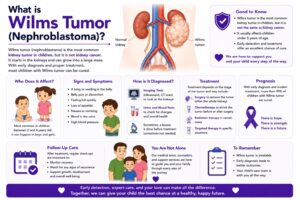
Wilms Tumor, also known as Nephroblastoma, is the most common kidney cancer in children.
It develops from immature kidney cells that fail to mature normally during fetal development. Instead of becoming healthy kidney tissue, these cells grow uncontrollably and form a tumor.
Most Wilms Tumors affect only one kidney, although a small percentage of children may develop tumors in both kidneys.
Because the kidneys filter blood, remove waste products, and help regulate blood pressure and fluid balance, preserving as much healthy kidney tissue as possible is an important consideration during treatment.
“Wilms Tumor (Nephroblastoma) is the most common kidney cancer in children, usually affecting those younger than five years of age. It often presents as a painless abdominal lump and is diagnosed using imaging studies and laboratory investigations. Treatment may include surgery, chemotherapy, and, in selected cases, radiation therapy. With timely diagnosis and specialized pediatric oncology care, many children achieve excellent long-term outcomes.”
How Common Is Wilms Tumor?
Wilms Tumor accounts for approximately 5–7% of all childhood cancers and is the most common malignant kidney tumor in children.
Most cases are diagnosed before the age of five years.
It is uncommon in older children and rare in adults.
Who Is at Risk?
Wilms Tumor can occur in any child, but it is most frequently diagnosed in:
- Children between one and five years of age
- Boys and girls (both can be affected)
- Children with certain rare genetic syndromes or congenital conditions (in a small percentage of cases)
Most children diagnosed with Wilms Tumor do not have an identifiable inherited condition.
What Causes Wilms Tumor?
One of the first questions parents ask is:
“Did we do something wrong?”
The answer is No.
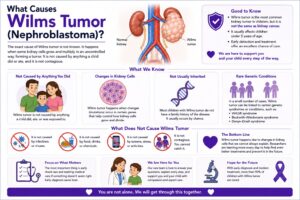
In the majority of children, the exact cause of Wilms Tumor is unknown.
Researchers believe the tumor develops because of changes in immature kidney cells during fetal development.
Importantly:
- Wilms Tumor is not caused by food.
- It is not caused by injury.
- It is not contagious.
- It is not caused by routine childhood activities.
In a small number of children, Wilms Tumor is associated with inherited genetic syndromes or congenital abnormalities, but most cases occur without a family history.
What Are the Symptoms of Wilms Tumor?
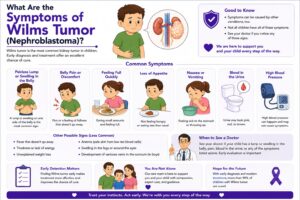
Many children with Wilms Tumor appear healthy before the diagnosis.
The tumor is often discovered when a parent notices an unusual swelling in the child’s abdomen during bathing or dressing.
Common symptoms include:
Abdominal Swelling
The most common sign is a firm, painless swelling or lump in the abdomen.
Many parents notice that one side of the abdomen appears larger than the other.
Abdominal Pain
Some children may complain of:
- Persistent abdominal discomfort
- Pain while playing
- Tenderness over the affected area
Blood in the Urine (Hematuria)
Some children develop visible blood in the urine, while others may have microscopic blood detected only through laboratory testing.
Fever
Persistent or unexplained fever may occur in some children.
High Blood Pressure
The kidneys help regulate blood pressure.
A Wilms Tumor can sometimes cause hypertension, which may require treatment before surgery.
Poor Appetite
Children may eat less than usual and show reduced interest in food.
Weight Loss
Unexplained weight loss should always be medically evaluated.
Tiredness
Fatigue may develop because of anemia or the body’s response to the tumor.
Shortness of Breath
Large tumors can occasionally press against the diaphragm, making breathing uncomfortable.
Constipation
An enlarging abdominal tumor may compress the bowel, leading to constipation.
When Should Parents Consult a Pediatric Oncologist?
Parents should seek medical evaluation if they notice:
- A persistent abdominal lump or swelling
- Blood in the urine
- Unexplained abdominal pain
- Persistent fever without infection
- Unexplained weight loss
- High blood pressure in a young child
- Ongoing fatigue
- Any persistent symptom that does not improve with routine treatment
Although these symptoms may have causes other than cancer, early evaluation is important for timely diagnosis.
Why Early Diagnosis Matters

Early diagnosis allows the healthcare team to:
- Confirm the diagnosis accurately
- Determine the stage of the disease
- Plan the most appropriate treatment
- Reduce the risk of complications
- Improve long-term outcomes
Children evaluated promptly at specialized pediatric cancer centres benefit from coordinated care by experienced multidisciplinary teams.
How Is Wilms Tumor Diagnosed?
Diagnosing Wilms Tumor (Nephroblastoma) requires a careful and systematic evaluation. Many children first come to medical attention because a parent notices a painless swelling in the abdomen or because an abdominal mass is detected during a routine examination.
At Basavatarakam Indo-American Cancer Hospital & Research Institute (BIACH&RI), Hyderabad, every child suspected of having Wilms Tumor undergoes a comprehensive evaluation. The aim is to confirm the diagnosis, determine the extent of the disease, assess kidney function, and develop the safest and most effective treatment plan.
Because treatment decisions depend on the stage and characteristics of the tumor, accurate diagnosis is essential.
Step 1: Detailed Medical History
The Pediatric Hemato-Oncologist begins by obtaining a detailed medical history from the parents or caregivers.
Important questions include:
- When was the abdominal swelling first noticed?
- Has the swelling increased in size?
- Is the child experiencing pain?
- Is there blood in the urine?
- Has the child had fever?
- Is there loss of appetite?
- Has there been weight loss?
- Has the child been unusually tired?
- Is there any family history of kidney disease or childhood cancer?
This information helps guide further investigations.
Step 2: Physical Examination
A thorough physical examination is performed to assess the child’s overall health and identify signs related to the tumor.
The doctor evaluates:
- Size and location of the abdominal mass
- Blood pressure
- General nutritional status
- Presence of anemia
- Swelling in other parts of the body
- Signs of tumor spread
- Growth and developmental milestones
One important precaution is that parents should never repeatedly press or massage an abdominal lump. If a kidney tumor is suspected, unnecessary pressure on the abdomen should be avoided until the child has been evaluated by a specialist.
Blood Tests
Blood investigations help assess the child’s overall health and determine whether the kidneys and other organs are functioning properly.
Common investigations include:
- Complete Blood Count (CBC)
- Kidney Function Tests (Blood Urea Nitrogen and Serum Creatinine)
- Liver Function Tests
- Electrolytes
- Blood Clotting Profile
- Blood Group and Cross-Matching (if surgery is planned)
These tests also help prepare the child safely for surgery or chemotherapy.
Urine Tests
Urine examination is performed to look for:
- Blood in the urine
- Infection
- Protein levels
- Overall kidney function
Even when blood is not visible, microscopic blood may sometimes be detected during laboratory analysis.
Ultrasound Scan
Ultrasound is usually the first imaging test performed.
It is painless, does not use radiation, and provides valuable information about:
- Whether the mass arises from the kidney
- Size of the tumor
- Whether one or both kidneys are involved
- Blood flow to the tumor
- Nearby organs
Ultrasound is an excellent screening tool, but additional imaging is needed for complete staging.
Contrast-Enhanced CT Scan (CECT)
A Contrast-Enhanced CT scan is one of the most important investigations for Wilms Tumor.
It helps doctors evaluate:
- Exact tumor size
- Location
- Relationship to surrounding organs
- Blood vessel involvement
- Involvement of nearby lymph nodes
- Whether the tumor has spread within the abdomen
The CT scan also helps surgeons plan the safest surgical approach.
MRI Scan
An MRI may be recommended in selected situations, particularly when:
- The tumor extends into major blood vessels
- There is concern about spinal involvement
- More detailed soft tissue imaging is required
- The surgical team needs additional anatomical information
MRI provides excellent visualization without exposing the child to ionizing radiation.
Chest CT Scan
The lungs are one of the most common sites where Wilms Tumor may spread.
A Chest CT scan is performed to determine whether there is any evidence of pulmonary metastasis.
Identifying lung involvement is important because it influences staging and treatment planning.
Doppler Imaging
In some children, Doppler ultrasound or specialized vascular imaging is used to evaluate whether the tumor has extended into:
- The renal vein
- The inferior vena cava (IVC)
This information is particularly important before surgery.
Is a Biopsy Always Needed?
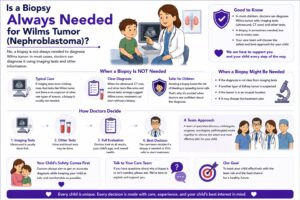
Unlike many other cancers, a biopsy is not routinely performed before surgery in every child with Wilms Tumor.
In many cases, the diagnosis is strongly suggested by imaging studies, and the treatment strategy follows established pediatric oncology protocols.
A biopsy may be considered in selected situations, such as:
- When imaging findings are unusual
- If another type of tumor is suspected
- When the diagnosis remains uncertain
- As part of the multidisciplinary team’s assessment
The decision is individualized and based on the child’s clinical presentation.
Histopathology
After the tumor is surgically removed—or after a biopsy when indicated—the tissue is examined by experienced pathologists.
Histopathology confirms:
- Whether the tumor is Wilms Tumor
- Tumor subtype
- Degree of differentiation
- Presence or absence of anaplasia
- Surgical margins
- Lymph node involvement
These findings help determine the next phase of treatment.
Molecular and Genetic Evaluation
Modern pediatric oncology increasingly incorporates molecular and genetic analysis to better understand tumor biology.
When clinically appropriate, these investigations may provide additional information regarding prognosis and treatment planning.
Genetic counselling may also be recommended for children with features suggestive of inherited syndromes.
Staging of Wilms Tumor
Once all investigations are complete, doctors determine the stage of the disease.
Staging describes:
- Whether the tumor is confined to the kidney
- Whether nearby lymph nodes are involved
- Whether cancer has spread beyond the kidney
- Whether distant organs such as the lungs are affected
Accurate staging ensures that each child receives the most appropriate treatment while avoiding unnecessary therapy.
Risk Classification
Treatment is based not only on stage but also on risk classification.
Risk assessment considers several factors, including:
- Age of the child
- Tumor stage
- Histological subtype
- Presence of anaplasia
- Surgical findings
- Response to initial treatment
- Molecular characteristics (where applicable)
Based on these factors, children are categorized into treatment groups that guide the intensity of therapy.
Multidisciplinary Treatment Planning at BIACH&RI
Every child diagnosed with Wilms Tumor benefits from a coordinated treatment plan developed by specialists from multiple disciplines.
At Basavatarakam Indo-American Cancer Hospital & Research Institute, the multidisciplinary team includes:
- Pediatric Hemato-Oncologists
- Pediatric Surgical Oncologists
- Pediatric Surgeons
- Pediatric Nephrologists
- Radiation Oncologists
- Radiologists
- Pathologists
- Pediatric Intensivists
- Pediatric Anesthesiologists
- Pediatric Oncology Nurses
- Clinical Nutritionists
- Physiotherapists
- Psycho-Oncology Specialists
The team reviews all investigations together and develops an individualized treatment strategy designed to achieve the best possible outcomes while preserving kidney function whenever feasible.
Treatment of Wilms Tumor (Kidney Cancer in Children)
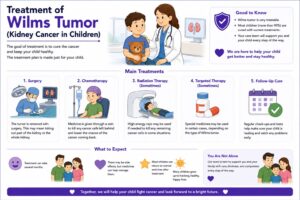
Treatment for Wilms Tumor (Nephroblastoma) has advanced significantly over the past few decades. Today, with early diagnosis, multidisciplinary care, and evidence-based treatment protocols, more than 90% of children with favorable-histology Wilms Tumor can achieve long-term survival, although the exact outlook depends on the stage, tumor biology, and individual response to treatment.
At Basavatarakam Indo-American Cancer Hospital & Research Institute (BIACH&RI), Hyderabad, every child receives a personalized treatment plan developed by a multidisciplinary team. The aim is not only to cure the cancer but also to preserve kidney function whenever possible and support the child’s long-term health and quality of life.
Goals of Treatment
The treatment strategy focuses on:
- Completely removing or eliminating the cancer.
- Preventing recurrence.
- Preserving healthy kidney tissue whenever feasible.
- Minimizing treatment-related complications.
- Supporting normal growth and development.
- Helping children return to school and everyday life.
Treatment is individualized according to:
- Tumor stage
- Histological subtype
- Whether one or both kidneys are involved
- Child’s age
- Overall health
- Genetic and molecular findings (when applicable)
Surgery: The Primary Treatment for Wilms Tumor
Surgery plays a central role in treating Wilms Tumor.
The type of surgery depends on:
- Tumor size
- Location
- Whether one or both kidneys are involved
- Blood vessel involvement
- Response to chemotherapy (when chemotherapy is given before surgery)
The primary objective is to remove the tumor completely while preserving as much healthy kidney tissue as possible.
Radical Nephrectomy
For most children with a tumor confined to one kidney, the standard operation is a Radical Nephrectomy.
During this procedure, the surgeon removes:
- The affected kidney
- The tumor
- Surrounding fatty tissue
- The ureter (when necessary)
- Nearby lymph nodes for pathological evaluation
Children can generally live healthy lives with one functioning kidney, provided it remains healthy.
Partial Nephrectomy (Kidney-Sparing Surgery)
In selected situations, especially when:
- Both kidneys are affected
- The child has a solitary functioning kidney
- Preserving kidney tissue is particularly important
The surgical team may consider Kidney-Sparing Surgery (Partial Nephrectomy).
This approach aims to remove the tumor while preserving as much normal kidney tissue as safely possible.
Not every child is a candidate for this procedure, and the decision is based on careful imaging review and multidisciplinary discussion.
Why Are Lymph Nodes Removed?
During surgery, nearby lymph nodes are usually sampled or removed for microscopic examination.
This helps determine:
- Whether cancer has spread beyond the kidney
- The exact stage of the disease
- Whether additional treatment is required
Accurate lymph node assessment is essential for treatment planning.
Is Chemotherapy Needed?
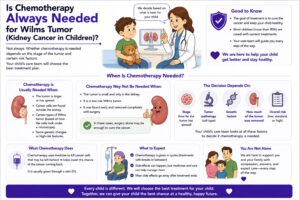
Most children with Wilms Tumor receive chemotherapy either:
- Before surgery (in selected treatment protocols), or
- After surgery, depending on the stage and pathology.
Chemotherapy helps destroy microscopic cancer cells that cannot be seen on imaging or during surgery.
The medicines and duration of treatment vary depending on the child’s individual diagnosis.
How Does Chemotherapy Work?
Chemotherapy medicines travel through the bloodstream to reach cancer cells throughout the body.
Treatment is given in carefully planned cycles, allowing healthy tissues time to recover between treatments.
The Pediatric Oncology team closely monitors:
- Blood counts
- Kidney function
- Liver function
- Growth
- Nutritional status
- Overall response to treatment
Common Side Effects of Chemotherapy
Although every child responds differently, possible side effects include:
- Hair loss
- Nausea and vomiting
- Loss of appetite
- Mouth ulcers
- Fatigue
- Low white blood cell counts
- Increased risk of infection
- Low platelet counts
- Anemia
Many of these side effects can be prevented or managed with modern supportive care.
Parents receive detailed guidance on what to expect and when to contact the medical team.
Radiation Therapy
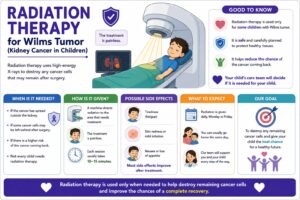
Radiation therapy is not required for every child with Wilms Tumor.
It may be recommended when:
- The tumor has spread beyond the kidney.
- Cancer remains after surgery.
- Certain higher-stage tumors are diagnosed.
- The pathology indicates a higher risk of recurrence.
Modern radiation techniques are carefully planned to minimize exposure to surrounding healthy organs, particularly the remaining kidney, liver, bowel, and spine.
Treatment for Bilateral Wilms Tumor
Some children develop Wilms Tumor in both kidneys.
In these situations, preserving kidney function becomes especially important.
Treatment may involve:
- Chemotherapy to shrink the tumors.
- Carefully planned kidney-sparing surgery whenever feasible.
- Ongoing assessment of kidney function.
- Long-term nephrology follow-up.
The treatment approach is individualized for each child.
Supportive Care During Treatment
Successful cancer treatment extends beyond surgery and chemotherapy.
Supportive care plays a critical role in helping children tolerate treatment safely and comfortably.
Infection Prevention
Because chemotherapy can temporarily weaken the immune system, families receive education on:
- Proper hand hygiene
- Safe food handling
- Avoiding contact with people who are ill
- Recognizing fever and other signs of infection
- When to seek urgent medical attention
Nutritional Support
Maintaining good nutrition helps support healing and recovery.
Dietitians work with families to address:
- Reduced appetite
- Weight loss
- Nausea
- Feeding difficulties
- Age-appropriate nutritional requirements
Blood Transfusions
Some children may require:
- Red blood cell transfusions
- Platelet transfusions
These supportive treatments help manage anemia and reduce bleeding risks during therapy.
Pain Management
Children may experience pain related to:
- Surgery
- Medical procedures
- Treatment side effects
Age-appropriate pain management strategies help ensure comfort throughout treatment.
Emotional Support
A diagnosis of childhood cancer affects the entire family.
Children and parents may experience:
- Anxiety
- Fear
- Emotional distress
- Changes in routine
- School disruption
Psychological support, counselling, and family-centred care are important aspects of comprehensive pediatric oncology services.
Can Children Live Normally with One Kidney?
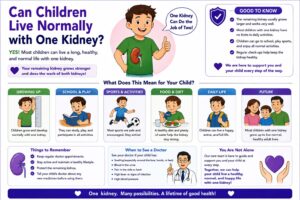
Yes.
Most children who have one healthy kidney after surgery can lead normal, active lives.
Regular follow-up is important to monitor:
- Kidney function
- Blood pressure
- Growth and development
- Urine protein levels
- Overall health
Families are encouraged to support healthy lifestyle habits, including adequate hydration, balanced nutrition, regular physical activity, and routine medical check-ups.
What Is the Prognosis for Wilms Tumor?

The prognosis for Wilms Tumor has improved dramatically due to advances in pediatric oncology and surgery.
Many children with favorable-histology Wilms Tumor achieve excellent long-term survival when treated according to established protocols.
The outlook depends on several factors, including:
- Tumor stage
- Histological subtype
- Lymph node involvement
- Response to treatment
- Whether one or both kidneys are affected
- Overall health of the child
Your treating Pediatric Hemato-Oncologist will discuss your child’s individual prognosis based on their specific diagnosis and treatment response.
Recovery After Treatment for Wilms Tumor
Completing treatment is a major milestone for every child and family. However, recovery does not end when surgery or chemotherapy is completed. Ongoing follow-up is essential to monitor healing, evaluate kidney function, support normal growth and development, and detect any recurrence at the earliest possible stage.
At Basavatarakam Indo-American Cancer Hospital & Research Institute (BIACH&RI), Hyderabad, children who have completed treatment for Wilms Tumor continue to receive long-term follow-up through a structured survivorship program. This helps ensure that every child receives comprehensive care beyond cancer treatment.
Follow-Up Care
The frequency of follow-up visits depends on the child’s age, stage of the disease, treatment received, and overall health.
During these visits, the Pediatric Hemato-Oncologist may recommend:
- Physical examination
- Blood pressure monitoring
- Kidney function tests
- Urine examination
- Complete Blood Count (CBC), when indicated
- Ultrasound or other imaging studies, when clinically required
- Assessment of growth and development
- Nutritional evaluation
These visits provide an opportunity to monitor recovery and address any concerns promptly.
Living with One Kidney
Most children treated for Wilms Tumor have one healthy kidney that is capable of performing normal kidney function.
Parents should encourage healthy lifestyle habits, including:
- Drinking adequate water
- Eating a balanced diet
- Maintaining a healthy body weight
- Regular physical activity appropriate for the child’s age
- Routine medical check-ups
- Informing healthcare providers about the child’s medical history before any future treatment
The treating doctor will advise whether any restrictions are necessary based on the child’s individual condition.
Can Wilms Tumor Come Back?
Although many children are successfully treated, there remains a possibility of recurrence in some cases.
The likelihood of recurrence depends on:
- Stage at diagnosis
- Histological subtype
- Response to treatment
- Surgical findings
- Individual disease characteristics
Regular follow-up appointments are therefore extremely important.
Parents should contact their healthcare team if they notice:
- A new abdominal swelling
- Persistent abdominal pain
- Blood in the urine
- Unexplained fever
- Weight loss
- Persistent fatigue
- Any unusual or persistent symptoms
Long-Term Survivorship
Thanks to advances in pediatric oncology, many children treated for Wilms Tumor grow up to lead healthy and productive lives.
Long-term survivorship care focuses on:
- Kidney health
- Growth and puberty
- Blood pressure control
- Nutrition
- Emotional well-being
- School performance
- Physical activity
- Transition to adult healthcare when appropriate
This ongoing care helps children achieve the best possible quality of life after treatment.
Emotional Well-Being of Families
A childhood cancer diagnosis affects the entire family.
Parents, siblings, and caregivers often experience anxiety, stress, and emotional challenges throughout treatment.
Support services may include:
- Psychological counselling
- Family education
- Nutritional guidance
- School reintegration support
- Social work assistance
- Parent support groups
A family-centred approach helps children and caregivers navigate recovery with confidence.
Frequently Asked Questions (FAQ)
What is Wilms Tumor?
Wilms Tumor, also called Nephroblastoma, is the most common kidney cancer in children. It usually develops in children younger than five years of age.
What is the first sign of Wilms Tumor?
The most common early sign is a painless swelling or lump in the abdomen that parents notice during bathing or dressing.
Is Wilms Tumor painful?
Many children do not experience pain initially. Some may develop abdominal discomfort or pain as the tumor grows.
Can Wilms Tumor be cured?
Many children with Wilms Tumor achieve excellent long-term survival with timely diagnosis and appropriate treatment. The outlook depends on factors such as the stage of the disease, tumor characteristics, and response to treatment.
Does every child need surgery?
Surgery is an important part of treatment for many children. The exact surgical approach depends on the tumor’s size, location, and whether one or both kidneys are involved.
Will my child need chemotherapy?
Many children receive chemotherapy before or after surgery, depending on the stage of the disease and the treatment protocol.
Is radiation therapy always required?
No. Radiation therapy is recommended only for selected children based on the stage, pathology, and risk of recurrence.
Can children live normally with one kidney?
Yes. Most children with one healthy kidney can live active, healthy lives with regular medical follow-up.
Is Wilms Tumor hereditary?
Most cases are not inherited. A small percentage are associated with certain genetic syndromes or congenital conditions.
When should parents consult a Pediatric Oncologist?
Parents should seek prompt medical evaluation if a child develops a persistent abdominal lump, blood in the urine, unexplained abdominal pain, weight loss, persistent fever, or other unexplained symptoms.
Why Choose Basavatarakam Indo-American Cancer Hospital & Research Institute (BIACH&RI)?
Children with Wilms Tumor require coordinated care from experienced specialists across multiple disciplines.
At Basavatarakam Indo-American Cancer Hospital & Research Institute (BIACH&RI), Hyderabad, families have access to comprehensive pediatric oncology services under one roof, including:
- Pediatric Hemato-Oncology specialists
- Pediatric Surgical Oncology
- Advanced diagnostic imaging
- Pediatric pathology
- Pediatric anesthesia and intensive care
- Radiation Oncology
- Pediatric oncology nursing
- Clinical nutrition services
- Rehabilitation and physiotherapy
- Long-term survivorship care
- Multidisciplinary treatment planning
Our commitment is to provide evidence-based, compassionate, and family-centred care throughout every stage of the child’s treatment journey.
Key Takeaways
- Wilms Tumor is the most common kidney cancer in children.
- Early diagnosis improves treatment planning and outcomes.
- The most common symptom is a painless abdominal swelling.
- Surgery is the primary treatment for many children.
- Chemotherapy and radiation therapy are used when indicated.
- Most children can live healthy lives after successful treatment.
- Long-term follow-up is essential for monitoring kidney health and overall well-being.
If your child has a persistent abdominal lump, unexplained abdominal pain, blood in the urine, or other concerning symptoms, seek prompt medical evaluation. Early diagnosis and specialist care can make a significant difference in treatment outcomes.
The Pediatric Hemato-Oncology and Pediatric Surgical Oncology teams at Basavatarakam Indo-American Cancer Hospital & Research Institute, Hyderabad, provide comprehensive diagnosis, treatment, surgery, supportive care, and long-term follow-up for children with Wilms Tumor and other childhood cancers. Contact our team to learn more about specialized pediatric cancer care.