

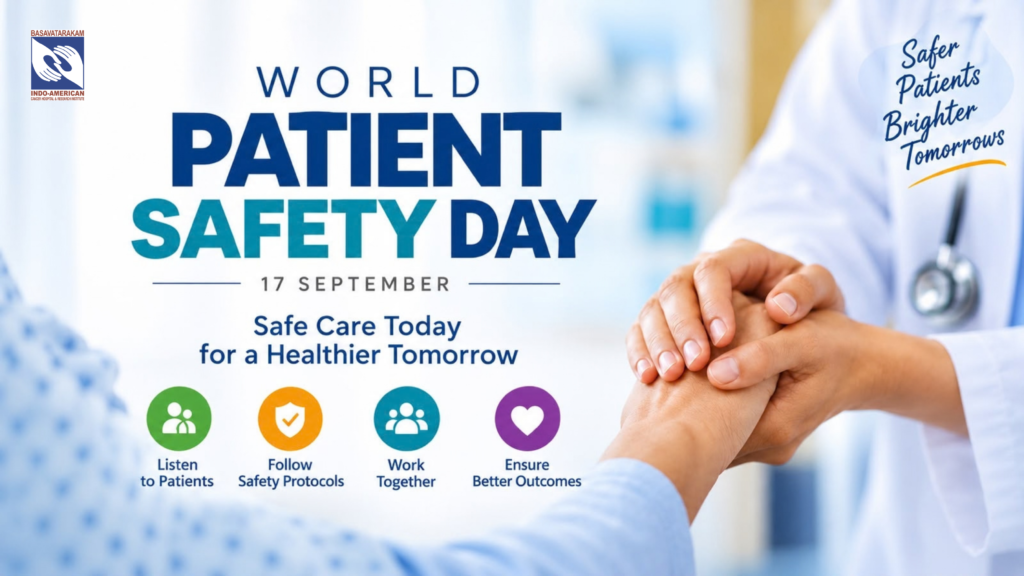
World Patient Safety Day 2026: Safe Care for Life in Cancer Care
Every patient who walks into a hospital comes with hope.
Hope for the right diagnosis.
Hope for the right treatment.
Hope to be heard, understood and cared for.
Patient safety means protecting that hope at every step of the healthcare journey.
Observed every year on 17 September, World Patient Safety Day brings attention to the importance of reducing avoidable harm and strengthening safe, quality healthcare. In 2026, the World Health Organization is focusing on safe care for noncommunicable diseases (NCDs) under the theme “Safe care for noncommunicable diseases” and the slogan “Safe care for life!”.
For people living with cancer and other NCDs, healthcare is often not a single visit or treatment. It can involve screening, diagnosis, surgery, chemotherapy, radiation therapy, medication, rehabilitation, follow-up and supportive or palliative care over an extended period. This makes patient safety an essential part of every stage of care.
What Does Patient Safety Mean?
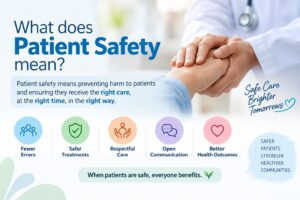
Patient safety is about preventing avoidable harm during healthcare and creating systems that support safe, effective and coordinated care.
It involves much more than following a checklist or protocol.
Patient safety means:
- Checking information carefully
- Communicating clearly
- Confirming the right patient and treatment
- Using medicines safely
- Supporting accurate diagnosis
- Preventing healthcare-associated infections
- Monitoring patients carefully
- Listening to patients and families
- Reporting and learning from safety incidents
- Working together as a healthcare team
Every one of these actions contributes to safer care.
Why Patient Safety Matters in Cancer Care
Cancer care can be complex. Patients may interact with different specialists, departments and healthcare professionals throughout their treatment journey.
There can be multiple stages of care, including:
At every stage, there are opportunities to make care safer.
The WHO notes that people living with NCDs can face increased risks of harm because of the long-term and complex nature of their conditions and their repeated interactions with healthcare systems. Cancer is among the NCDs specifically highlighted in the 2026 campaign.
Safety Begins With Prevention and Early Detection
Patient safety begins even before treatment.
Awareness, preventive healthcare and appropriate screening can support earlier identification of health concerns.
For cancer care, timely evaluation of warning signs and appropriate screening can help patients reach the right healthcare professionals at the right time.
Early detection is therefore not only about finding a disease—it is also about creating a pathway towards timely and appropriate care.
Safe Diagnosis Is Essential
An accurate diagnosis is the foundation for appropriate treatment.
Cancer diagnosis may involve clinical evaluation, imaging, pathology, laboratory investigations and other specialised assessments.
Clear communication between healthcare professionals and careful review of diagnostic information are important components of safe care.
Patients also have an important role: sharing their medical history, medications, previous reports and concerns can help healthcare teams make informed decisions.
Medication Safety Matters
Many patients with cancer may receive multiple medicines during different stages of their care.
Safe medication practices include:
- Correct identification of medicines
- Appropriate dosage and administration
- Checking allergies and possible interactions
- Clear communication with patients
- Monitoring for side effects
- Helping patients understand how and when to take medicines
Medication safety is particularly important when care is complex or involves multiple healthcare providers.
Infection Prevention and Control
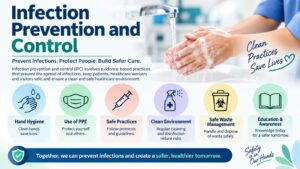
Preventing infections is another important part of patient safety.
Hospitals follow infection prevention and control practices to reduce the risk of healthcare-associated infections.
Simple actions such as appropriate hand hygiene, proper use of protective equipment, safe handling of medical equipment and maintaining clean care environments can contribute to safer healthcare.
Patients Are Partners in Safe Care
Patient safety is not the responsibility of healthcare professionals alone.
Patients and families are partners in safe care.
Patients can contribute by:
- Asking questions when something is unclear
- Sharing complete medical information
- Informing healthcare professionals about allergies and current medicines
- Following treatment instructions
- Keeping follow-up appointments
- Speaking up when they have concerns
- Understanding their care plan
The WHO’s 2026 campaign specifically emphasizes meaningful engagement of people living with NCDs and communities in identifying safety risks and developing solutions together with healthcare professionals.
Communication Is a Key Part of Safety
Good healthcare depends on good communication.
A patient may meet doctors, nurses, pharmacists, technicians, therapists and other healthcare professionals during their treatment journey.
Clear communication between these teams—and with the patient and family—helps ensure that important information is understood and carried forward throughout the care process.
When we communicate better, we care better.
Safety Through the Entire Care Journey
Patient safety should not stop when active treatment ends.
For people living with NCDs, care may continue through:
- Rehabilitation
- Follow-up consultations
- Survivorship care
- Pain management
- Palliative care
- Long-term monitoring
- Supportive care
WHO emphasizes addressing safety risks across the continuum of NCD care, including prevention, early detection, diagnosis, treatment, long-term management and self-care.
Building a Culture of Safety
A strong culture of patient safety means creating an environment where healthcare professionals can communicate openly, identify risks, learn from incidents and continuously improve care.
Safety is not simply a policy displayed on a wall.
Safety is a daily practice.
It is checking.
It is communicating.
It is listening.
It is speaking up.
It is learning.
It is improving.
It is working together.
At Basavatarakam, Every Patient Matters
At Basavatarakam Indo-American Cancer Hospital & Research Institute, we believe that every patient deserves care that protects not only life, but also dignity, trust and quality of life.
Our commitment to cancer care extends beyond treatment. It includes creating a safe, coordinated and compassionate healthcare experience for patients and their families.
Because behind every treatment is a person.
Behind every patient is a family.
And behind every act of safe care is a commitment to life.
Safe Care for Life
On World Patient Safety Day 2026, let us renew our commitment to making healthcare safer for every person living with cancer and other noncommunicable diseases.
Safety is everyone’s responsibility.
Every check matters.
Every voice matters.
Every patient matters.
Safe Care for Life!
Suggested FAQ Section
Adding an FAQ section can also make the blog more useful for visitors and support SEO.
What is World Patient Safety Day?
World Patient Safety Day is observed annually on 17 September to raise awareness about patient safety and encourage action to reduce avoidable harm in healthcare.
What is the theme of World Patient Safety Day 2026?
The 2026 theme is “Safe care for noncommunicable diseases”, with the slogan “Safe care for life!”.
Why is patient safety important in cancer care?
Cancer care can involve multiple stages, healthcare professionals and treatments over an extended period. Maintaining safety throughout this journey helps reduce avoidable risks and supports quality care.
How can patients contribute to their own safety?
Patients can ask questions, provide accurate medical information, inform healthcare professionals about medicines and allergies, understand their care plan and speak up when they have concerns.
What are some important aspects of patient safety?
Important areas include safe diagnosis, medication safety, infection prevention, effective communication, patient engagement, monitoring and learning from safety incidents.