

Neuroblastoma in Children: A Complete Parent’s Guide
When a child is diagnosed with Neuroblastoma, parents often have many questions. What is Neuroblastoma? Why did it occur? Is it curable? What treatment options are available? Can my child lead a normal life after treatment?
Although Neuroblastoma is one of the more complex childhood cancers, advances in pediatric oncology, surgery, chemotherapy, stem cell transplantation, radiation therapy, and immunotherapy have significantly improved outcomes for many children.
At Basavatarakam Indo-American Cancer Hospital & Research Institute (BIACH&RI), Hyderabad, our Pediatric Hemato-Oncology team works closely with Pediatric Surgeons, Radiation Oncologists, Radiologists, Pathologists, Nuclear Medicine Specialists, Pediatric Intensivists, Nutritionists, Rehabilitation Experts, and Oncology Nurses to provide comprehensive care for children diagnosed with Neuroblastoma.
This guide explains everything parents need to know—from early symptoms and diagnosis to modern treatment approaches and long-term follow-up.
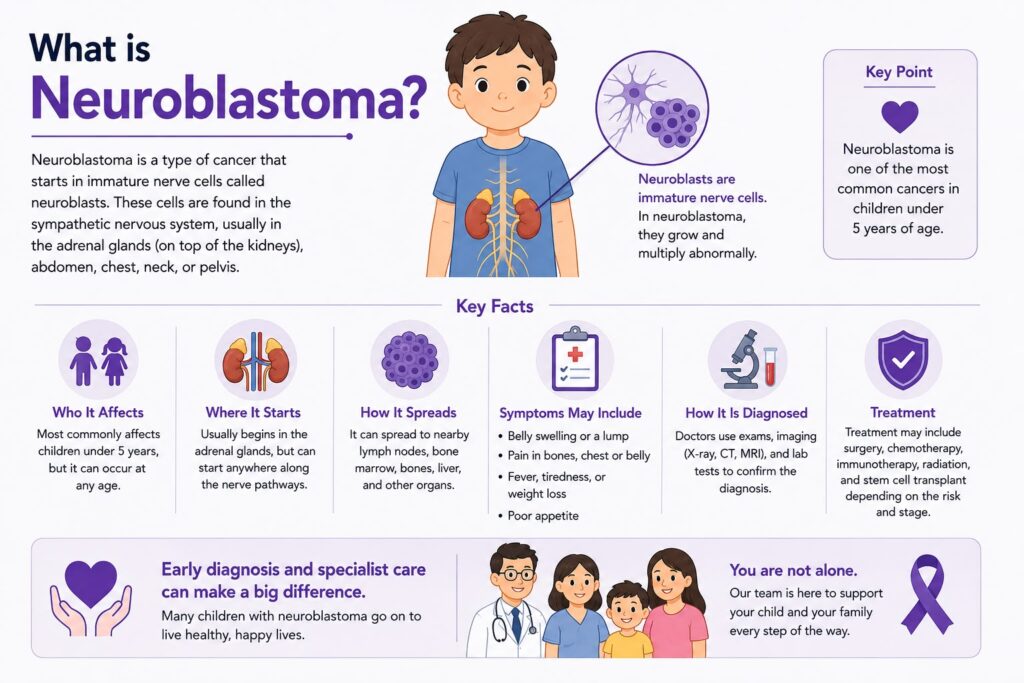
What is Neuroblastoma?
Neuroblastoma is a cancer that develops from immature nerve cells (neuroblasts) that normally form part of the sympathetic nervous system.
During fetal development, these immature cells usually mature into normal nerve tissue. Occasionally, some cells do not mature properly and instead grow uncontrollably, forming a tumor.
Neuroblastoma most commonly develops in the adrenal glands, which sit above the kidneys, but it can also occur anywhere along the sympathetic nervous system, including the:
- Abdomen
- Chest
- Neck
- Pelvis
- Spine
Because these nerves extend throughout the body, Neuroblastoma can arise in several different locations.
“Neuroblastoma is a childhood cancer that develops from immature nerve cells, most commonly in the adrenal glands above the kidneys. It primarily affects infants and children younger than five years. Symptoms may include an abdominal lump, abdominal pain, fever, bone pain, weight loss, fatigue, or swelling around the eyes. Treatment depends on the risk category and may include surgery, chemotherapy, radiation therapy, stem cell transplantation, immunotherapy, and comprehensive supportive care.”
How Common is Neuroblastoma?
Neuroblastoma is one of the most common solid tumors in children, especially in infants and children under five years of age.
It accounts for approximately 8–10% of all childhood cancers and is among the leading causes of cancer-related illness in very young children.
Although uncommon compared with childhood infections, it is one of the most frequently treated pediatric solid tumors at specialized children’s cancer centres.
Which Children are Most Commonly Affected?
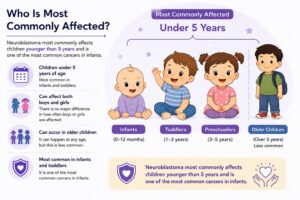
Neuroblastoma most often affects:
- Infants
- Toddlers
- Children younger than five years
It is uncommon in older children and rare in teenagers.
Boys and girls can both develop Neuroblastoma.
What Causes Neuroblastoma?
One of the first questions parents ask is:
“Did we do something wrong?”
The answer is No.
In most children, the exact cause is unknown.
Neuroblastoma develops because of changes in immature nerve cells during early development.
For the vast majority of families:
- It is not caused by food.
- It is not caused by parenting.
- It is not contagious.
- It is not the result of routine childhood activities.
A small number of cases are associated with inherited genetic changes, but most Neuroblastomas occur sporadically without a family history.
Where Does Neuroblastoma Usually Develop?
The tumor most commonly begins in:
Adrenal Glands (Most Common)
Located above the kidneys, these glands produce hormones that help regulate blood pressure, metabolism, and the body’s response to stress.
Abdomen
Many Neuroblastomas develop in the abdomen, where they may grow silently before symptoms become noticeable.
Chest
Tumors in the chest may cause breathing difficulties, cough, or chest discomfort.
Neck
Neuroblastoma in the neck may present as a painless swelling.
Pelvis
Pelvic tumors can sometimes affect bladder or bowel function depending on their size and location.
Early Signs and Symptoms of Neuroblastoma
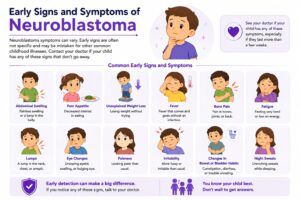
The symptoms depend on the location of the tumor and whether it has spread.
Parents should seek medical evaluation if symptoms persist or worsen.
Common symptoms include:
- A lump or swelling in the abdomen
- Persistent abdominal pain
- Loss of appetite
- Weight loss
- Fever without a clear cause
- Bone pain
- Limping
- Swelling around the eyes
- Dark circles around the eyes
- Fatigue
- Constipation
- Difficulty passing urine
- Persistent cough (if located in the chest)
- Back pain
- Weakness in the legs (if the tumor presses on the spinal cord)
Many of these symptoms are caused by conditions other than cancer, but persistent or unexplained symptoms should always be evaluated by a pediatrician.
Neuroblastoma in Children: Symptoms, Causes, Diagnosis, Treatment & Survival | Basavatarakam Cancer Hospital Hyderabad
How Is Neuroblastoma Diagnosed?
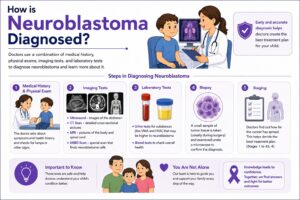
Early and accurate diagnosis is one of the most important factors in planning successful treatment for Neuroblastoma. Because the symptoms can resemble many common childhood illnesses, children with persistent or unexplained symptoms should be evaluated promptly by an experienced pediatric oncology team.
At Basavatarakam Indo-American Cancer Hospital & Research Institute (BIACH&RI), Hyderabad, diagnosing Neuroblastoma involves a multidisciplinary approach using advanced imaging, laboratory investigations, pathology, and molecular testing. The goal is not only to confirm the diagnosis but also to determine the exact extent of the disease and identify features that help guide treatment.
Medical History and Physical Examination
The Pediatric Hemato-Oncologist begins with a detailed assessment of the child’s symptoms and overall health.
Parents may be asked about:
- Duration of abdominal swelling or pain
- Fever
- Weight loss
- Appetite changes
- Bone pain
- Difficulty walking
- Weakness
- Constipation
- Changes in urination
- Family medical history
- Previous illnesses
A thorough physical examination helps evaluate:
- Abdominal mass
- Enlarged liver
- Enlarged lymph nodes
- Eye changes
- Neurological symptoms
- Blood pressure
- General growth and nutritional status
Blood Tests
Blood investigations provide important information about the child’s general health before treatment.
These may include:
- Complete Blood Count (CBC)
- Liver Function Tests
- Kidney Function Tests
- Electrolytes
- Blood Clotting Profile
- Lactate Dehydrogenase (LDH)
- Ferritin (when clinically indicated)
These tests also help assess whether the disease has affected bone marrow function or other organs.
Urine Tests
One of the characteristic features of Neuroblastoma is that many tumors produce chemicals called catecholamines.
Doctors may measure their breakdown products in the urine, including:
- Vanillylmandelic Acid (VMA)
- Homovanillic Acid (HVA)
Elevated levels can support the diagnosis when interpreted alongside imaging and biopsy findings.
Ultrasound Examination
An abdominal ultrasound is often the first imaging test performed when a child presents with abdominal swelling.
Ultrasound helps doctors determine:
- Whether a mass is present
- Its approximate size
- Its location
- Whether nearby organs appear affected
Although ultrasound is useful as an initial investigation, additional imaging is usually required for treatment planning.
CT Scan
A Contrast-Enhanced CT (Computed Tomography) scan provides detailed images of the tumor and surrounding structures.
It helps determine:
- Exact tumor size
- Relationship to major blood vessels
- Involvement of nearby organs
- Presence of enlarged lymph nodes
- Possible spread within the chest or abdomen
CT imaging is an important component of surgical planning.
MRI Scan
Magnetic Resonance Imaging (MRI) provides excellent visualization of soft tissues.
MRI is particularly useful when:
- The tumor is close to the spinal cord
- There is concern about spinal canal involvement
- Detailed evaluation of surrounding tissues is required
MRI helps surgeons and oncologists plan treatment safely.
MIBG Scan
One of the most important investigations for Neuroblastoma is the Metaiodobenzylguanidine (MIBG) scan.
Many Neuroblastoma cells absorb MIBG, allowing doctors to identify:
- The primary tumor
- Spread to bones
- Spread to bone marrow
- Multiple disease sites
MIBG scanning plays a key role in staging and monitoring response to treatment in many children.
PET/CT Scan
In selected situations, PET/CT may be recommended when additional information is required.
PET/CT combines metabolic imaging with anatomical imaging to evaluate disease activity and assist with treatment planning, depending on the clinical scenario.
Bone Marrow Aspiration and Biopsy
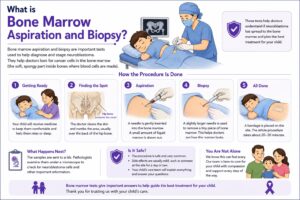
Because Neuroblastoma can spread to the bone marrow, doctors may recommend:
- Bone Marrow Aspiration
- Bone Marrow Biopsy
These procedures help determine whether cancer cells are present in the marrow.
Bone marrow involvement is one of the factors used during staging and risk assessment.
Tumor Biopsy
A biopsy is essential to confirm the diagnosis.
During the procedure, a surgeon or interventional radiologist removes a small tissue sample from the tumor.
Specialist pathologists examine the tissue under the microscope and perform additional laboratory studies to determine:
- Whether the tumor is Neuroblastoma
- Degree of tumor differentiation
- Biological characteristics
- Molecular features
The biopsy provides the definitive diagnosis that guides treatment.
Molecular and Genetic Testing
Modern pediatric oncology increasingly relies on molecular diagnostics to understand the biological behavior of Neuroblastoma.
Depending on the clinical situation, testing may evaluate features associated with prognosis and treatment planning.
These investigations help identify children who may require more intensive therapy and those who may be candidates for specific treatment approaches.
How Is Neuroblastoma Staged?
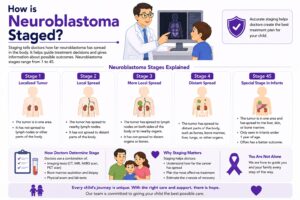
Staging describes:
- Where the tumor started
- Whether it has spread
- Which organs are involved
- Overall extent of disease
Accurate staging allows doctors to choose the most appropriate treatment plan.
Internationally accepted staging systems are used by pediatric oncology teams to classify Neuroblastoma based on imaging findings, pathology, and other diagnostic investigations.
Risk Classification
Not every child with Neuroblastoma receives the same treatment.
Children are generally classified into:
Low-Risk Disease
These children may require surgery alone or less intensive treatment, depending on individual circumstances.
Intermediate-Risk Disease
Treatment usually combines surgery and chemotherapy, with the exact approach tailored to the child’s disease characteristics.
High-Risk Disease
Children with high-risk Neuroblastoma often require a combination of treatments that may include:
- Intensive chemotherapy
- Surgery
- Radiation therapy
- Stem cell transplantation (where indicated)
- Immunotherapy (when appropriate and available)
- Long-term follow-up
The treatment strategy is individualized based on the child’s clinical condition and tumor biology.
Multidisciplinary Treatment Planning at BIACH&RI
Every child diagnosed with Neuroblastoma deserves a carefully coordinated treatment plan.
At Basavatarakam Indo-American Cancer Hospital & Research Institute, treatment planning involves collaboration among specialists from multiple disciplines, including:
- Pediatric Hemato-Oncology
- Pediatric Surgery
- Radiation Oncology
- Radiology
- Nuclear Medicine
- Pathology
- Pediatric Intensive Care
- Pediatric Anaesthesia
- Nutrition Services
- Physiotherapy and Rehabilitation
- Pediatric Oncology Nursing
- Psycho-Oncology
The team reviews all clinical findings, imaging studies, laboratory reports, and pathology results before recommending an individualized treatment plan.
This multidisciplinary approach ensures that every child receives evidence-based care while addressing the physical, emotional, nutritional, and psychological needs of both the child and family.
Treatment of Neuroblastoma in Children
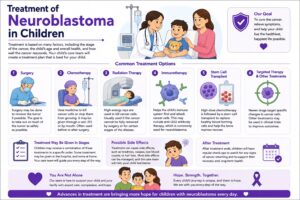
Treatment for Neuroblastoma is personalized because no two children have exactly the same disease. The treatment plan depends on several important factors, including the child’s age, the location of the tumor, whether the cancer has spread, the biological characteristics of the tumor, and the risk category.
At Basavatarakam Indo-American Cancer Hospital & Research Institute (BIACH&RI), Hyderabad, every child is evaluated by a multidisciplinary Pediatric Oncology Tumor Board. The treatment strategy is carefully planned to achieve the best possible outcome while minimizing treatment-related side effects and preserving the child’s quality of life.
The primary goals of treatment are to:
- Completely remove or destroy the tumor whenever possible.
- Prevent the disease from recurring.
- Minimize short-term and long-term complications.
- Help children return to a healthy and active life.
Treatment Options for Neuroblastoma
Depending on the stage and risk category, treatment may include one or more of the following:
- Surgery
- Chemotherapy
- Radiation Therapy
- High-Dose Chemotherapy with Stem Cell Rescue (for selected patients)
- Immunotherapy (where indicated)
- Supportive Care
- Long-term Follow-up
Each child receives an individualized treatment plan.
Surgery for Neuroblastoma
Surgery is one of the most important treatments for Neuroblastoma.
The objective of surgery is to remove as much of the tumor as safely possible without damaging nearby organs, nerves, or major blood vessels.
For children with low-risk Neuroblastoma, surgery alone may be sufficient.
For larger or high-risk tumors, chemotherapy is often given first to shrink the tumor before surgery. This approach may improve the safety and effectiveness of the operation.
Pediatric surgeons experienced in treating childhood cancers carefully assess:
- Tumor location
- Size
- Blood vessel involvement
- Relationship to nearby organs
- Whether complete removal is possible
The surgical plan is individualized for every child.
Chemotherapy
Chemotherapy is the backbone of treatment for many children with Neuroblastoma.
It uses medicines that travel through the bloodstream to destroy cancer cells throughout the body.
Children with intermediate- and high-risk Neuroblastoma usually receive multiple cycles of chemotherapy.
The goals of chemotherapy include:
- Shrinking the primary tumor
- Destroying cancer cells that may have spread
- Making surgery safer
- Reducing the risk of recurrence
Treatment is given in carefully planned cycles, allowing the child’s body time to recover between treatments.
Common Side Effects of Chemotherapy
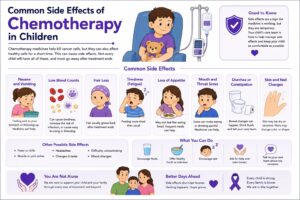
Every child responds differently.
Possible side effects include:
- Hair loss
- Nausea and vomiting
- Loss of appetite
- Mouth ulcers
- Fatigue
- Low blood counts
- Increased risk of infections
- Bruising or bleeding
- Temporary weakness
Today’s supportive care measures have significantly improved the ability to prevent and manage many chemotherapy-related side effects.
Radiation Therapy
Radiation therapy uses precisely targeted high-energy radiation to destroy remaining cancer cells.
It is not required for every child.
Radiation therapy may be recommended:
- When surgery cannot completely remove the tumor.
- For high-risk Neuroblastoma.
- If cancer remains after chemotherapy.
- In selected situations where local disease control is important.
Modern radiation techniques are carefully planned to maximize tumor control while minimizing exposure to surrounding healthy tissues.
High-Dose Chemotherapy and Stem Cell Transplantation
Some children with high-risk Neuroblastoma may require high-dose chemotherapy followed by autologous stem cell transplantation, also known as stem cell rescue.
In this procedure:
- The child’s own healthy stem cells are collected and stored before high-dose chemotherapy.
- Intensive chemotherapy is administered to destroy remaining cancer cells.
- The stored stem cells are then returned to help restore normal bone marrow function.
Not every child requires this treatment. The decision depends on the risk category, treatment response, and recommendations of the Pediatric Oncology team.
Immunotherapy
Immunotherapy has become an important treatment option for selected children with high-risk Neuroblastoma.
Unlike chemotherapy, which directly attacks rapidly dividing cells, immunotherapy helps the body’s immune system recognize and destroy cancer cells.
For selected patients, immunotherapy may be incorporated into the overall treatment plan as part of internationally accepted protocols.
The suitability of immunotherapy depends on the child’s diagnosis, treatment response, and availability of appropriate therapies.
Targeted Therapy
Advances in cancer research have led to the development of targeted therapies for certain cancers.
For selected patients with specific molecular or genetic alterations, targeted treatment options may be considered as part of individualized care.
Treatment decisions are based on clinical evaluation and current evidence.
Supportive Care During Treatment
Successful Neuroblastoma treatment involves much more than chemotherapy or surgery.
Children benefit from comprehensive supportive care throughout their treatment journey.
Supportive care may include:
Infection Prevention
Because chemotherapy can temporarily weaken the immune system, preventing infections is essential.
Families receive guidance regarding:
- Hand hygiene
- Food safety
- Avoiding exposure to contagious illnesses
- Recognizing early signs of infection
- When to seek urgent medical attention
Blood Product Support
Some children require:
- Red blood cell transfusions
- Platelet transfusions
These treatments help manage anemia and reduce the risk of bleeding during intensive therapy.
Nutritional Care
Proper nutrition plays a vital role in recovery.
Pediatric dietitians help families maintain adequate nutrition despite:
- Poor appetite
- Nausea
- Mouth ulcers
- Taste changes
- Increased nutritional requirements
Individualized nutrition plans support healing, growth, and treatment tolerance.
Pain Management
Pain may result from:
- The tumor itself
- Surgery
- Medical procedures
- Treatment-related side effects
The healthcare team uses age-appropriate pain management strategies to keep children as comfortable as possible throughout treatment.
Psychological Support
Cancer affects the emotional well-being of both the child and the family.
Children may experience:
- Fear
- Anxiety
- Separation from friends and school
- Changes in routine
Parents may experience emotional stress, uncertainty, and caregiver fatigue.
Psychological counselling and emotional support are important components of comprehensive pediatric cancer care.
Rehabilitation and Physical Activity
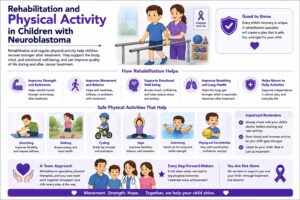
Some children benefit from physiotherapy and rehabilitation during or after treatment.
Rehabilitation helps:
- Improve strength
- Restore mobility
- Reduce fatigue
- Enhance quality of life
- Support return to normal activities
Can Neuroblastoma Be Cured?
Many parents ask:
“Can my child be cured?”
The answer depends on several factors, including:
- Age at diagnosis
- Stage of the disease
- Risk category
- Tumor biology
- Response to treatment
Children with low-risk Neuroblastoma often have an excellent prognosis with appropriate treatment.
For children with intermediate- and high-risk disease, advances in surgery, chemotherapy, radiation therapy, stem cell transplantation, immunotherapy, and supportive care have significantly improved outcomes over the past two decades.
Every child’s situation is unique. The treating Pediatric Hemato-Oncologist is the best person to discuss the expected outlook based on the child’s specific diagnosis.
Excellent. We now complete the FINAL SECTION of the Neuroblastoma pillar article.
Life After Neuroblastoma Treatment
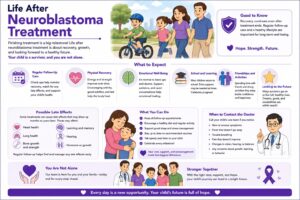
Completing treatment for Neuroblastoma is a significant milestone for every child and family. However, follow-up care remains an essential part of recovery. Even after successful treatment, children require regular medical evaluations to monitor their health, detect any recurrence at an early stage, manage late effects of treatment, and support normal growth and development.
At Basavatarakam Indo-American Cancer Hospital & Research Institute (BIACH&RI), Hyderabad, survivorship care is an integral part of pediatric oncology. Our team continues to work with families long after treatment has ended to help children return to school, resume physical activities, and achieve the best possible quality of life.
Follow-up After Treatment
The frequency of follow-up visits depends on the child’s diagnosis, treatment received, and overall health.
During these visits, doctors may evaluate:
- General physical health
- Growth and developmental milestones
- Blood investigations
- Imaging studies, when indicated
- Nutritional status
- Organ function
- Emotional and psychological well-being
- School performance and social adjustment
Regular follow-up allows the healthcare team to identify and manage any concerns promptly.
Can Neuroblastoma Come Back?
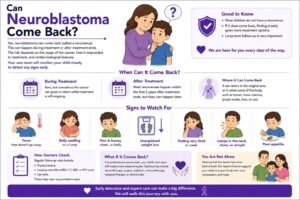
Like many cancers, Neuroblastoma can recur in some children. The risk of recurrence depends on several factors, including:
- Initial stage of the disease
- Risk category
- Tumor biology
- Response to treatment
For this reason, it is important that families attend all scheduled follow-up appointments and promptly report any new symptoms to their treating doctor.
Long-Term Survivorship Care
Many children treated for Neuroblastoma grow into healthy adolescents and adults. Survivorship care focuses on helping these children achieve their full potential while monitoring for any long-term effects of treatment.
Areas that may require ongoing assessment include:
- Physical growth
- Learning and school performance
- Hormonal development
- Heart function
- Kidney function
- Hearing, when certain chemotherapy medicines have been used
- Bone health
- Emotional well-being
Every child’s follow-up plan is individualized.
Supporting Families Through Recovery
Recovery from childhood cancer is not only physical but also emotional. Parents, siblings, and caregivers often need support while adjusting to life after treatment.
Families may benefit from:
- Psychological counselling
- Nutritional guidance
- School reintegration planning
- Rehabilitation services
- Parent support groups
- Survivorship education
A family-centred approach helps children regain confidence and return to everyday life.
Frequently Asked Questions (FAQ)
What is Neuroblastoma?
Neuroblastoma is a cancer that develops from immature nerve cells, most commonly in the adrenal glands or abdomen. It primarily affects infants and young children.
What are the first symptoms of Neuroblastoma?
Symptoms vary depending on the location of the tumor but may include abdominal swelling, abdominal pain, loss of appetite, unexplained weight loss, fever, bone pain, limping, swelling around the eyes, or persistent fatigue.
At what age does Neuroblastoma usually occur?
Most cases are diagnosed in children younger than five years of age, particularly in infants and toddlers.
Is Neuroblastoma hereditary?
Most cases are not inherited. Only a small percentage are associated with inherited genetic changes.
Can Neuroblastoma be cured?
Many children, particularly those with low-risk disease, can be successfully treated. Outcomes depend on the stage, risk group, tumor biology, and response to treatment.
Is surgery always required?
Not always. Treatment depends on the risk category. Some children undergo surgery alone, while others require chemotherapy before surgery or a combination of therapies.
Does every child need chemotherapy?
No. Children with low-risk Neuroblastoma may not require chemotherapy, while those with intermediate- or high-risk disease often receive chemotherapy as part of their treatment.
Is Bone Marrow Transplant required for every child?
No. High-dose chemotherapy followed by stem cell rescue is generally considered only for selected children with high-risk Neuroblastoma, based on the treating team’s assessment.
Can children return to school after treatment?
Many children return to school after completing treatment. The timing depends on their recovery, immune status, and advice from the treating doctor.
When should parents consult a Pediatric Oncologist?
Parents should seek medical evaluation if a child has persistent abdominal swelling, unexplained weight loss, bone pain, prolonged fever, unusual fatigue, or any persistent symptom that does not improve with routine treatment.
Why Choose Basavatarakam Indo-American Cancer Hospital & Research Institute (BIACH&RI)?
Choosing the right hospital for a child with cancer is one of the most important decisions a family can make.
At Basavatarakam Indo-American Cancer Hospital & Research Institute (BIACH&RI), Hyderabad, children with Neuroblastoma receive coordinated care from a dedicated multidisciplinary team committed to delivering evidence-based treatment and compassionate support.
Our pediatric oncology services include:
- Dedicated Pediatric Hemato-Oncology specialists
- Multidisciplinary tumor board discussions
- Advanced diagnostic facilities
- Pediatric oncology nursing
- Pediatric surgical oncology support
- Radiation oncology services
- Bone Marrow Transplant program
- Nutritional counselling
- Rehabilitation services
- Long-term survivorship care
- Family-centred treatment planning
Key Takeaways
- Neuroblastoma is one of the most common solid tumors in young children.
- It most often develops in the adrenal glands or abdomen.
- Early diagnosis allows timely treatment planning.
- Treatment depends on the child’s risk category and may include surgery, chemotherapy, radiation therapy, stem cell transplantation, or immunotherapy.
- Comprehensive supportive care is essential throughout treatment.
- Long-term follow-up helps monitor recovery, growth, and overall well-being.
- Specialized multidisciplinary care provides children with the best opportunity for successful treatment.
Early diagnosis can make a meaningful difference in the treatment of childhood cancers. If your child has persistent abdominal swelling, unexplained fever, weight loss, bone pain, or other concerning symptoms, consult a qualified Pediatric Hemato-Oncologist without delay.
The Pediatric Hemato-Oncology team at Basavatarakam Indo-American Cancer Hospital & Research Institute, Hyderabad, provides comprehensive evaluation, diagnosis, treatment, and long-term follow-up for children with Neuroblastoma and other childhood cancers. Contact our team to learn more about specialized pediatric cancer care and available treatment options.