

Pediatric Brain Tumors: A Complete Parent’s Guide
When a Child Has a Brain Tumor, Every Moment Matters
Hearing that your child may have a brain tumor is one of the most overwhelming experiences any parent can face. Questions arise immediately:
- Is it cancer?
- Can it be treated?
- Will surgery be needed?
- Will my child recover?
- Can my child return to a normal life?
The encouraging news is that tremendous advances in Pediatric Neuro-Oncology, neurosurgery, medical oncology, radiation oncology, neuroimaging, and rehabilitation have transformed the care of children with brain tumors. Today, many pediatric brain tumors can be treated successfully, and many children go on to lead active and fulfilling lives.
Early diagnosis, expert evaluation, and treatment by an experienced multidisciplinary team are essential to achieving the best possible outcomes.
“Pediatric brain tumors are abnormal growths that develop within a child’s brain or central nervous system. They may be benign or malignant and can affect brain function because of their location. Common symptoms include persistent headaches, morning vomiting, seizures, balance problems, and vision changes. Diagnosis typically involves MRI and specialist evaluation, while treatment may include surgery, chemotherapy, radiation therapy, targeted therapy, and rehabilitation. Early diagnosis and care from a multidisciplinary Neuro-Oncology and Pediatric Hemato-Oncology team can improve treatment planning and long-term outcomes.”
Comprehensive Pediatric Neuro-Oncology Care at BIACH&RI
At Basavatarakam Indo-American Cancer Hospital & Research Institute (BIACH&RI), Hyderabad, children with brain tumors are managed through the combined expertise of our Pediatric Hemato-Oncology Department and Neuro-Oncology Department.
This collaborative approach ensures that every child benefits from coordinated care by specialists experienced in childhood brain tumors.
Our multidisciplinary team includes:
- Pediatric Hemato-Oncologists
- Neuro-Oncologists
- Neurosurgeons
- Radiation Oncologists
- Pediatric Neurologists
- Neuroradiologists
- Neuropathologists
- Pediatric Intensivists
- Pediatric Anesthesiologists
- Rehabilitation Medicine Specialists
- Physiotherapists
- Occupational Therapists
- Speech and Swallow Therapists
- Clinical Psychologists
- Clinical Nutritionists
- Pediatric Oncology Nurses
Every case is discussed in a Multidisciplinary Tumor Board, where experts review imaging, pathology, molecular findings, and the child’s overall condition to develop a personalized treatment plan based on internationally accepted clinical guidelines.
What Is a Pediatric Brain Tumor?
A pediatric brain tumor is an abnormal growth of cells that develops within the brain or central nervous system (CNS).
Brain tumors may be:
- Benign (non-cancerous), which generally grow more slowly but can still affect important brain structures because of their location.
- Malignant (cancerous), which tend to grow more aggressively and require specialized treatment.
Regardless of whether a tumor is benign or malignant, it can interfere with critical functions such as movement, speech, vision, balance, memory, hormone regulation, and breathing, making prompt evaluation and expert care essential.
Why Specialized Neuro-Oncology Matters
Brain tumors are unlike cancers in many other parts of the body. Treatment decisions must balance effective tumor control with preservation of neurological function, learning, development, and quality of life.
This is why specialized Neuro-Oncology care is so important.
A dedicated Neuro-Oncology program brings together specialists who understand:
- The complex anatomy of the brain and spinal cord
- Advanced neuroimaging techniques
- Modern neurosurgical approaches
- Pediatric-specific chemotherapy protocols
- Precision radiation techniques
- Molecular classification of brain tumors
- Rehabilitation after treatment
- Long-term neurocognitive follow-up
A coordinated, multidisciplinary approach helps ensure that treatment is individualized to each child’s needs.
Why Do Brain Tumors Develop in Children?
In most children, the exact cause is unknown.
Brain tumors develop when genetic changes occur within brain cells, causing them to grow in an uncontrolled manner.
Current scientific evidence indicates that most pediatric brain tumors are not caused by diet, mobile phone use, minor head injuries, or routine childhood activities.
Some children with rare inherited genetic syndromes have an increased risk of developing specific brain tumors, but these cases represent only a small proportion of diagnoses.
Types of Pediatric Brain Tumors
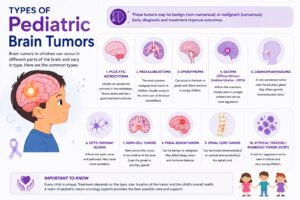
Children can develop many different types of brain tumors, each requiring a unique treatment approach.
Some of the more common pediatric brain tumors include:
- Medulloblastoma
- Pilocytic Astrocytoma
- Diffuse Midline Glioma
- Ependymoma
- Craniopharyngioma
- Low-Grade Glioma
- High-Grade Glioma
- Germ Cell Tumors of the Central Nervous System
- Choroid Plexus Tumors
The exact type of tumor is determined through imaging studies and, when appropriate, pathological and molecular evaluation.
Why Early Diagnosis Is Critical
Brain tumors often begin with symptoms that resemble common childhood illnesses. However, when symptoms persist, worsen over time, or occur in combination, they require careful medical evaluation.
Early diagnosis can:
- Reduce the risk of neurological complications
- Improve treatment planning
- Increase the possibility of complete tumor removal when appropriate
- Help preserve neurological function
- Improve long-term outcomes
Symptoms of Pediatric Brain Tumors
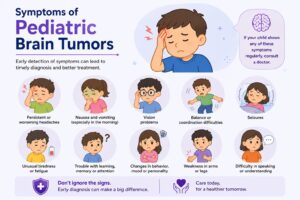
The symptoms depend on:
- The child’s age
- The tumor’s location
- The size of the tumor
- The speed at which it is growing
- The pressure it creates within the skull
Common symptoms include:
- Persistent headaches, especially those that are worse in the morning or wake the child from sleep
- Recurrent vomiting without an obvious stomach illness
- New-onset seizures
- Difficulty walking or maintaining balance
- Weakness in an arm or leg
- Changes in vision, such as blurred or double vision
- Persistent dizziness
- Changes in speech or swallowing
- Declining school performance or concentration
- Unusual sleepiness or changes in behaviour
- Hormonal disturbances, such as poor growth, delayed puberty, or excessive thirst and urination
These symptoms do not necessarily mean that a child has a brain tumor, but they do warrant prompt medical assessment, especially if they persist or progressively worsen.
Excellent. This is where we start building true Neuro-Oncology authority. This section will target searches for:
- Best Neuro-Oncology Hospital
- Best Neuro-Oncologist
- Pediatric Brain Tumor Specialist
- Brain Tumor MRI
- Brain Tumor Diagnosis
- Pediatric Neurosurgeon
- Neuro-Oncology Department
- Brain Cancer Diagnosis
From this article onwards, every department in BIACH&RI will be naturally strengthened.
Why Early and Accurate Diagnosis Matters
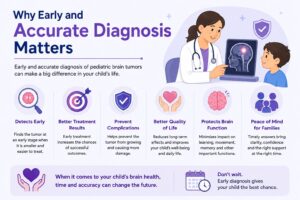
Diagnosing a brain tumor is much more than simply confirming the presence of a growth in the brain. The type, location, size, molecular characteristics, and relationship to critical brain structures all influence treatment decisions.
At Basavatarakam Indo-American Cancer Hospital & Research Institute (BIACH&RI), Hyderabad, children with suspected brain tumors undergo a comprehensive evaluation through our Neuro-Oncology Department in close collaboration with the Pediatric Hemato-Oncology Department. This multidisciplinary approach helps ensure an accurate diagnosis and an individualized treatment plan.
Specialized Neuro-Oncology Evaluation at BIACH&RI
Children with suspected brain tumors are assessed by a multidisciplinary team that may include:
- Neuro-Oncologists
- Pediatric Hemato-Oncologists
- Neurosurgeons
- Pediatric Neurologists
- Neuroradiologists
- Neuropathologists
- Radiation Oncologists
- Pediatric Intensivists
- Pediatric Anesthesiologists
- Rehabilitation Specialists
- Clinical Nutritionists
- Pediatric Oncology Nurses
Every child is evaluated individually to determine the safest and most effective treatment strategy.
Detailed Medical History
The evaluation begins with a detailed discussion with the child’s parents or caregivers.
The medical team will ask about:
- Duration of symptoms
- Headache pattern
- Episodes of vomiting
- Seizures
- Changes in walking or balance
- Vision problems
- School performance
- Behavioural changes
- Developmental milestones
- Family history
- Previous medical conditions
Even small details can help identify the location and possible nature of the brain tumor.
Neurological Examination
A detailed neurological examination provides valuable information about how different parts of the brain are functioning.
Doctors assess:
- Muscle strength
- Balance and coordination
- Walking pattern
- Reflexes
- Vision
- Eye movements
- Hearing
- Speech and language
- Memory
- Sensory function
- Cranial nerve function
This examination helps determine which area of the brain may be affected and guides further investigations.
MRI – The Most Important Investigation
Magnetic Resonance Imaging (MRI) is the preferred imaging technique for evaluating pediatric brain tumors.
MRI provides highly detailed images of:
- Brain tissue
- Brainstem
- Cerebellum
- Ventricles
- Cranial nerves
- Blood vessels
- Spinal cord (when indicated)
MRI helps determine:
- Tumor location
- Tumor size
- Extent of disease
- Pressure on surrounding brain structures
- Hydrocephalus (fluid accumulation)
- Relationship to critical brain areas
Modern MRI techniques may also include specialized sequences that help characterize the tumor and assist with surgical planning.
CT Scan
A CT scan may be used in emergency situations, particularly when rapid assessment is required.
CT can help identify:
- Bleeding
- Hydrocephalus
- Large brain masses
- Bone involvement
However, MRI usually provides greater detail for treatment planning.
Advanced Neuroimaging
Depending on the clinical situation, additional imaging techniques may be considered, such as:
- MR Spectroscopy
- MR Perfusion Imaging
- Diffusion Tensor Imaging (DTI)
- Functional MRI (fMRI)
These advanced studies can provide additional information about tumor biology and the relationship of the tumor to important functional areas of the brain.
Examination of the Spine
Certain pediatric brain tumors can spread through the cerebrospinal fluid.
When clinically indicated, MRI of the spine may be recommended to evaluate for spinal involvement.
Cerebrospinal Fluid (CSF) Examination
For selected tumor types and only when it is safe to do so, analysis of cerebrospinal fluid may help determine whether tumor cells have spread within the central nervous system.
The decision to perform this test depends on the child’s condition and the treating team’s assessment.
Brain Tumor Biopsy
Although imaging provides important information, some children require a biopsy to establish a definitive diagnosis.
During a biopsy, a small tissue sample is obtained and examined by a neuropathologist.
The biopsy helps determine:
- Exact tumor type
- Tumor grade
- Biological behaviour
- Molecular characteristics
- Treatment options
Not every child requires a separate biopsy, as tissue may be obtained during surgery.
Neuropathology
The tissue sample is carefully examined by specialists in Neuropathology.
This evaluation identifies:
- Tumor classification
- Grade
- Microscopic features
- Cell type
- Growth pattern
Accurate pathological diagnosis is essential because treatment differs significantly among pediatric brain tumors.
Molecular Testing
Modern pediatric neuro-oncology increasingly relies on molecular testing to better understand tumor biology.
When appropriate, molecular analysis may help:
- Confirm the diagnosis
- Classify the tumor more accurately
- Estimate prognosis
- Guide treatment decisions
- Identify eligibility for targeted therapies or clinical trials, where available
This reflects the growing role of precision medicine in pediatric oncology.
WHO Classification of Brain Tumors
Brain tumors are classified according to internationally accepted criteria developed by the World Health Organization (WHO).
This classification considers:
- Histology (appearance under the microscope)
- Molecular characteristics
- Genetic alterations
Using standardized classification helps ensure consistent diagnosis and treatment planning across specialized centers.
Tumor Grading
Brain tumors are also assigned a grade that reflects how the tumor cells appear and behave.
In general:
- Lower-grade tumors tend to grow more slowly.
- Higher-grade tumors tend to grow more aggressively and often require more intensive treatment.
The grade is only one factor considered when developing a treatment plan.
Multidisciplinary Tumor Board at BIACH&RI
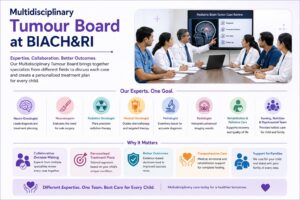
One of the strengths of Basavatarakam Indo-American Cancer Hospital & Research Institute (BIACH&RI) is its multidisciplinary approach to cancer care.
Every pediatric brain tumor case can be reviewed by a Multidisciplinary Tumor Board, bringing together experts from:
- Neuro-Oncology
- Pediatric Hemato-Oncology
- Neurosurgery
- Radiation Oncology
- Neuroradiology
- Neuropathology
- Pediatric Neurology
- Rehabilitation Medicine
- Pediatric Critical Care
Together, the team reviews clinical findings, imaging, pathology, and molecular information to develop an individualized treatment strategy based on current evidence and international guidelines.
This collaborative decision-making process helps ensure that each child receives comprehensive, coordinated care tailored to their specific diagnosis.
Pediatric Brain Tumors: Symptoms, Diagnosis, Advanced Treatment & Neuro-Oncology Care for Children
Part 3 – Advanced Treatment, Pediatric Neuro-Oncology & Brain Tumor Surgery
Personalized Treatment for Every Child
No two pediatric brain tumors are exactly alike. Even children diagnosed with the same type of tumor may require different treatment strategies depending on the tumor’s location, size, molecular characteristics, and overall health of the child.
At Basavatarakam Indo-American Cancer Hospital & Research Institute (BIACH&RI), Hyderabad, treatment planning is personalized through close collaboration between our Neuro-Oncology Department, Pediatric Hemato-Oncology Department, Neurosurgery Department, Radiation Oncology Department, and other specialists. Every child’s case is reviewed in a multidisciplinary setting to develop an individualized treatment plan aligned with internationally accepted clinical guidelines.
The primary goals of treatment are to:
- Achieve the best possible tumor control.
- Preserve neurological function whenever feasible.
- Protect cognitive development and quality of life.
- Minimize treatment-related side effects.
- Support the child and family throughout the treatment journey.
Pediatric Brain Tumor Surgery
For many children, surgery is the first and one of the most important steps in treatment.
Brain tumor surgery may be performed to:
- Obtain tissue for diagnosis.
- Remove as much of the tumor as safely possible.
- Relieve pressure within the skull.
- Improve neurological symptoms.
- Create the best conditions for additional treatments such as chemotherapy or radiation therapy.
The extent of surgery depends on several factors, including the tumor’s size, location, relationship to critical brain structures, and the child’s neurological condition.
Whenever possible, the surgical team aims for maximum safe resection—removing as much tumor as can be done safely while protecting important brain functions.
Advanced Pediatric Neurosurgery
Children with brain tumors require specialized neurosurgical expertise because the developing brain is highly sensitive.
Modern pediatric neurosurgery emphasizes:
- Precise surgical planning.
- Protection of critical brain structures.
- Preservation of speech, movement, vision, and balance whenever possible.
- Safe removal of tumors while minimizing complications.
Depending on the clinical situation, advanced technologies may assist surgical planning and execution. The specific techniques used are determined by the treating neurosurgical team based on the child’s needs.
Pediatric Neuro-Oncology
Brain tumor care extends well beyond surgery.
The Neuro-Oncology Department works closely with Pediatric Hemato-Oncology specialists to coordinate every stage of treatment.
Neuro-Oncology focuses on:
- Diagnosis of brain and spinal cord tumors.
- Treatment planning.
- Coordination of surgery, chemotherapy, and radiation therapy.
- Monitoring treatment response.
- Management of neurological complications.
- Long-term follow-up and survivorship care.
This integrated approach ensures continuity of care from diagnosis through recovery.
Chemotherapy for Pediatric Brain Tumors
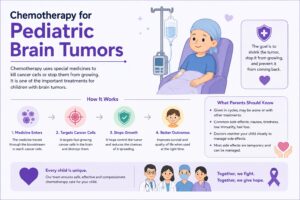
Chemotherapy uses anti-cancer medicines to destroy or control tumor cells.
Not every child with a brain tumor requires chemotherapy. Its role depends on:
- Tumor type.
- Tumor grade.
- Child’s age.
- Molecular characteristics.
- Surgical outcome.
Chemotherapy may be recommended:
- Before surgery in selected situations.
- After surgery.
- Together with radiation therapy for specific tumor types.
- For recurrent disease.
- As part of multimodal treatment strategies.
Treatment protocols are individualized according to the child’s diagnosis and current evidence-based recommendations.
Precision Radiation Oncology
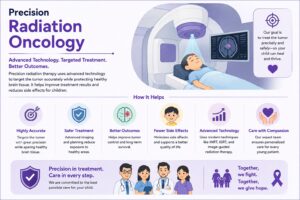
Radiation therapy is an important treatment for certain pediatric brain tumors.
At BIACH&RI, the Radiation Oncology Department works closely with the Neuro-Oncology and Pediatric Hemato-Oncology teams to determine whether radiation therapy is appropriate.
Modern radiation planning aims to:
- Deliver treatment precisely to the tumor.
- Protect surrounding healthy brain tissue.
- Reduce radiation exposure to critical structures whenever possible.
The timing and type of radiation therapy depend on the child’s age, diagnosis, and overall treatment plan.
Targeted Therapy
Advances in cancer biology have led to the development of targeted therapies for selected pediatric brain tumors.
Unlike conventional chemotherapy, targeted therapies are designed to act on specific molecular pathways involved in tumor growth.
For some children, molecular testing may help identify whether targeted treatment options are appropriate.
The availability and suitability of targeted therapy depend on the specific diagnosis and current clinical evidence.
Immunotherapy
Immunotherapy is an evolving area of pediatric oncology research.
For selected brain tumors and under appropriate clinical circumstances, immunotherapy may be considered as part of specialized treatment strategies or clinical research programs where available.
The decision to use immunotherapy is individualized and based on the tumor type, molecular profile, and established treatment recommendations.
Managing Hydrocephalus
Some pediatric brain tumors interfere with the normal flow of cerebrospinal fluid, leading to hydrocephalus, a condition in which fluid accumulates within the brain.
Hydrocephalus can increase pressure inside the skull and may require urgent treatment.
Management may include procedures recommended by the neurosurgical team to relieve pressure and protect brain function. The specific approach depends on the child’s condition.
Rehabilitation After Brain Tumor Treatment
Recovery does not end after surgery or chemotherapy.
Many children benefit from a comprehensive rehabilitation program that supports physical, cognitive, and emotional recovery.
Depending on the child’s needs, rehabilitation may include:
- Physiotherapy to improve strength and balance.
- Occupational therapy to support daily activities.
- Speech and language therapy for communication or swallowing difficulties.
- Neuropsychological assessment and cognitive rehabilitation.
- Nutritional counselling.
- Psychological support for the child and family.
Early rehabilitation plays an important role in helping children regain independence and return to school and everyday life.
Managing Treatment Side Effects
Every treatment has potential side effects, but many can be prevented, recognized early, or managed effectively with supportive care.
The healthcare team monitors children closely for:
- Fatigue.
- Infection.
- Nausea and vomiting.
- Changes in appetite.
- Blood count abnormalities.
- Hormonal changes.
- Neurological symptoms.
- Learning or developmental challenges.
Parents receive detailed guidance on what to expect during treatment and when to seek medical attention.
Comprehensive Supportive Care
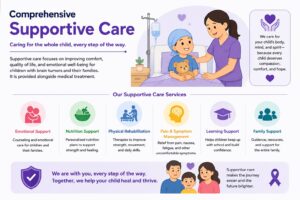
Successful treatment involves more than surgery and medicines.
At BIACH&RI, supportive care is an integral part of pediatric neuro-oncology and may include:
- Pediatric intensive care support when required.
- Specialized pediatric oncology nursing.
- Pain management.
- Nutritional support.
- Infection prevention.
- Psychological counselling.
- Social work services.
- Educational guidance for school reintegration.
- Family counselling.
This holistic approach addresses both the medical and emotional needs of children and their families.
Why a Multidisciplinary Neuro-Oncology Program Matters
Treating pediatric brain tumors requires expertise across multiple specialties.
A multidisciplinary Neuro-Oncology program brings together specialists who jointly evaluate each child’s diagnosis, imaging, pathology, treatment options, and recovery plan.
This collaborative model helps ensure coordinated decision-making, individualized treatment, and continuity of care throughout the child’s cancer journey.
Recovery After Treatment
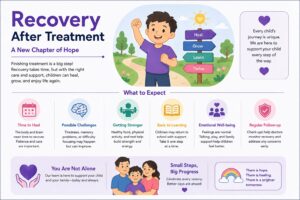
Completing treatment for a pediatric brain tumor marks an important milestone, but recovery continues well beyond surgery, chemotherapy, or radiation therapy. Children require ongoing medical follow-up to monitor neurological function, growth and development, learning, endocrine health, and overall well-being.
At Basavatarakam Indo-American Cancer Hospital & Research Institute (BIACH&RI), Hyderabad, recovery is supported through close collaboration between the Neuro-Oncology Department, Pediatric Hemato-Oncology Department, Neurosurgery Department, Radiation Oncology Department, rehabilitation specialists, psychologists, nutritionists, and pediatric nursing teams.
The goal is not only to treat the tumor but also to help every child achieve the best possible quality of life.
Long-Term Follow-Up
The follow-up schedule is individualized according to:
- Tumor type
- Grade
- Age of the child
- Treatment received
- Risk of recurrence
- Neurological recovery
Regular follow-up may include:
- Clinical neurological examination
- MRI brain (and spine, when clinically indicated)
- Vision and hearing assessments
- Growth and developmental evaluation
- Endocrine assessment for selected children
- Neurocognitive assessment
- Laboratory investigations when appropriate
- Rehabilitation review
These visits help detect recurrence early, monitor recovery, and address any late effects of treatment.
Returning to School
One of the most meaningful milestones for families is a child’s return to school.
Some children return quickly, while others may need additional time and educational support.
A gradual return with appropriate accommodations may be recommended based on:
- Physical recovery
- Cognitive function
- Fatigue
- Vision or hearing changes
- Motor skills
- Emotional readiness
Collaboration between healthcare professionals, parents, and teachers helps children reintegrate into school successfully.
Rehabilitation and Functional Recovery
Some children may experience temporary or long-term effects following treatment.
A comprehensive rehabilitation program may include:
Physiotherapy
To improve:
- Balance
- Strength
- Walking
- Coordination
Occupational Therapy
To help children regain independence in:
- Daily activities
- Fine motor skills
- Hand function
- Self-care
Speech and Language Therapy
For children with:
- Speech difficulties
- Language delays
- Swallowing disorders
- Communication challenges
Neuropsychological Support
Brain tumors and their treatment may affect:
- Memory
- Attention
- Learning
- Processing speed
- Executive function
Early assessment allows appropriate educational and cognitive support.
Psychological Counselling
Children and families often benefit from counselling to address:
- Anxiety
- Fear
- Emotional adjustment
- Behavioural changes
- Coping strategies
Can Pediatric Brain Tumors Return?
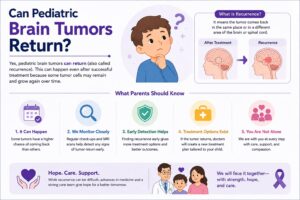
Some pediatric brain tumors may recur after treatment.
The risk depends on:
- Tumor type
- Grade
- Molecular profile
- Extent of surgical removal
- Response to treatment
For this reason, long-term surveillance is an essential component of pediatric neuro-oncology care.
Parents should seek prompt medical advice if a child develops:
- Persistent headaches
- Recurrent vomiting
- New seizures
- Changes in balance
- Weakness
- Vision changes
- Behavioural changes
- Any new neurological symptoms
Long-Term Survivorship
Thanks to advances in pediatric oncology and neuro-oncology, many children treated for brain tumors grow into healthy adults.
Long-term survivorship care focuses on:
- Brain health
- Neurological function
- Learning and education
- Hormonal health
- Nutrition
- Emotional well-being
- Physical activity
- Social development
- Transition to adult healthcare when appropriate
A structured survivorship program helps children and families navigate life after cancer treatment.
Frequently Asked Questions (FAQ)
What is a pediatric brain tumor?
A pediatric brain tumor is an abnormal growth of cells within the brain or central nervous system. Tumors may be benign or malignant, and both can affect important brain functions because of their location.
Are all brain tumors in children cancer?
No. Some brain tumors are benign, while others are malignant. Both types require specialist evaluation because they can affect critical areas of the brain.
What are the earliest symptoms?
Common symptoms include:
- Persistent headaches
- Morning vomiting
- New-onset seizures
- Balance problems
- Vision changes
- Weakness
- Behavioural or learning changes
These symptoms may also occur in many non-cancerous conditions, but persistent or progressive symptoms should be assessed by a doctor.
Is MRI the best test?
MRI is generally the preferred imaging investigation for evaluating pediatric brain tumors because it provides detailed images of the brain and spinal cord without ionizing radiation.
Does every child need surgery?
Not always.
Treatment depends on:
- Tumor type
- Location
- Size
- Molecular findings
- Overall condition of the child
Some children require surgery, while others may receive chemotherapy, radiation therapy, or a combination of treatments.
Can pediatric brain tumors be cured?
Many pediatric brain tumors can be successfully treated, although outcomes vary according to the tumor type, location, grade, molecular features, and response to treatment. Your treating team will discuss the expected outlook for your child’s specific diagnosis.
What is Neuro-Oncology?
Neuro-Oncology is a specialized field focused on the diagnosis, treatment, and long-term management of tumors affecting the brain, spinal cord, and nervous system.
Why is a multidisciplinary team important?
Children with brain tumors often require coordinated care from multiple specialists. A multidisciplinary team combines expertise from Neuro-Oncology, Pediatric Hemato-Oncology, Neurosurgery, Radiation Oncology, Radiology, Pathology, Rehabilitation, and supportive care to develop individualized treatment plans.
Will my child return to a normal life?
Many children return to school, participate in family and social activities, and enjoy active lives after treatment. Recovery varies depending on the tumor type and treatment received, and some children may require ongoing rehabilitation or educational support.
Why Choose the Neuro-Oncology & Pediatric Hemato-Oncology Departments at BIACH&RI?
Children with brain tumors require highly specialized, coordinated care.
At Basavatarakam Indo-American Cancer Hospital & Research Institute (BIACH&RI), Hyderabad, our Neuro-Oncology Department and Pediatric Hemato-Oncology Department work together with multiple specialties to provide comprehensive, patient-centred care.
Our integrated approach includes:
- Dedicated Neuro-Oncology expertise
- Pediatric Hemato-Oncology services
- Multidisciplinary Tumor Board discussions
- Pediatric Neurosurgery
- Advanced Neuroimaging
- Neuropathology
- Radiation Oncology
- Pediatric Intensive Care
- Rehabilitation Medicine
- Physiotherapy
- Occupational Therapy
- Speech and Language Therapy
- Clinical Nutrition
- Pediatric Oncology Nursing
- Psychological Counselling
- Long-term Survivorship Care
This collaborative model supports children and families from diagnosis through treatment, recovery, and long-term follow-up.
Key Takeaways
- Pediatric brain tumors are among the most common solid tumors in children.
- Early recognition of symptoms can lead to earlier diagnosis and treatment.
- MRI plays a key role in diagnosis and treatment planning.
- Treatment may include surgery, chemotherapy, radiation therapy, targeted therapy, and rehabilitation, depending on the diagnosis.
- Long-term follow-up and survivorship care are essential for monitoring health, development, and quality of life.
- A multidisciplinary Neuro-Oncology and Pediatric Hemato-Oncology team provides coordinated care tailored to each child’s needs.
If your child has persistent headaches, repeated morning vomiting, seizures, balance problems, vision changes, or any unexplained neurological symptoms, seek medical evaluation without delay. Early diagnosis can improve treatment planning and outcomes.
At Basavatarakam Indo-American Cancer Hospital & Research Institute (BIACH&RI), Hyderabad, our Neuro-Oncology Department and Pediatric Hemato-Oncology Department provide comprehensive evaluation, advanced diagnostics, multidisciplinary treatment, rehabilitation, and long-term survivorship care for children with brain tumors. Our commitment is to deliver compassionate, evidence-based care while supporting every child and family throughout their journey.