


Breast Cancer: Understanding the Disease and the Importance of Early Diagnosis

Breast cancer is one of the most common cancers affecting women across the world and has become one of the leading cancers diagnosed among women in India. Although it is predominantly seen in women, breast cancer can also occur in men.
A diagnosis of breast cancer can be emotionally overwhelming for patients and their families. Questions such as “Will I recover?”, “Will I lose my breast?”, “What treatment will I need?”, and “Can I continue my normal life?“ are natural and deserve clear, compassionate, and evidence-based answers.
The encouraging news is that significant advances in breast cancer diagnosis and treatment have transformed patient outcomes over the past two decades. Today, many breast cancers detected at an early stage can be treated successfully, and even patients with more advanced disease have access to a wide range of modern therapies that can help control the disease, improve quality of life, and support long-term care.
At Basavatarakam Indo-American Cancer Hospital & Research Institute (BIACH&RI), Hyderabad, breast cancer treatment is delivered through a dedicated Multidisciplinary Breast Oncology Team that includes specialists in Breast Surgical Oncology, Medical Oncology, Radiation Oncology, Breast Imaging, Pathology, Plastic & Reconstructive Surgery, Nuclear Medicine, Clinical Nutrition, Physiotherapy, Psycho-Oncology, Oncology Nursing, and Palliative Care. Every patient’s treatment plan is carefully tailored to the biology of the cancer, the stage of the disease, the patient’s overall health, and individual treatment goals.
What Is Breast Cancer?

Breast cancer develops when cells within the breast undergo genetic changes that cause them to grow uncontrollably. Over time, these abnormal cells may form a tumor.
Not every breast lump is cancer. In fact, many breast lumps are benign (non-cancerous) conditions such as fibroadenomas or breast cysts. However, any new breast lump or change in the breast should always be evaluated by a qualified healthcare professional.
Breast cancer most commonly begins in:
- The milk ducts (ductal carcinoma)
- The milk-producing lobules (lobular carcinoma)
Less commonly, it can arise from other tissues within the breast.
If left untreated, some breast cancers may spread to nearby lymph nodes or other parts of the body. This is why early diagnosis and timely treatment are so important.
Breast Anatomy: Understanding Where Breast Cancer Begins
The breast is made up of several structures that work together to produce and transport milk.
These include:
- Lobules – Milk-producing glands.
- Ducts – Small tubes that carry milk to the nipple.
- Fatty tissue – Gives the breast its shape.
- Fibrous connective tissue – Supports the breast.
- Blood vessels and lymphatic vessels – Supply nutrients and help remove waste.
- Lymph nodes – Part of the body’s immune system, commonly located in the armpit (axilla), above the collarbone, and near the breastbone.
Understanding breast anatomy helps explain how breast cancer develops and why lymph node assessment is an important part of diagnosis and treatment planning.
How Common Is Breast Cancer?
Breast cancer is:
- The most commonly diagnosed cancer in women worldwide.
- One of the leading cancers affecting Indian women.
- Increasingly being diagnosed in younger women compared with previous decades.
Greater awareness, improved screening, advances in imaging, and modern treatment approaches have significantly improved outcomes for many patients.
Can Men Develop Breast Cancer?
Yes.
Although male breast cancer is uncommon, it is an important condition that should not be overlooked.
Men should seek medical evaluation if they notice:
- A lump beneath or near the nipple.
- Bloody or abnormal nipple discharge.
- Nipple inversion.
- Persistent swelling of the breast.
- Skin thickening or ulceration.
- Enlarged lymph nodes in the armpit.
Because breast cancer in men is rare, symptoms are sometimes ignored, resulting in delayed diagnosis. Early medical evaluation is essential.
What Causes Breast Cancer?
Breast cancer develops because of changes (mutations) in the DNA of breast cells, causing them to grow and divide in an uncontrolled manner.
In most patients, there is no single identifiable cause. Instead, breast cancer usually results from a combination of genetic, hormonal, environmental, and lifestyle factors.
Having one or more risk factors does not mean that a person will definitely develop breast cancer. Likewise, many patients diagnosed with breast cancer have no obvious risk factors.
Risk Factors for Breast Cancer
Several factors may increase the likelihood of developing breast cancer.
Non-Modifiable Risk Factors
These are factors that cannot be changed.
- Increasing age
- Female sex
- Personal history of breast cancer
- Family history of breast or ovarian cancer
- Inherited gene mutations such as BRCA1 and BRCA2
- Dense breast tissue
- Early onset of menstruation
- Late menopause
- Previous radiation exposure to the chest during childhood or early adulthood
- Certain inherited genetic syndromes
Modifiable Risk Factors
Some lifestyle factors may influence breast cancer risk.
These include:
- Obesity, particularly after menopause
- Physical inactivity
- Excess alcohol consumption
- Tobacco use
- Long-term use of certain hormone replacement therapies
- Delayed first pregnancy or not having children in some individuals
Maintaining a healthy lifestyle may help reduce the risk of breast cancer and contributes to overall well-being.
Common Signs and Symptoms of Breast Cancer
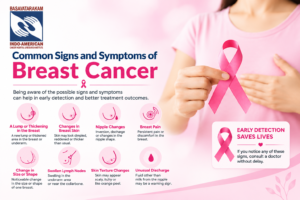
Breast cancer does not always cause symptoms in its earliest stages. This is why breast awareness and appropriate screening are important.
Common symptoms include:
- A new lump in the breast or underarm
- Thickening of breast tissue
- Change in breast size or shape
- Persistent swelling of part or all of the breast
- Skin dimpling or puckering
- Redness or warmth of the breast
- Skin resembling the texture of an orange peel (peau d’orange)
- Nipple inversion (newly developed)
- Bloody or abnormal nipple discharge
- Crusting or scaling of the nipple
- Persistent ulcer or wound over the breast
- Pain in one area of the breast that does not resolve
- Swollen lymph nodes in the armpit or above the collarbone
These symptoms do not always indicate breast cancer, but they should always be evaluated by a healthcare professional.
Breast Pain: Does It Always Mean Cancer?
No.
Breast pain (mastalgia) is a common concern and is usually not caused by breast cancer.
Breast pain may be related to:
- Hormonal changes
- Menstrual cycles
- Breast cysts
- Benign breast conditions
- Muscular pain
- Certain medications
However, persistent or localized breast pain—especially when associated with a lump or other breast changes—should be assessed by a specialist.
When Should You See a Breast Cancer Specialist?
You should seek medical evaluation if you notice:
- A breast lump that persists after your menstrual cycle
- A new lump in the armpit
- Bloody nipple discharge
- Persistent breast swelling
- Skin changes involving the breast or nipple
- A breast ulcer that does not heal
- Progressive breast enlargement on one side
- Persistent nipple inversion
- Any unexplained change in the appearance or feel of the breast
Prompt evaluation does not necessarily mean cancer is present, but it allows timely diagnosis and appropriate management.
How Is Breast Cancer Diagnosed?
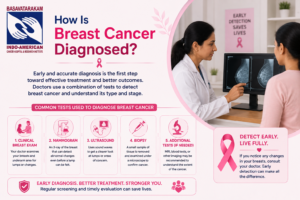
Diagnosing breast cancer requires a systematic and accurate approach. At Basavatarakam Indo-American Cancer Hospital & Research Institute (BIACH&RI), Hyderabad, every patient undergoes a comprehensive evaluation to confirm the diagnosis, determine the type of breast cancer, assess the extent of disease, and develop an individualized treatment plan.
The internationally accepted approach to diagnosing breast cancer is known as the Triple Assessment, which combines clinical examination, breast imaging, and tissue diagnosis.
The Triple Assessment
The Triple Assessment includes:
- Clinical Breast Examination
- Breast Imaging
- Tissue Diagnosis (Biopsy)
When these three components are used together, they provide a highly accurate diagnosis and help guide the next steps in treatment.
Clinical Breast Examination
The first step is a detailed consultation with a breast specialist.
During the examination, your doctor evaluates:
- The size and location of the breast lump
- Whether the lump is mobile or fixed
- Changes in the skin
- Nipple abnormalities
- Breast symmetry
- Presence of breast swelling
- Lymph nodes in the armpit, neck, and above the collarbone
- Symptoms such as pain or nipple discharge
Your medical history is equally important. The doctor may ask about:
- Duration of symptoms
- Family history of breast or ovarian cancer
- Previous breast surgery
- Menstrual and reproductive history
- Current medications
- Previous radiation exposure
- Lifestyle factors
Breast Imaging
Imaging helps doctors evaluate breast abnormalities, determine the extent of disease, and guide biopsy when necessary.
The type of imaging depends on the patient’s age, symptoms, breast density, and clinical findings.
Mammography
Mammography is the most commonly used imaging test for detecting breast cancer.
It uses low-dose X-rays to identify abnormalities that may not be felt during a physical examination.
A mammogram can detect:
- Small breast cancers
- Microcalcifications
- Architectural distortion
- Breast asymmetry
- Suspicious masses
Many early-stage breast cancers are identified through mammography before symptoms develop.
Digital Mammography
Digital mammography provides high-quality breast images that can be reviewed and enhanced electronically.
It offers advantages in many patients, particularly those with dense breast tissue.
Breast Ultrasound
Breast ultrasound uses sound waves to create images of the breast.
It is particularly useful for:
- Evaluating palpable breast lumps
- Distinguishing solid masses from fluid-filled cysts
- Guiding needle biopsies
- Assessing younger women with dense breasts
Ultrasound complements mammography but does not replace it.
Breast MRI
A Breast MRI may be recommended in selected situations, such as:
- Evaluation of high-risk patients
- Assessment of multifocal or multicentric disease
- Determining the extent of cancer
- Evaluating response to chemotherapy before surgery
- Investigating inconclusive findings on mammography or ultrasound
MRI is not required for every patient. The decision is based on individual clinical indications.
What Is BI-RADS?
Breast imaging reports commonly use the Breast Imaging Reporting and Data System (BI-RADS) developed by the American College of Radiology.
BI-RADS helps standardize reporting and guides recommendations for follow-up or biopsy.
The categories range from:
- BI-RADS 0: Additional imaging required
- BI-RADS 1: Negative
- BI-RADS 2: Benign finding
- BI-RADS 3: Probably benign; short-term follow-up may be recommended
- BI-RADS 4: Suspicious abnormality; biopsy is usually advised
- BI-RADS 5: Highly suggestive of malignancy
- BI-RADS 6: Known biopsy-proven breast cancer
Your doctor will explain what your BI-RADS category means and the appropriate next steps.
Is a Biopsy Necessary?
If imaging suggests a suspicious breast abnormality, a biopsy is usually recommended.
A biopsy is the only way to confirm whether a breast lesion is cancerous.
It allows the pathologist to examine tissue under the microscope and determine the exact type of breast disease.
Types of Breast Biopsy
Several biopsy techniques may be used depending on the clinical situation.
Core Needle Biopsy
This is the most commonly performed biopsy for breast abnormalities.
Using a hollow needle, multiple small tissue samples are collected from the suspicious area under imaging guidance or clinical examination.
Core needle biopsy provides sufficient tissue for:
- Histopathological diagnosis
- Hormone receptor testing
- HER2 testing
- Additional molecular analysis when required
Fine Needle Aspiration (FNA)
Fine Needle Aspiration uses a thin needle to collect cells from a breast lump or lymph node.
It may be useful in selected situations, although it generally provides less information than a core needle biopsy.
Vacuum-Assisted Biopsy
For some lesions, a vacuum-assisted device allows larger tissue samples to be obtained through a small incision.
This technique may be recommended for selected patients based on imaging findings.
Surgical (Excisional) Biopsy
Occasionally, if a diagnosis cannot be established with needle biopsy or if complete removal of a small lesion is appropriate, a surgical biopsy may be performed.
What Happens to the Biopsy Sample?
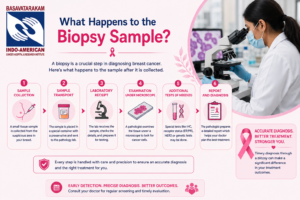
The tissue sample is carefully examined by a pathologist, who determines:
- Whether cancer is present
- The type of breast cancer
- Tumor grade
- Microscopic features
- Presence of lymphovascular invasion (when applicable)
This information forms the foundation for treatment planning.
Tumor Grade: Understanding How the Cancer Appears
In addition to staging, breast cancers are assigned a histological grade, which reflects how the cancer cells look under the microscope.
- Grade 1: Cells resemble normal breast cells and tend to grow more slowly.
- Grade 2: Cells have intermediate features.
- Grade 3: Cells appear more abnormal and generally grow more rapidly.
Tumor grade is one of several factors considered when developing an individualized treatment plan.
Biomarker Testing: Personalizing Breast Cancer Treatment
Modern breast cancer treatment is guided not only by the size and stage of the tumor but also by its biological characteristics.
The biopsy sample is routinely tested for important biomarkers.
Estrogen Receptor (ER)
ER-positive cancers may respond to hormone therapy.
Progesterone Receptor (PR)
PR status provides additional information about tumor biology and treatment options.
HER2 (Human Epidermal Growth Factor Receptor 2)
HER2-positive breast cancers may benefit from targeted therapies specifically designed for this subtype.
Ki-67
Ki-67 is a marker of cell proliferation that may help assess how actively the tumor cells are dividing. It is interpreted alongside other clinical and pathological findings.
Genetic Testing and Genetic Counselling
Genetic testing is not required for every patient, but it may be recommended for individuals with:
- A strong family history of breast or ovarian cancer
- Breast cancer diagnosed at a young age
- Bilateral breast cancer
- Male breast cancer
- Certain pathological features or family histories suggestive of hereditary cancer syndromes
Testing may include evaluation for inherited mutations such as BRCA1 and BRCA2, when clinically indicated. Genetic counselling helps patients and families understand the implications of testing and the available risk-reduction strategies.
Comprehensive Staging Evaluation
Once breast cancer has been confirmed, additional tests may be recommended to understand the extent of the disease and guide treatment planning.
Depending on the individual patient’s condition, these investigations may include:
- Blood tests
- Chest imaging
- Abdominal imaging
- Bone scan (when clinically indicated)
- PET-CT scan in selected situations
- Additional imaging based on symptoms and clinical findings
These investigations are recommended selectively, based on current clinical guidelines and the patient’s stage and presentation.
Types of Breast Cancer
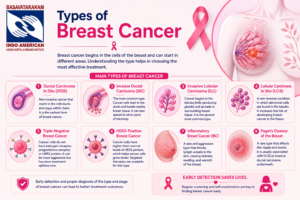
Breast cancer is not a single disease. It includes several subtypes, each with distinct biological characteristics and treatment approaches. Understanding the type of breast cancer helps doctors recommend the most appropriate treatment.
Ductal Carcinoma In Situ (DCIS)
Ductal Carcinoma In Situ (DCIS) is a non-invasive breast cancer where abnormal cells are confined to the milk ducts and have not spread into surrounding breast tissue.
Although DCIS is an early form of breast cancer, treatment is important because some cases may progress to invasive cancer if left untreated.
Treatment options may include:
- Breast-conserving surgery (lumpectomy)
- Mastectomy in selected cases
- Radiation therapy after breast-conserving surgery when appropriate
- Hormone therapy for selected hormone receptor-positive cases
Invasive Ductal Carcinoma (IDC)
Invasive Ductal Carcinoma is the most common type of breast cancer.
It begins in the milk ducts and spreads into surrounding breast tissue. If not treated, it may spread to nearby lymph nodes or other parts of the body.
Treatment is individualized and may include surgery, chemotherapy, radiation therapy, hormone therapy, targeted therapy, or immunotherapy depending on the tumor’s biological characteristics.
Invasive Lobular Carcinoma (ILC)
This cancer begins in the milk-producing lobules before invading surrounding breast tissue.
Compared with invasive ductal carcinoma, invasive lobular carcinoma may grow in a more diffuse pattern, making it less obvious on examination or imaging in some patients.
Triple-Negative Breast Cancer (TNBC)
Triple-negative breast cancer does not express:
- Estrogen Receptors (ER)
- Progesterone Receptors (PR)
- HER2 receptors
Because of these biological characteristics, hormone therapy and HER2-targeted therapies are generally not effective. Treatment often involves chemotherapy, and selected patients may also benefit from immunotherapy based on current clinical guidelines.
HER2-Positive Breast Cancer
HER2-positive breast cancer has increased expression of the HER2 protein.
Today, several highly effective targeted therapies are available for eligible patients with HER2-positive disease. These treatments have significantly improved outcomes over the past two decades.
Hormone Receptor-Positive Breast Cancer
Hormone receptor-positive breast cancer expresses estrogen and/or progesterone receptors.
These cancers often respond well to hormone (endocrine) therapy, which helps reduce the influence of hormones that promote tumor growth.
Inflammatory Breast Cancer
Inflammatory breast cancer is an uncommon but aggressive form of breast cancer.
Instead of presenting as a distinct lump, patients may develop:
- Rapid swelling of the breast
- Redness
- Warmth
- Thickened skin
- Orange peel appearance (peau d’orange)
Because inflammatory breast cancer can resemble an infection, prompt evaluation by a breast specialist is essential.
Paget Disease of the Breast
Paget disease primarily affects the nipple and surrounding skin.
Symptoms may include:
- Persistent itching
- Crusting
- Scaling
- Redness
- Bloody discharge
- Nipple ulceration
Although these symptoms may resemble eczema, persistent nipple changes should always be evaluated.
Male Breast Cancer
Although uncommon, breast cancer can occur in men.
Men should seek medical attention if they notice:
- A lump beneath the nipple
- Bloody nipple discharge
- Skin changes
- Nipple inversion
- Persistent breast enlargement
Early diagnosis can significantly improve treatment outcomes.
How Is Breast Cancer Treated?
Modern breast cancer treatment is highly personalized.
Treatment depends on several factors, including:
- Type of breast cancer
- Stage of disease
- Tumor grade
- ER status
- PR status
- HER2 status
- Ki-67
- Genetic findings (when relevant)
- Patient’s age
- Menopausal status
- Overall health
- Individual treatment goals
No single treatment is appropriate for every patient.
Multidisciplinary Breast Cancer Care

At Basavatarakam Indo-American Cancer Hospital & Research Institute (BIACH&RI), Hyderabad, every newly diagnosed breast cancer patient benefits from a multidisciplinary approach.
The Breast Cancer Team includes specialists in:
- Breast Surgical Oncology
- Medical Oncology
- Radiation Oncology
- Breast Imaging
- Pathology
- Plastic & Reconstructive Surgery
- Nuclear Medicine
- Clinical Nutrition
- Physiotherapy
- Oncology Nursing
- Psycho-Oncology
- Palliative Care
Each patient’s diagnosis, imaging, pathology, and treatment options are reviewed to develop a personalized care plan.
Surgery for Breast Cancer
Surgery remains one of the most important treatments for breast cancer.
The primary goals are to:
- Completely remove the cancer whenever appropriate
- Preserve normal breast tissue whenever possible
- Assess lymph node involvement
- Achieve the best possible cosmetic and functional outcome
The choice of surgery depends on the size and location of the tumor, breast size, tumor biology, patient preference, and other clinical factors.
Breast-Conserving Surgery (Lumpectomy)
Breast-conserving surgery removes the cancer along with a margin of healthy tissue while preserving most of the breast.
For carefully selected patients, this approach provides excellent cancer control when combined with radiation therapy.
Benefits include:
- Preservation of the breast
- Shorter surgery
- Good cosmetic outcome
- Effective cancer treatment in appropriately selected patients
Mastectomy
A mastectomy involves removal of the entire breast.
It may be recommended in situations such as:
- Large tumors relative to breast size
- Multiple tumors in different areas of the breast
- Certain recurrent breast cancers
- Patient preference
- Other clinical indications
Several types of mastectomy may be considered depending on the individual case, including skin-sparing and nipple-sparing techniques in selected patients.
Sentinel Lymph Node Biopsy (SLNB)
The sentinel lymph node is the first lymph node that receives drainage from the breast.
During Sentinel Lymph Node Biopsy, the surgeon identifies and removes one or a few sentinel lymph nodes to determine whether cancer has spread.
Compared with removing many lymph nodes, this approach can:
- Provide accurate staging
- Reduce surgical morbidity
- Lower the risk of arm swelling (lymphedema)
- Promote faster recovery in appropriate patients
Axillary Lymph Node Surgery
When breast cancer involves additional lymph nodes, further axillary surgery may be recommended based on the extent of disease and current treatment guidelines.
The decision is individualized after multidisciplinary discussion.
Breast Reconstruction
For patients undergoing mastectomy, breast reconstruction may be an option.
Reconstruction can be performed:
- At the time of mastectomy (immediate reconstruction)
- After completion of cancer treatment (delayed reconstruction)
Reconstructive options are discussed jointly by the Breast Surgical Oncology and Plastic & Reconstructive Surgery teams, taking into account the patient’s treatment plan, preferences, and overall health.
Medical Oncology Treatment for Breast Cancer
Following surgery (or before surgery in selected cases), many patients benefit from additional treatments designed to destroy cancer cells, reduce the risk of recurrence, and improve long-term outcomes. Collectively, these treatments are known as systemic therapy because they treat cancer cells throughout the body.
At Basavatarakam Indo-American Cancer Hospital & Research Institute (BIACH&RI), Hyderabad, systemic treatment is planned by experienced Medical Oncologists after carefully evaluating the patient’s pathology report, stage of disease, hormone receptor status, HER2 status, overall health, and individual treatment goals.
Every treatment plan is personalized because no two breast cancers are exactly alike.
Chemotherapy for Breast Cancer
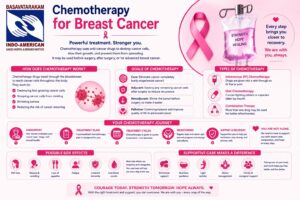
Chemotherapy uses anti-cancer medicines to destroy rapidly growing cancer cells. It remains an important treatment for many patients with breast cancer.
Depending on the stage and type of breast cancer, chemotherapy may be recommended:
Neoadjuvant Chemotherapy (Before Surgery)
Neoadjuvant chemotherapy is given before surgery to:
- Reduce the size of the tumor
- Increase the possibility of breast-conserving surgery
- Assess how well the cancer responds to treatment
- Treat microscopic cancer cells that may have spread beyond the breast
This approach is commonly considered for larger tumors, certain biologically aggressive cancers, and selected locally advanced breast cancers.
Adjuvant Chemotherapy (After Surgery)
Adjuvant chemotherapy is given after surgery to reduce the risk of cancer returning.
The decision depends on several factors, including:
- Tumor size
- Lymph node involvement
- Tumor grade
- Hormone receptor status
- HER2 status
- Patient age
- Overall health
- Other pathological features
Your Medical Oncology team will discuss the expected benefits, treatment schedule, possible side effects, and supportive care measures before treatment begins.
Targeted Therapy
Targeted therapy represents a major advance in breast cancer treatment.
Unlike chemotherapy, which affects rapidly dividing cells, targeted therapy is designed to act on specific molecules involved in cancer growth.
Patients with HER2-positive breast cancer may benefit from HER2-directed therapies, which have significantly improved treatment outcomes over the past two decades.
The Medical Oncology team determines eligibility for targeted therapy based on the tumor’s biological characteristics and current evidence-based treatment guidelines.
Hormone Therapy (Endocrine Therapy)

Hormone therapy is an important treatment for patients whose tumors are Estrogen Receptor (ER) and/or Progesterone Receptor (PR) positive.
These medicines work by reducing the effect of hormones that stimulate the growth of hormone-sensitive breast cancer cells.
Depending on the individual patient, hormone therapy may be recommended for several years after primary treatment to reduce the risk of recurrence.
The choice of medicine and duration of therapy depend on menopausal status, tumor biology, and overall treatment planning.
Immunotherapy
Immunotherapy helps the body’s immune system recognize and attack cancer cells.
Selected patients with certain types of breast cancer, particularly some cases of Triple-Negative Breast Cancer (TNBC), may benefit from immunotherapy.
Whether immunotherapy is appropriate depends on:
- Tumor subtype
- Biomarker testing
- Stage of disease
- Overall clinical assessment
- Current international treatment guidelines
Precision Oncology
Breast cancer treatment is increasingly guided by Precision Oncology, an approach that uses the biological characteristics of each patient’s tumor to personalize treatment.
Rather than treating all breast cancers in the same way, precision medicine helps doctors select therapies based on the tumor’s specific features.
Depending on the clinical situation, treatment decisions may be guided by:
- Histopathological findings
- Hormone receptor status
- HER2 status
- Ki-67
- Genetic and molecular testing where clinically indicated
This individualized approach helps optimize treatment planning while avoiding unnecessary therapies whenever possible.
Radiation Therapy for Breast Cancer
Radiation therapy is an important component of breast cancer treatment for many patients.
It uses carefully planned, high-energy radiation to destroy remaining cancer cells after surgery and reduce the risk of local recurrence.
Radiation therapy may be recommended after:
- Breast-conserving surgery
- Mastectomy in selected patients
- Treatment involving lymph node involvement
- Other clinical situations where additional local control is beneficial
At BIACH&RI, radiation treatment is delivered by experienced Radiation Oncologists, who work closely with the Breast Surgical Oncology and Medical Oncology teams to ensure coordinated, patient-centered care.
Modern radiation techniques are designed to deliver treatment precisely to the target area while minimizing exposure to surrounding healthy tissues.
Follow-up After Breast Cancer Treatment
Completing treatment is an important milestone, but regular follow-up remains an essential part of breast cancer care.
Follow-up visits help doctors:
- Monitor recovery
- Detect any signs of recurrence
- Manage long-term treatment effects
- Address new symptoms or concerns
- Provide ongoing emotional and supportive care
The frequency of follow-up appointments varies depending on the individual’s diagnosis, treatment received, and overall health.
Patients should continue attending scheduled appointments even if they feel well.
Living Beyond Breast Cancer
Many women successfully return to their normal family, professional, and social lives after completing breast cancer treatment.
Recovery is a gradual process and may include physical, emotional, and psychological adjustments.
Comprehensive survivorship care may include:
- Nutritional counselling
- Physiotherapy
- Lymphedema management
- Psychological support
- Menopausal symptom management
- Bone health assessment
- Lifestyle counselling
- Regular surveillance
The goal is not only to treat cancer but also to help patients regain confidence, function, and quality of life.
Can Breast Cancer Be Prevented?
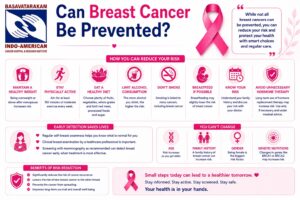
Although breast cancer cannot always be prevented, certain healthy lifestyle choices may help reduce risk.
These include:
- Maintaining a healthy body weight
- Engaging in regular physical activity
- Eating a balanced diet rich in fruits, vegetables, and whole grains
- Limiting alcohol consumption
- Avoiding tobacco
- Breastfeeding, where possible
- Participating in age-appropriate breast cancer screening
- Seeking medical advice if there is a strong family history of breast or ovarian cancer
Breast Cancer Screening
Early detection plays a crucial role in improving breast cancer outcomes.
Screening recommendations vary depending on age, family history, and individual risk factors.
Your healthcare provider can advise which screening approach is most appropriate for you.
Screening methods may include:
- Breast awareness
- Clinical breast examination
- Mammography
- Breast ultrasound in selected situations
- Breast MRI for women at high risk
Women should not wait for symptoms before discussing screening with their healthcare provider.
Breast Self-Awareness
Knowing how your breasts normally look and feel can help you notice any changes promptly.
You should consult a healthcare professional if you notice:
- A new breast lump
- Persistent swelling
- Skin dimpling
- Nipple inversion
- Bloody nipple discharge
- Persistent redness or thickening of the breast
- A non-healing sore on the breast or nipple
Breast self-awareness complements—but does not replace—recommended screening and medical evaluation.
Breast Cancer: Myths and Facts
Myth: Every breast lump is cancer.
Fact: Most breast lumps are benign, but every new lump should be evaluated by a healthcare professional.
Myth: Breast cancer only affects older women.
Fact: Although risk increases with age, breast cancer can occur in younger women and, rarely, in men.
Myth: Breast pain always means cancer.
Fact: Breast pain is commonly caused by non-cancerous conditions, but persistent symptoms should be assessed.
Myth: A family history is necessary to develop breast cancer.
Fact: Many patients diagnosed with breast cancer have no known family history.
Frequently Asked Questions
Can breast cancer be cured if detected early?
Many patients diagnosed at an early stage can be treated successfully. Outcomes depend on several factors, including the type and stage of the cancer and the treatment received.
Will every patient need chemotherapy?
No. Treatment is individualized. Some patients may require surgery alone, while others may benefit from chemotherapy, hormone therapy, targeted therapy, radiation therapy, immunotherapy, or a combination of these.
Can I preserve my breast?
Many patients are candidates for breast-conserving surgery. The decision depends on the size and location of the tumor, breast size, and other clinical factors.
Can men develop breast cancer?
Yes. Although uncommon, breast cancer can occur in men and should be evaluated promptly if symptoms develop.
Is reconstruction possible after mastectomy?
For many patients, breast reconstruction is an option. The timing and method depend on the individual’s treatment plan and overall health.
Why Choose Basavatarakam Indo-American Cancer Hospital & Research Institute (BIACH&RI)?
Breast cancer care at BIACH&RI is delivered through a coordinated multidisciplinary approach that brings together expertise from Breast Surgical Oncology, Medical Oncology, Radiation Oncology, Breast Imaging, Pathology, Plastic & Reconstructive Surgery, Clinical Nutrition, Physiotherapy, Psycho-Oncology, Oncology Nursing, and Palliative Care.
Our focus is on delivering evidence-based, personalized, and compassionate care, supported by modern diagnostic technologies and advanced treatment options. From screening and diagnosis to treatment, rehabilitation, and survivorship, patients receive comprehensive care at every stage of their journey.