

Pediatric Brain Tumor Symptoms: Early Warning Signs Every Parent Should Know
Every parent worries when a child complains of headaches, vomits repeatedly, or seems unusually tired. In most cases, these symptoms are caused by common childhood illnesses. However, when symptoms persist, worsen over time, or occur together, they may require careful medical evaluation.
Brain tumors in children are uncommon, but they are among the most common solid tumors of childhood. Recognizing warning signs early can lead to timely diagnosis and appropriate treatment. While these symptoms do not necessarily mean a child has a brain tumor, persistent or progressive symptoms should never be ignored.
At Basavatarakam Indo-American Cancer Hospital & Research Institute (BIACH&RI), Hyderabad, children with suspected brain tumors receive comprehensive evaluation through our Neuro-Oncology Department, Pediatric Hemato-Oncology Department, Neurosurgery Department, and advanced diagnostic services. Our multidisciplinary team works together to identify the cause of a child’s symptoms and recommend the most appropriate care.
What Is a Pediatric Brain Tumor?
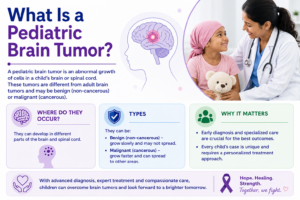
A pediatric brain tumor is an abnormal growth of cells within the brain or central nervous system. Tumors may be benign (non-cancerous) or malignant (cancerous). Regardless of their type, brain tumors can affect important brain functions because they develop within the confined space of the skull.
The symptoms depend on:
- Tumor size
- Tumor location
- Rate of growth
- Age of the child
- Pressure on nearby brain structures
Some tumors grow slowly and produce subtle symptoms, while others develop more rapidly and require urgent medical attention.
What are the early symptoms of a brain tumor in a child?
Early symptoms of a pediatric brain tumor may include persistent headaches, repeated morning vomiting, balance problems, difficulty walking, vision changes, seizures, weakness, behavioural changes, or declining school performance. These symptoms can also occur in many common childhood illnesses, but persistent or worsening neurological symptoms should be evaluated by a healthcare professional. Diagnosis typically involves a neurological examination and MRI, followed by further investigations when necessary. Treatment depends on the tumor type and may include surgery, chemotherapy, radiation therapy, rehabilitation, and long-term follow-up.
Why Do Brain Tumor Symptoms Occur?
The brain controls movement, vision, speech, balance, memory, breathing, and many other vital functions.
A brain tumor may cause symptoms by:
- Increasing pressure inside the skull.
- Pressing on important areas of the brain.
- Blocking the normal flow of cerebrospinal fluid (CSF), leading to hydrocephalus.
- Affecting nerves that control vision, hearing, speech, or movement.
The exact symptoms vary depending on which part of the brain is involved.
Early Warning Signs of Brain Tumors in Children
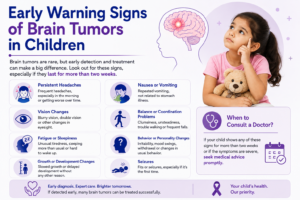
Persistent Headaches
Occasional headaches are common in children. However, parents should seek medical advice if headaches:
- Become more frequent.
- Increase in severity.
- Occur early in the morning.
- Wake the child from sleep.
- Are associated with vomiting or vision changes.
Persistent headaches do not always indicate a brain tumor, but they deserve medical evaluation if they are progressive or accompanied by other neurological symptoms.
Repeated Morning Vomiting
Repeated vomiting without a stomach infection, especially in the morning, can occur when pressure inside the skull increases.
Medical assessment is recommended when vomiting:
- Happens repeatedly over several days.
- Is associated with headaches.
- Occurs without fever or diarrhea.
- Is accompanied by balance problems or vision changes.
Difficulty Walking or Poor Balance
The cerebellum controls balance and coordination.
A child with a brain tumor affecting this area may:
- Walk unsteadily.
- Fall more often than usual.
- Have difficulty climbing stairs.
- Appear clumsy.
- Lose previously acquired motor skills.
Any persistent change in coordination should be evaluated by a healthcare professional.
Vision Problems
Brain tumors may affect vision by increasing pressure within the brain or involving pathways that control eye movements.
Symptoms may include:
- Blurred vision
- Double vision
- Difficulty focusing
- Unusual eye movements
- Squinting
- Complaints of poor vision
Persistent visual symptoms warrant prompt medical assessment.
Seizures
A seizure may be the first sign of a brain tumor in some children, although seizures have many other possible causes.
Parents should seek immediate medical evaluation if a child experiences:
- A first-time seizure.
- Recurrent seizures.
- Episodes of staring with unresponsiveness.
- Sudden jerking movements.
- Loss of consciousness.
Changes in Behaviour or Personality
Parents and teachers may notice:
- Increased irritability.
- Unusual tiredness.
- Difficulty concentrating.
- Loss of interest in activities.
- Memory problems.
- Declining school performance.
These symptoms can have many causes, but persistent changes deserve medical attention.
Weakness or Difficulty Using an Arm or Leg
A child may develop:
- Weakness on one side of the body.
- Difficulty holding objects.
- Dragging one foot.
- Problems climbing stairs.
- Reduced coordination.
Such symptoms should be evaluated without delay.
Speech or Language Difficulties
Brain tumors involving language areas may cause:
- Slurred speech.
- Difficulty finding words.
- Trouble understanding language.
- Delayed speech in younger children.
Any new or worsening speech problem should be assessed promptly.
Hearing Changes
Some brain tumors can affect the nerves responsible for hearing and balance.
Parents should seek evaluation if a child develops:
- Hearing loss.
- Ringing in the ears.
- Dizziness.
- Balance problems associated with hearing changes.
Excessive Sleepiness or Fatigue
Persistent drowsiness, difficulty waking, or reduced alertness may indicate increased pressure within the brain and should not be ignored, especially if accompanied by headaches or vomiting.
Symptoms in Infants
Infants may not be able to describe headaches or vision changes. Warning signs can include:
- An unusually enlarged head.
- A bulging soft spot (fontanelle).
- Persistent vomiting.
- Irritability.
- Poor feeding.
- Delayed development.
- Abnormal eye movements.
- Excessive sleepiness.
- Seizures.
These symptoms require prompt medical assessment.
When Should Parents Seek Immediate Medical Care?
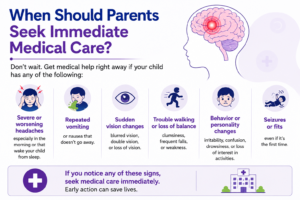
Seek urgent medical attention if a child develops:
- Severe or worsening headache.
- Repeated morning vomiting.
- A first-time seizure.
- Sudden weakness.
- Difficulty walking.
- Double vision.
- Persistent drowsiness.
- Loss of consciousness.
- Confusion or unusual behaviour.
- Any rapidly worsening neurological symptoms.
Could These Symptoms Be Caused by Something Else?
Yes. Most headaches, vomiting, seizures, or balance problems in children are not caused by brain tumors.
These symptoms may result from:
- Viral illnesses.
- Migraine.
- Ear infections.
- Dehydration.
- Epilepsy.
- Vision problems.
- Other neurological conditions.
However, persistent or progressive symptoms should always be evaluated to determine the underlying cause.
Why Early Diagnosis Is So Important
A child with persistent neurological symptoms should never be diagnosed based on internet searches alone. While many symptoms such as headaches or vomiting are commonly caused by minor illnesses, persistent or progressive symptoms deserve careful medical evaluation.
Early diagnosis allows doctors to:
- Identify the actual cause of symptoms.
- Begin treatment promptly if needed.
- Prevent complications related to increased pressure inside the brain.
- Plan the most appropriate treatment.
- Improve long-term neurological outcomes.
At Basavatarakam Indo-American Cancer Hospital & Research Institute (BIACH&RI), Hyderabad, children with suspected brain tumors are evaluated through a coordinated multidisciplinary approach involving the Neuro-Oncology Department, Pediatric Hemato-Oncology Department, Neurosurgery Department, Radiology, and other pediatric specialists.
What Happens During the First Consultation?
The first consultation focuses on understanding the child’s symptoms in detail.
Doctors may ask:
- When did the symptoms begin?
- Have the headaches become more frequent?
- Is vomiting occurring mainly in the morning?
- Has the child experienced seizures?
- Have there been changes in walking or balance?
- Has vision changed recently?
- Has school performance declined?
- Are there any behavioural changes?
- Is there any family history of neurological or genetic disorders?
This detailed history helps determine whether additional investigations are needed.
Comprehensive Neurological Examination
A neurological examination provides important clues about how different parts of the brain are functioning.
The doctor may assess:
- Muscle strength
- Walking pattern
- Balance and coordination
- Reflexes
- Vision
- Eye movements
- Hearing
- Speech and language
- Sensation
- Cranial nerve function
- Memory and concentration (age appropriate)
Even subtle findings can help identify which part of the brain may be affected.
MRI – The Preferred Imaging Test
If a brain tumor is suspected, Magnetic Resonance Imaging (MRI) is generally the preferred imaging test because it provides highly detailed pictures of the brain without using ionizing radiation.
MRI helps doctors evaluate:
- The size of the lesion.
- The exact location.
- Whether nearby brain structures are affected.
- Possible swelling around the tumor.
- Fluid build-up (hydrocephalus).
- Relationship to critical brain areas.
MRI also helps neurosurgeons plan treatment if surgery becomes necessary.
When Is a CT Scan Used?
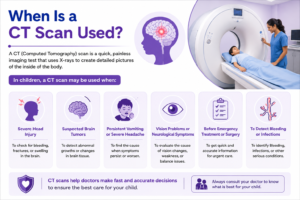
A CT scan may be recommended when rapid assessment is required, such as in emergency situations.
It can quickly identify:
- Bleeding inside the brain.
- Hydrocephalus.
- Large brain masses.
- Bone abnormalities.
However, MRI usually provides more detailed information for treatment planning.
Why MRI of the Spine May Be Recommended
Certain pediatric brain tumors can spread through the cerebrospinal fluid (CSF).
When clinically indicated, doctors may recommend an MRI of the spine to determine whether there is any involvement beyond the brain. This information is important for staging and treatment planning in specific tumor types.
Can Blood Tests Diagnose a Brain Tumor?
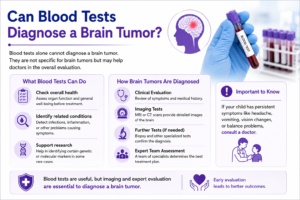
Many parents ask whether a blood test can detect a brain tumor.
Currently, there is no routine blood test that can diagnose most pediatric brain tumors.
Blood tests are still important because they help doctors:
- Assess the child’s overall health.
- Evaluate organ function before treatment.
- Monitor treatment-related effects.
- Detect infections or anemia.
The diagnosis of a brain tumor relies primarily on clinical evaluation, imaging, and tissue examination when required.
Why a Biopsy May Be Needed
Imaging studies can strongly suggest a brain tumor, but a biopsy or examination of tissue obtained during surgery is often necessary to confirm the diagnosis.
The tissue sample is examined by a Neuropathologist, who identifies:
- The exact tumor type.
- Tumor grade.
- Histological features.
- Molecular characteristics that may influence treatment planning.
Not every child requires a separate biopsy procedure, as tissue is frequently obtained during surgery.
Molecular Testing and Precision Medicine
Modern pediatric neuro-oncology increasingly incorporates molecular testing.
These specialized tests can help:
- Confirm the diagnosis.
- Classify the tumor more accurately.
- Guide treatment decisions.
- Estimate prognosis.
- Identify eligibility for targeted therapies or clinical trials when appropriate.
This represents an important step toward precision medicine in childhood brain tumors.
The Role of a Multidisciplinary Team
Brain tumors in children require expertise from multiple specialties.
At BIACH&RI, treatment planning involves collaboration between:
- Pediatric Hemato-Oncology
- Neuro-Oncology
- Pediatric Neurosurgery
- Radiation Oncology
- Neuroradiology
- Neuropathology
- Pediatric Neurology
- Pediatric Intensive Care
- Rehabilitation Medicine
- Clinical Nutrition
- Pediatric Oncology Nursing
- Clinical Psychology
Working together allows the team to develop a personalized treatment plan tailored to each child’s diagnosis and needs.
What Happens If a Brain Tumor Is Diagnosed?
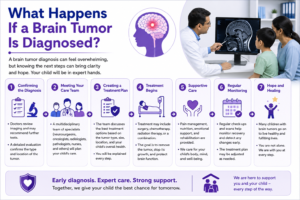
If investigations confirm a brain tumor, the treatment plan depends on several factors, including:
- Tumor type.
- Benign or malignant nature.
- Tumor location.
- Tumor size.
- Age of the child.
- Overall health.
- Molecular characteristics.
- Whether the tumor has spread.
Treatment may include:
- Surgery
- Chemotherapy
- Radiation therapy
- Targeted therapy (for selected tumors)
- Rehabilitation
- Long-term follow-up
The treating team will explain the available options and involve parents in every step of the decision-making process.
Why Specialized Pediatric Neuro-Oncology Care Matters
Children with brain tumors have unique medical and developmental needs. Management requires coordinated expertise that extends beyond surgery alone.
A dedicated Pediatric Neuro-Oncology program provides:
- Accurate diagnosis.
- Advanced neuroimaging.
- Expert neurosurgical planning.
- Evidence-based oncology treatment.
- Comprehensive rehabilitation.
- Psychological support.
- Long-term survivorship care.
This integrated approach aims to provide the best possible outcomes while supporting the child’s growth, learning, and quality of life.
Frequently Asked Questions
Does every child with headaches need an MRI?
No. Most headaches in children are not caused by brain tumors. A doctor will decide whether imaging is needed based on the child’s symptoms, neurological examination, and medical history.
Can a brain tumor be mistaken for migraine?
Yes. Some symptoms overlap. Persistent headaches, especially when associated with morning vomiting, balance problems, vision changes, or neurological abnormalities, require further medical evaluation.
Are all pediatric brain tumors cancerous?
No. Pediatric brain tumors may be benign or malignant. Both types can cause symptoms because they occupy space within the skull and may affect important brain structures.
Should I wait to see if symptoms improve?
Mild symptoms related to common illnesses often improve with time. However, persistent, worsening, or recurrent neurological symptoms should always be evaluated by a healthcare professional rather than observed indefinitely.
How Are Pediatric Brain Tumors Treated?
Treatment for a pediatric brain tumor depends on several factors. No two children receive exactly the same treatment because every tumor is unique.
Doctors consider:
- The type of brain tumor
- Whether it is benign or malignant
- The tumor’s location
- Its size and extent
- The child’s age and general health
- Whether the tumor has spread
- Molecular and pathological findings
After reviewing all investigations, the multidisciplinary team develops an individualized treatment plan designed to provide the best possible outcome while protecting the child’s neurological development and quality of life.
Surgery
For many pediatric brain tumors, surgery is the first step in treatment.
The objectives of surgery may include:
- Confirming the diagnosis through tissue examination.
- Removing as much of the tumor as safely possible.
- Relieving pressure inside the skull.
- Improving neurological symptoms.
- Creating the best opportunity for additional treatment when required.
Modern pediatric neurosurgery emphasizes maximum safe tumor removal, balancing effective treatment with preservation of critical brain functions such as movement, speech, vision, hearing, and coordination.
Chemotherapy
Chemotherapy uses medicines to destroy or control cancer cells.
Depending on the type of brain tumor, chemotherapy may be recommended:
- Before surgery in selected cases.
- After surgery.
- Together with radiation therapy.
- For recurrent disease.
- As part of internationally accepted pediatric oncology treatment protocols.
Treatment plans are individualized according to the child’s diagnosis and current clinical guidelines.
Radiation Therapy
Radiation therapy may be recommended for certain pediatric brain tumors after careful evaluation by the multidisciplinary team.
The aim of modern radiation therapy is to:
- Deliver treatment precisely to the affected area.
- Protect nearby healthy brain tissue whenever possible.
- Reduce the risk of long-term side effects.
The decision to use radiation therapy depends on:
- Tumor type
- Child’s age
- Surgical outcome
- Overall treatment strategy
Targeted Therapy
Advances in molecular biology have led to targeted therapies for selected pediatric brain tumors.
Unlike conventional chemotherapy, targeted therapies focus on specific molecular pathways involved in tumor growth.
Not every child requires targeted therapy. The treating team determines whether it is appropriate based on the tumor’s molecular profile and current evidence.
Rehabilitation After Treatment
Recovery is an important part of treatment.
Some children recover quickly, while others benefit from structured rehabilitation programs.
Depending on individual needs, rehabilitation may include:
Physiotherapy
To improve:
- Walking
- Balance
- Muscle strength
- Coordination
- Endurance
Occupational Therapy
To help children regain independence in:
- Daily activities
- Hand function
- Fine motor skills
- School activities
Speech and Language Therapy
Children who experience speech or swallowing difficulties may benefit from specialized speech and language therapy to support communication and safe eating.
Neuropsychological Support
Brain tumors and their treatment may affect:
- Learning
- Memory
- Attention
- Behaviour
- Processing speed
Assessment and individualized educational support can help children return to school and achieve their developmental goals.
Psychological Counselling
A brain tumor diagnosis affects the entire family.
Psychological support can help children and caregivers manage:
- Anxiety
- Emotional stress
- Fear
- Behavioural changes
- Adjustment during and after treatment
Returning to School
One of the biggest milestones after treatment is returning to school.
Some children resume classes soon after recovery, while others may need additional support.
Depending on the child’s condition, recommendations may include:
- A gradual return to school.
- Temporary classroom accommodations.
- Reduced academic workload.
- Additional learning support.
- Regular communication between parents, teachers, and healthcare professionals.
Helping children return to normal routines is an important part of long-term recovery.
Long-Term Follow-Up
Children treated for brain tumors require regular follow-up to monitor:
- Neurological function
- Growth and development
- Vision
- Hearing
- Hormonal health
- Learning abilities
- MRI findings when indicated
- Recovery after treatment
Long-term follow-up allows doctors to monitor progress, detect recurrence when applicable, and address any late effects of treatment.
Can Brain Tumors in Children Be Prevented?
At present, there is no proven way to prevent most pediatric brain tumors.
Most childhood brain tumors occur because of complex genetic changes within cells that are not related to anything parents did or did not do.
Although prevention is not currently possible in most cases, early recognition of symptoms and timely medical evaluation can make a significant difference in diagnosis and treatment planning.
Frequently Asked Questions
Are headaches always a sign of a brain tumor?
No. Most headaches in children are caused by common conditions such as viral illnesses, dehydration, migraine, or vision problems. However, persistent headaches—especially when associated with morning vomiting, balance problems, or neurological changes—should be evaluated by a doctor.
How common are pediatric brain tumors?
Brain tumors are uncommon, but they are among the most common solid tumors diagnosed during childhood. Most children with headaches or vomiting do not have a brain tumor.
Can a child have a brain tumor without severe headaches?
Yes. Some children may first develop balance problems, seizures, vision changes, weakness, behavioural changes, or learning difficulties rather than severe headaches.
When should parents seek emergency medical attention?
Immediate medical care is recommended if a child develops:
- A first-time seizure.
- Sudden weakness.
- Persistent vomiting with severe headache.
- Loss of consciousness.
- Difficulty walking.
- Sudden vision changes.
- Increasing drowsiness or confusion.
Is MRI safe for children?
MRI does not use ionizing radiation and is generally considered a safe imaging technique. Some children, particularly younger ones, may require sedation to remain still during the examination.
Why is a multidisciplinary team important?
Pediatric brain tumors often require coordinated expertise from multiple specialists. A multidisciplinary team ensures that diagnosis, surgery, oncology treatment, rehabilitation, and follow-up are carefully planned to meet each child’s individual needs.
Why Choose Basavatarakam Indo-American Cancer Hospital & Research Institute (BIACH&RI)?
Children with suspected or confirmed brain tumors benefit from coordinated, specialized care.
At Basavatarakam Indo-American Cancer Hospital & Research Institute (BIACH&RI), Hyderabad, our Neuro-Oncology Department, Pediatric Hemato-Oncology Department, and Neurosurgery Department work together with experts from Radiology, Radiation Oncology, Neuropathology, Rehabilitation Medicine, Pediatric Intensive Care, Nutrition, Psychology, and specialized pediatric oncology nursing to provide comprehensive care throughout diagnosis, treatment, recovery, and long-term follow-up.
Every child receives an individualized treatment plan based on current evidence, multidisciplinary discussion, and compassionate family-centered care.
Key Takeaways
- Persistent neurological symptoms should not be ignored.
- Most headaches and vomiting in children are not caused by brain tumors.
- MRI is the preferred imaging investigation when a brain tumor is suspected.
- Early diagnosis supports timely treatment planning.
- Treatment may include surgery, chemotherapy, radiation therapy, rehabilitation, and long-term follow-up, depending on the diagnosis.
- Comprehensive care requires collaboration between Neuro-Oncology, Pediatric Hemato-Oncology, Neurosurgery, Radiation Oncology, Rehabilitation, and supportive care teams.
If your child experiences persistent headaches, repeated morning vomiting, seizures, balance problems, vision changes, or other unexplained neurological symptoms, seek medical evaluation without delay. While these symptoms are often caused by conditions other than brain tumors, timely assessment is important for an accurate diagnosis and appropriate treatment.
At Basavatarakam Indo-American Cancer Hospital & Research Institute (BIACH&RI), Hyderabad, our multidisciplinary team—including specialists in Neuro-Oncology, Pediatric Hemato-Oncology, Neurosurgery, Radiation Oncology, Radiology, Rehabilitation, and Pediatric Oncology—provides comprehensive, evidence-based care for children with brain tumors, supporting families from diagnosis through recovery and long-term follow-up.