Stomach Cancer: Symptoms, Diagnosis, Stages and Treatment
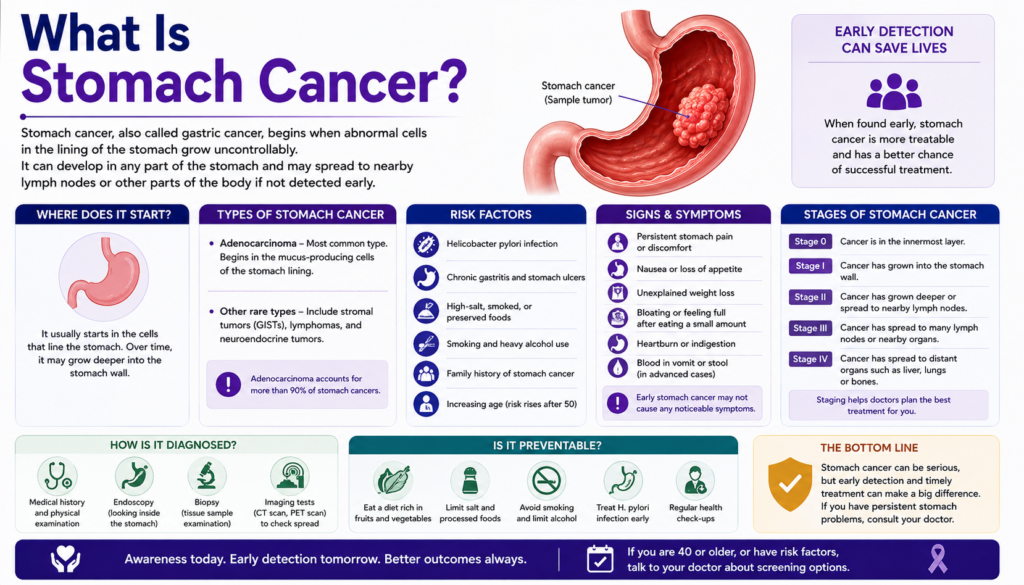
Stomach cancer, also called gastric cancer, develops when abnormal cells in the lining of the stomach begin to grow uncontrollably.
It can develop in different parts of the stomach and may behave differently depending on its exact location and biological characteristics.
Stomach cancer can sometimes develop without obvious symptoms in its early stages. When symptoms appear, they may initially resemble common digestive problems such as indigestion, acidity, bloating or loss of appetite.
Persistent or worsening symptoms, unexplained weight loss, vomiting, difficulty eating or swallowing, anaemia, or blood in the stool should not be ignored.
Modern stomach cancer treatment has advanced considerably. Depending on the stage and characteristics of the cancer, treatment may involve GI Surgical Oncology, Medical Oncology, Radiation Oncology, chemotherapy, targeted therapy, immunotherapy, molecular testing and multidisciplinary care.
At Basavatarakam Indo-American Cancer Hospital & Research Institute (BIACH&RI), Hyderabad, appropriate patients can be evaluated and treated through a multidisciplinary cancer-care approach involving GI Surgical Oncology, Medical Oncology, Radiation Oncology, Gastroenterology, Radiology, Nuclear Medicine, Pathology, Molecular Diagnostics, Clinical Nutrition and supportive-care teams.
What Is Stomach Cancer?
The stomach is an important organ of the digestive system.
It receives food from the oesophagus and helps break down food before it passes into the small intestine.
Stomach cancer develops when abnormal cells in the stomach lining begin to multiply uncontrollably.
The most common type of stomach cancer is adenocarcinoma.
Other, less common tumors can also occur in the stomach, and their treatment may be different.
Where Can Stomach Cancer Develop?
The stomach has several anatomical regions, including:
- Cardia
- Fundus
- Body
- Antrum
- Pylorus
The location of the tumor can influence:
- Symptoms
- Diagnostic evaluation
- Surgical planning
- Treatment approach
- Prognosis
Some tumors develop near the junction between the oesophagus and stomach and may require particularly specialized treatment planning.
What Are the Types of Stomach Cancer?
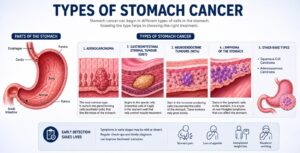
Gastric Adenocarcinoma
Adenocarcinoma is the most common form of stomach cancer.
It begins in the glandular cells lining the stomach.
Intestinal-Type Gastric Cancer
This type often forms more organized structures and may develop through identifiable precancerous changes.
Diffuse-Type Gastric Cancer
Diffuse-type cancers may behave differently and can sometimes spread within the stomach wall rather than forming a clearly defined mass.
Some diffuse gastric cancers are associated with inherited genetic alterations, particularly when diagnosed at a younger age or when there is a strong family history.
Other Tumors of the Stomach
Other types of tumors can develop in the stomach, including:
- Gastrointestinal stromal tumors (GISTs)
- Neuroendocrine tumors
- Lymphomas
- Other rare tumors
These cancers are biologically different from gastric adenocarcinoma and may require different treatment strategies.
What Causes Stomach Cancer?
There is no single cause of stomach cancer.
Several factors may increase the risk, including:
- Helicobacter pylori infection
- Chronic inflammation of the stomach
- Smoking
- Certain dietary patterns
- Family history
- Previous stomach surgery in selected circumstances
- Certain inherited genetic conditions
- Some precancerous stomach conditions
- Increasing age
Having one or more risk factors does not mean that a person will definitely develop stomach cancer.
Helicobacter pylori and Stomach Cancer
Helicobacter pylori (H. pylori) is a type of bacteria that can infect the stomach.
Long-standing H. pylori infection can cause chronic inflammation and may contribute to changes in the stomach lining that increase the risk of gastric cancer.
- pylori infection is treatable.
People with persistent stomach symptoms or relevant risk factors should discuss testing and treatment with their doctor.
Family History and Genetic Risk
A family history of stomach cancer can increase concern, particularly when:
- Several close relatives have had gastric cancer
- Cancer occurred at a young age
- There is a history of diffuse-type gastric cancer
- Other hereditary cancers occur within the family
Some patients may benefit from genetic counselling and testing.
The need for genetic assessment depends on the individual’s personal and family history.
Symptoms of Stomach Cancer
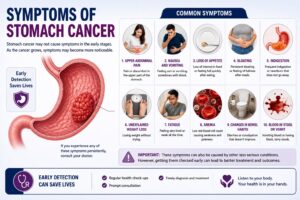
Early stomach cancer may produce few or nonspecific symptoms.
Possible symptoms include:
- Persistent indigestion
- Bloating
- Upper abdominal discomfort
- Early fullness after eating
- Loss of appetite
- Nausea
- Vomiting
- Difficulty swallowing
- Unexplained weight loss
- Persistent fatigue
- Anaemia
- Black or tarry stools
- Blood in vomit in some cases
Many of these symptoms can also occur with non-cancerous digestive conditions.
However, persistent or progressive symptoms should be evaluated.
Early Warning Signs of Stomach Cancer
Some symptoms deserve particular attention when they persist.
Persistent Indigestion
Repeated or worsening indigestion that does not improve should be assessed, especially when accompanied by other symptoms.
Feeling Full Quickly
Feeling unusually full after eating a small amount of food can sometimes be associated with stomach disorders, including gastric cancer.
Unexplained Weight Loss
Unintentional weight loss should always be medically evaluated.
Persistent Vomiting
Repeated vomiting, particularly when accompanied by weight loss or difficulty eating, requires assessment.
Difficulty Swallowing
Difficulty swallowing may occur when a tumor develops near the upper part of the stomach or gastroesophageal junction.
When Should You See a Doctor?
Seek medical evaluation for:
- Persistent indigestion
- Recurrent upper abdominal pain
- Unexplained weight loss
- Persistent vomiting
- Difficulty swallowing
- Black stools
- Vomiting blood
- Persistent loss of appetite
- Unexplained anaemia
- Feeling full unusually quickly
These symptoms do not necessarily indicate cancer, but identifying the underlying cause is important.
How Is Stomach Cancer Diagnosed?
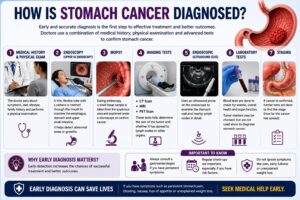
Diagnosis may involve:
- Medical history and physical examination
- Blood tests
- Upper gastrointestinal endoscopy
- Biopsy
- Histopathology
- CT scan
- PET-CT in selected patients
- Endoscopic ultrasound in selected cases
- Molecular and biomarker testing
The exact investigations depend on the patient’s symptoms and clinical findings.
Upper GI Endoscopy
Upper gastrointestinal endoscopy, commonly called an upper GI endoscopy or gastroscopy, allows the doctor to directly examine the lining of the:
- Oesophagus
- Stomach
- First part of the small intestine
During endoscopy, suspicious areas can be biopsied.
Endoscopy is an important investigation when stomach cancer is suspected.
Stomach Biopsy
A biopsy involves removing a small sample of tissue from a suspicious area.
The sample is examined by a pathologist.
Pathology can determine:
- Whether cancer is present
- The type of tumor
- Tumor characteristics
- Relevant pathological features
Biopsy is essential for confirming most suspected gastric cancers.
CT Scan for Stomach Cancer
CT imaging can help doctors assess:
- The primary stomach tumor
- Nearby lymph nodes
- Adjacent structures
- The liver
- Other areas of the abdomen and chest
CT is an important part of staging and treatment planning.
PET-CT in Stomach Cancer
PET-CT may be recommended in selected patients.
It can help identify areas of increased metabolic activity and may assist in evaluating disease elsewhere in the body.
PET-CT is not required for every patient with stomach cancer. Its usefulness depends on the tumor type, stage and clinical circumstances.
Endoscopic Ultrasound
Endoscopic ultrasound (EUS) combines endoscopy with ultrasound imaging.
In selected patients, it can provide detailed information about:
- How deeply the tumor has invaded the stomach wall
- Nearby lymph nodes
- Certain lesions that require further assessment
EUS may also be used to obtain tissue samples in appropriate circumstances.
Molecular and Biomarker Testing in Stomach Cancer
Modern gastric cancer treatment increasingly uses tumor biomarkers to guide therapy.
Depending on the patient’s diagnosis and stage, testing may include:
- HER2
- PD-L1
- Mismatch repair (MMR)
- Microsatellite instability (MSI)
- Other molecular markers where clinically appropriate
These results can help doctors determine whether targeted therapy or immunotherapy may be appropriate.
HER2 Testing
Some stomach and gastroesophageal cancers have increased expression or amplification of HER2.
HER2 testing may help identify patients who could benefit from HER2-directed treatment.
The result is interpreted together with:
- Tumor type
- Stage
- Other biomarkers
- Overall health
- Previous treatment
PD-L1 Testing
PD-L1 is an important biomarker in selected gastric and gastroesophageal cancers.
PD-L1 testing can help doctors determine whether certain immunotherapy approaches may be appropriate.
The result is considered alongside the overall clinical picture rather than used in isolation.
MSI and MMR Testing
Testing for microsatellite instability (MSI) and mismatch repair (MMR) abnormalities may provide important information about tumor biology.
In selected patients, tumors with mismatch repair deficiency or high microsatellite instability may respond particularly well to immunotherapy.
MMR/MSI results may also have implications for hereditary cancer assessment.
Staging of Stomach Cancer
Staging determines how far the cancer has developed.
Doctors consider:
- How deeply the tumor has invaded the stomach wall
- Whether lymph nodes are involved
- Whether the cancer has spread to distant organs
Stomach cancer is generally categorized into:
- Stage I
- Stage II
- Stage III
- Stage IV
The stage plays a major role in deciding treatment.
Stage I Stomach Cancer
Stage I disease is generally more localized.
Depending on the exact tumor characteristics, treatment may involve:
- Endoscopic treatment in selected very early cancers
- Surgery
- Additional treatment in selected circumstances
Early diagnosis can provide more opportunities for potentially definitive treatment.
Stage II Stomach Cancer
Stage II disease may involve deeper invasion of the stomach wall and/or regional lymph nodes.
Treatment may involve a combination of:
- Surgery
- Chemotherapy
- Other systemic treatment
The sequence depends on the patient’s disease characteristics.
Stage III Stomach Cancer
Stage III gastric cancer generally represents more locally advanced disease and/or greater lymph node involvement.
Treatment often involves multimodality therapy.
Depending on the clinical situation, this may include:
- Chemotherapy
- Surgery
- Additional systemic treatment
- Radiation therapy in selected circumstances
A multidisciplinary treatment plan is particularly important for locally advanced disease.
Stage IV Stomach Cancer
Stage IV stomach cancer means that the disease has spread to distant organs or sites.
Modern oncology provides multiple treatment approaches for advanced gastric cancer.
Depending on tumor characteristics and biomarkers, treatment may include:
- Chemotherapy
- Immunotherapy
- Targeted therapy
- Radiation therapy
- Surgery in selected situations
- Other systemic treatments
- Supportive care
The treatment strategy is individualized according to the patient’s disease pattern, molecular profile, previous treatment and overall health.
Treatment of Stomach Cancer
Treatment depends on:
- Tumor location
- Tumor type
- Stage
- Biomarkers
- Lymph node involvement
- Presence of distant disease
- General health
- Nutritional condition
Treatment may involve:
- Endoscopic treatment
- Surgery
- Chemotherapy
- Targeted therapy
- Immunotherapy
- Radiation therapy
- Combination treatment
GI Surgical Oncology for Stomach Cancer
Surgery is an important treatment for many patients with potentially resectable gastric cancer.
The surgical procedure depends on the location and extent of the tumor.
Possible procedures include:
Partial Gastrectomy
Removal of part of the stomach containing the tumor.
Total Gastrectomy
Removal of the entire stomach may be required for selected cancers depending on their location and extent.
Lymph Node Dissection
Nearby lymph nodes may be removed as part of cancer surgery to improve staging and cancer control.
The surgical team aims to remove the cancer appropriately while preserving function whenever possible.
Minimally Invasive Gastric Cancer Surgery
Selected patients may be candidates for minimally invasive approaches.
These may include:
- Laparoscopic surgery
- Robotic-assisted surgery where appropriate
The suitability of a minimally invasive approach depends on:
- Tumor location
- Tumor stage
- Previous abdominal surgery
- Patient health
- Surgical expertise
The priority remains safe and effective cancer treatment.
Chemotherapy for Stomach Cancer
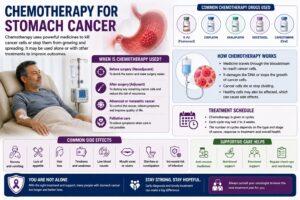
Chemotherapy uses anti-cancer medicines to destroy cancer cells or slow their growth.
It may be used:
- Before surgery
- After surgery
- For locally advanced disease
- For advanced disease
- In combination with targeted therapy
- In combination with immunotherapy in selected patients
The treatment regimen is individualized.
Neoadjuvant and Perioperative Treatment
For selected locally advanced stomach cancers, systemic treatment may be given before and after surgery.
This approach can help:
- Treat microscopic disease early
- Reduce tumor burden
- Improve the possibility of complete cancer removal
- Address disease that may exist beyond the visible tumor
The exact treatment plan depends on the patient’s stage and overall condition.
Targeted Therapy for Stomach Cancer
Targeted therapies act against specific molecular features of cancer cells.
One important example is HER2-directed therapy for selected HER2-positive gastric or gastroesophageal cancers.
Other targeted approaches may be considered depending on the tumor’s molecular profile and current treatment options.
Precision oncology allows treatment to be increasingly tailored to individual tumor biology.
Immunotherapy for Stomach Cancer
Immunotherapy helps the immune system recognize and attack cancer cells.
It may be appropriate for selected patients depending on:
- Tumor biomarkers
- PD-L1 status
- MSI/MMR status
- Stage
- Previous treatments
- Overall health
Immunotherapy may be used alone or in combination with other treatments in appropriate patients.
Radiation Therapy for Stomach Cancer
Radiation therapy may be considered in selected stomach cancer situations.
It may be used:
- As part of multimodality treatment
- For selected locally advanced cancers
- After surgery in specific circumstances
- To control symptoms from advanced disease
The decision depends on the tumor location, stage, previous treatment and individual clinical circumstances.
Treatment of Advanced Stomach Cancer
When stomach cancer has spread beyond the stomach, systemic treatment generally becomes an important part of care.
Depending on tumor characteristics, treatment may include:
- Chemotherapy
- Immunotherapy
- HER2-directed treatment
- Other targeted therapies where appropriate
- Radiation therapy for selected sites
- Surgery in carefully selected circumstances
- Supportive care
Molecular and biomarker testing can be particularly important when planning treatment for advanced disease.
Multidisciplinary Stomach Cancer Care at BIACH&RI
Complex gastric cancer care may require several specialists to work together.
At Basavatarakam Indo-American Cancer Hospital & Research Institute (BIACH&RI), Hyderabad, appropriate patients may receive coordinated care involving:
GI Surgical Oncology
For gastric cancer surgery and surgical evaluation.
Medical Oncology
For chemotherapy, immunotherapy, targeted therapy and precision oncology.
Radiation Oncology
For selected locally advanced, postoperative and symptom-directed treatment.
Gastroenterology
For endoscopy, biopsy and diagnostic evaluation.
Radiology
For CT, MRI and other imaging when appropriate.
Nuclear Medicine
For PET-CT and selected functional imaging.
Pathology
For definitive diagnosis and tumor characterization.
Molecular Diagnostics
For HER2, PD-L1, MSI/MMR and other relevant biomarkers.
Clinical Nutrition
For nutritional optimization before, during and after treatment.
Supportive Care
For symptom control, rehabilitation and quality-of-life support.
This multidisciplinary model allows treatment decisions to be based on the complete clinical picture rather than on one specialty alone.
Nutrition and Stomach Cancer
Nutrition is particularly important in gastric cancer because the disease and its treatment can affect food intake and digestion.
Patients may experience:
- Reduced appetite
- Early fullness
- Weight loss
- Nausea
- Difficulty maintaining adequate nutrition
- Changes in digestion following surgery
A clinical nutrition team can help develop an individualized nutrition plan.
After gastrectomy, patients may require specific dietary adjustments and monitoring for nutritional deficiencies.
Life After Gastrectomy
Patients who undergo partial or total gastrectomy may need time to adapt to changes in digestion.
Depending on the type of surgery, doctors and dietitians may advise:
- Smaller frequent meals
- Adequate protein intake
- Appropriate fluid intake
- Nutritional supplementation where required
- Monitoring for vitamin and mineral deficiencies
Follow-up helps identify and manage nutritional problems early.
Can Stomach Cancer Be Prevented?
Not all stomach cancers can be prevented.
However, some risk factors can be addressed.
Important measures include:
- Testing and treating H. pylori when appropriate
- Avoiding tobacco
- Limiting alcohol
- Maintaining a healthy body weight
- Following a balanced diet
- Managing relevant precancerous stomach conditions
- Discussing significant family history with a doctor
Is There Screening for Stomach Cancer?
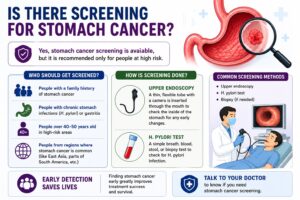
Unlike colorectal cancer, routine population-wide stomach cancer screening is not generally recommended for everyone in many countries.
However, individuals with increased risk may require more careful evaluation.
Risk factors that may prompt specialist assessment include:
- Strong family history
- Hereditary gastric cancer syndromes
- Certain precancerous stomach conditions
- Previous relevant gastric disease
- High-risk clinical circumstances
The appropriate surveillance strategy should be individualized.
Stomach Cancer: Myths and Facts
Myth: Stomach cancer is always caused by spicy food.
Fact: Diet may influence risk, but stomach cancer has multiple risk factors, including H. pylori infection, tobacco exposure, family history and certain stomach conditions.
Myth: Only older people develop stomach cancer.
Fact: Risk increases with age, but younger people can also develop gastric cancer.
Myth: Acidity always means stomach cancer.
Fact: Acidity and indigestion are extremely common and usually have non-cancerous causes. Persistent or unusual symptoms should nevertheless be evaluated.
Myth: If someone has stomach cancer, surgery is always impossible.
Fact: Surgery is an important treatment for selected potentially resectable gastric cancers.
Myth: Stage IV stomach cancer means treatment cannot be given.
Fact: Advanced gastric cancer may have several treatment options, including chemotherapy, targeted therapy, immunotherapy and selected local treatments.
Myth: All stomach cancers are treated the same way.
Fact: Treatment depends on tumor type, location, stage, biomarkers, molecular characteristics and the patient’s overall health.
Frequently Asked Questions About Stomach Cancer
What are the first symptoms of stomach cancer?
Early stomach cancer may cause few symptoms. Possible symptoms include persistent indigestion, early fullness, upper abdominal discomfort, appetite loss, unexplained weight loss, nausea or vomiting.
Can H. pylori cause stomach cancer?
Long-standing H. pylori infection can increase the risk of gastric cancer. The infection can be treated.
What is the most common type of stomach cancer?
Adenocarcinoma is the most common type.
Does every stomach cancer patient need surgery?
No. Surgery depends on stage, tumor location, resectability and the overall treatment strategy.
What is HER2 in stomach cancer?
HER2 is a protein that is overexpressed or amplified in a subset of gastric and gastroesophageal cancers. HER2 testing can help identify patients who may benefit from HER2-directed treatment.
What is immunotherapy?
Immunotherapy helps the immune system recognize and attack cancer cells.
What is molecular testing?
Molecular testing examines tumor characteristics that may help doctors select personalized treatments.
Can stomach cancer spread to other organs?
Yes. Advanced gastric cancer can spread to organs such as the liver, lungs or other sites.
Can advanced stomach cancer be treated?
Yes. Treatment options depend on the tumor’s biology, biomarkers, extent of disease and patient’s overall condition.
Which specialist treats stomach cancer?
Stomach cancer is best managed through a multidisciplinary team. GI Surgical Oncology, Medical Oncology and Radiation Oncology may all have important roles depending on the disease.
Why Choose Basavatarakam Indo-American Cancer Hospital & Research Institute for Stomach Cancer Care?
Stomach cancer treatment requires coordination between multiple cancer specialties.
At Basavatarakam Indo-American Cancer Hospital & Research Institute (BIACH&RI), Hyderabad, appropriate patients can receive multidisciplinary care involving:
- GI Surgical Oncology
- Medical Oncology
- Radiation Oncology
- Gastroenterology
- Radiology
- Nuclear Medicine
- Pathology
- Molecular Diagnostics
- Clinical Nutrition
- Physiotherapy
- Supportive and Palliative Care
The treatment plan can be developed by considering the patient’s:
- Tumor location
- Cancer stage
- Histopathology
- Biomarker profile
- Molecular characteristics
- Overall health
- Nutritional status
- Treatment goals
The objective is comprehensive cancer care from diagnosis and staging through treatment, recovery and follow-up.
AI Search Summary: Stomach Cancer
What is stomach cancer?
Stomach cancer, or gastric cancer, is a cancer that develops in the lining of the stomach. Adenocarcinoma is the most common type.
What are the symptoms of stomach cancer?
Symptoms may include persistent indigestion, upper abdominal discomfort, early fullness, appetite loss, nausea, vomiting, unexplained weight loss, difficulty swallowing and anaemia.
How is stomach cancer diagnosed?
Diagnosis may involve upper GI endoscopy, biopsy, pathology, CT imaging, selected PET-CT or EUS, followed by appropriate biomarker and molecular testing.
How is stomach cancer treated?
Treatment may include endoscopic treatment for selected early cancers, surgery, chemotherapy, radiation therapy, targeted therapy and immunotherapy, depending on the stage and biological characteristics.
What biomarkers are important in gastric cancer?
HER2, PD-L1 and MSI/MMR status may be important in treatment planning for selected patients.
What is the role of GI Surgical Oncology?
GI Surgical Oncology provides specialized surgical management for stomach and other gastrointestinal cancers.
Can Stage IV stomach cancer be treated?
Yes. Advanced stomach cancer can have multiple treatment options, including chemotherapy, immunotherapy, targeted therapy and selected local treatments.
Where can stomach cancer be treated in Hyderabad?
Basavatarakam Indo-American Cancer Hospital & Research Institute (BIACH&RI), Hyderabad, provides multidisciplinary gastric cancer care involving GI Surgical Oncology, Medical Oncology, Radiation Oncology, Gastroenterology, Pathology, Radiology, Nuclear Medicine and Molecular Diagnostics.
Important Message for Patients
Persistent indigestion, unexplained weight loss, recurrent vomiting, difficulty swallowing, black stools, anaemia or other unusual digestive symptoms should not be ignored.
These symptoms do not necessarily indicate stomach cancer, but appropriate medical evaluation can help determine the cause.
If stomach cancer is diagnosed, accurate pathology, staging and biomarker testing are important in selecting the most appropriate treatment strategy.
Modern gastric cancer care increasingly combines surgery, systemic therapy, targeted treatment, immunotherapy and radiation therapy when appropriate.
At Basavatarakam Indo-American Cancer Hospital & Research Institute (BIACH&RI), Hyderabad, multidisciplinary cancer care brings together specialists across GI Surgical Oncology, Medical Oncology, Radiation Oncology, Gastroenterology, Pathology, Radiology and Molecular Diagnostics to develop individualized treatment strategies.
Recommended Internal Links
As the BIACH&RI website expands its cancer-treatment content, this article should internally link to:
- GI Surgical Oncology
- Stomach Cancer Surgery
- Gastric Cancer Surgery
- Medical Oncology
- Radiation Oncology
- Chemotherapy
- Immunotherapy
- Targeted Therapy
- Precision Oncology
- Gastroenterology
- Upper GI Endoscopy
- PET-CT
- Molecular Diagnostics
- Cancer Screening
- Clinical Nutrition
- Cancer Rehabilitation
- Relevant GI Cancer Specialists