

Childhood Leukemia: A Parent’s Guide to Understanding the Most Common Childhood Cancer
Hearing the words “Your child has leukemia” is one of the most overwhelming moments any parent can experience. It is natural to feel frightened, confused, and uncertain about what lies ahead. Questions about treatment, recovery, school, the future, and your child’s quality of life arise almost immediately.
The encouraging news is that childhood leukemia is one of the most treatable forms of childhood cancer. Over the past few decades, remarkable advances in pediatric oncology, chemotherapy, supportive care, molecular diagnostics, and Bone Marrow Transplantation have transformed outcomes for many children. Today, a large proportion of children diagnosed with leukemia achieve long-term remission and go on to live healthy, productive lives.
At Basavatarakam Indo-American Cancer Hospital & Research Institute (BIACH&RI), Hyderabad, our Pediatric Hemato-Oncology & Bone Marrow Transplant team provides comprehensive, evidence-based care for children with leukemia. From advanced diagnostics and individualized treatment planning to supportive care and long-term follow-up, our goal is to give every child the best possible chance of recovery while supporting families through every stage of the journey.
What Is Childhood Leukemia?
Leukemia is a cancer that begins in the bone marrow, the soft tissue inside bones where blood cells are produced.
A healthy bone marrow continuously makes three main types of blood cells:
- Red blood cells, which carry oxygen throughout the body.
- White blood cells, which help fight infections.
- Platelets, which help blood clot and prevent excessive bleeding.
In leukemia, immature white blood cells (called blasts) begin to grow and multiply in an uncontrolled manner. Instead of developing into healthy infection-fighting cells, they crowd out the normal blood-forming cells within the bone marrow.
As this happens:
- The number of healthy red blood cells falls, leading to anaemia.
- Platelet counts decrease, increasing the risk of bruising and bleeding.
- Normal white blood cells become less effective, making infections more common.
Without timely treatment, leukemia cells can spread through the bloodstream to other parts of the body, including the lymph nodes, liver, spleen, central nervous system, and other organs.
Is Childhood Leukemia Common?
Although cancer in children is uncommon compared with many childhood illnesses, leukemia is the most common childhood cancer, accounting for approximately one-third of all childhood cancer diagnoses worldwide.
It can occur in infants, young children, school-aged children, and adolescents, although some types are more common in specific age groups.
Early recognition of symptoms and prompt evaluation by experienced specialists are important because leukemia often progresses rapidly if left untreated.
Types of Childhood Leukemia
Acute Lymphoblastic Leukemia (ALL)
Acute Lymphoblastic Leukemia (ALL) is the most common type of childhood leukemia, representing about 75–80% of leukemia cases in children.
It develops from immature lymphoid cells, a type of white blood cell that normally helps protect the body from infections.
ALL usually progresses quickly, but it is also highly responsive to modern treatment protocols. Many children with ALL achieve complete remission and long-term survival with appropriate therapy.
Acute Myeloid Leukemia (AML)
Acute Myeloid Leukemia (AML) is less common than ALL but remains an important childhood blood cancer.
AML develops from immature myeloid cells, which normally mature into different types of blood cells, including certain white blood cells, red blood cells, and platelets.
Treatment for AML is different from that for ALL and often involves more intensive chemotherapy. Depending on the child’s diagnosis, risk category, and treatment response, Bone Marrow Transplantation may also be recommended.
What Causes Childhood Leukemia?
One of the first questions parents ask is:
“Did we do something wrong?”
The answer is no.
In the vast majority of children, the exact cause of leukemia is unknown.
Current medical research suggests that leukemia develops because of changes in the DNA of developing blood-forming cells. These genetic changes occur within the leukemia cells themselves and are usually not inherited from parents.
Importantly:
- Childhood leukemia is not caused by poor parenting.
- It is not caused by eating particular foods.
- It is not caused by routine childhood activities.
- It is not contagious.
Researchers continue to study the complex biological processes that lead to leukemia, but for most families there is no identifiable cause.
Are There Any Risk Factors?
Most children with leukemia have no known risk factors.
However, certain uncommon conditions may increase the risk, including:
- Some inherited genetic syndromes
- Certain rare bone marrow failure disorders
- Previous exposure to specific cancer treatments
- Rare inherited immune disorders
Even in these situations, having a risk factor does not mean that a child will definitely develop leukemia.
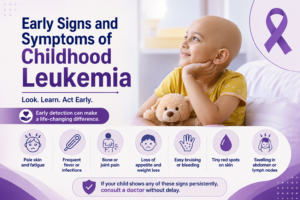
Early Signs and Symptoms of Childhood Leukemia
The symptoms of leukemia often resemble common childhood illnesses, which is one reason diagnosis can sometimes be delayed. Most children with fever, bruising, or bone pain do not have leukemia.
However, parents should seek medical evaluation if symptoms are persistent, unexplained, or occur together.
Common warning signs include:
Persistent Fever
A fever that continues for several days or repeatedly returns without an obvious cause should be evaluated, particularly when accompanied by other concerning symptoms.
Frequent Infections
Children may experience repeated infections, infections that are unusually severe, or illnesses that do not improve as expected.
Unusual Tiredness or Weakness
A child who becomes noticeably less active, sleeps more than usual, struggles with routine activities, or appears unusually fatigued should be assessed.
Pale Skin
Anaemia caused by reduced red blood cell production can make a child look pale and feel short of breath or dizzy during normal play.
Easy Bruising or Bleeding
Parents may notice:
- Bruises appearing without significant injury
- Frequent nosebleeds
- Bleeding gums
- Tiny red or purple spots on the skin (petechiae)
These may occur because platelet levels are low.
Bone or Joint Pain
Leukemia cells within the bone marrow can cause persistent pain in the legs, arms, or joints. Some children may limp or avoid walking because of discomfort.
Swollen Lymph Nodes
Lymph nodes in the neck, armpits, or groin may become enlarged. While swollen glands are commonly caused by infections, persistent enlargement should be medically assessed.
Enlarged Liver or Spleen
Some children develop fullness or swelling in the abdomen because the liver or spleen becomes enlarged.
Weight Loss and Poor Appetite
Unexpected weight loss, poor appetite, or failure to gain weight normally should not be ignored.
Night Sweats
Repeated drenching night sweats, particularly when associated with fever or weight loss, should prompt medical evaluation.
When Should Parents See a Pediatric Hemato-Oncologist?
Parents should seek prompt medical attention if:
- Fever persists despite treatment.
- Bruising or bleeding occurs frequently.
- Bone pain continues for several weeks.
- Fatigue becomes progressively worse.
- Symptoms continue without a clear explanation.
- Several warning signs appear together.
These symptoms do not necessarily indicate leukemia, but they do require careful assessment to determine the underlying cause.
Perfect. Continuing the same article without repeating anything.
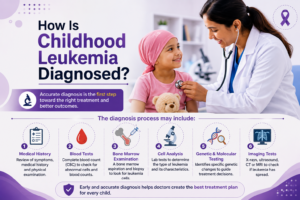
How Is Childhood Leukemia Diagnosed?
Receiving a diagnosis of childhood leukemia can feel overwhelming for any family. However, reaching an accurate diagnosis is the first and most important step toward successful treatment.
At Basavatarakam Indo-American Cancer Hospital & Research Institute (BIACH&RI), Hyderabad, children suspected of having leukemia undergo a systematic evaluation using advanced laboratory tests, imaging, and specialised hematopathology. The objective is not only to confirm leukemia but also to identify its exact subtype, genetic characteristics, and risk category so that every child receives the most appropriate treatment.
No single test confirms leukemia. Instead, doctors combine clinical examination, blood investigations, bone marrow studies, and molecular diagnostics to create a complete picture of the disease.
Step 1: Detailed Medical History and Physical Examination
The evaluation begins with a detailed discussion about the child’s symptoms, their duration, and any previous medical history.
The Pediatric Hemato-Oncologist will ask about:
- Persistent fever
- Fatigue or weakness
- Frequent infections
- Bruising or bleeding
- Bone or joint pain
- Weight loss
- Appetite changes
- Previous illnesses
- Family medical history
A thorough physical examination helps identify signs such as:
- Enlarged lymph nodes
- Liver enlargement
- Spleen enlargement
- Skin bruising or petechiae
- Pallor due to anaemia
- Bone tenderness
- Signs of infection
Although these findings may suggest leukemia, laboratory tests are essential to confirm the diagnosis.
Step 2: Complete Blood Count (CBC)
A Complete Blood Count (CBC) is usually the first laboratory investigation performed when leukemia is suspected.
This test measures:
- Haemoglobin
- Red blood cells
- White blood cells
- Platelets
Children with leukemia may have:
- Low haemoglobin (anaemia)
- Low platelet count (thrombocytopenia)
- Very high or sometimes low white blood cell counts
- Abnormal immature cells circulating in the blood
However, it is important to remember that a CBC alone cannot diagnose leukemia. Additional investigations are always required.
Step 3: Peripheral Blood Smear
A small sample of blood is examined under a microscope by experienced hematopathologists.
This allows specialists to evaluate:
- Cell size
- Cell shape
- Cell maturity
- Presence of abnormal blast cells
Finding blasts in the peripheral blood strongly raises the suspicion of leukemia, but further testing is required to determine the exact type.
Step 4: Bone Marrow Aspiration and Bone Marrow Biopsy
The Bone Marrow Aspiration is one of the most important investigations in diagnosing childhood leukemia.
During this procedure, a small amount of liquid bone marrow is collected, usually from the pelvic bone, under appropriate anaesthesia or sedation to keep the child as comfortable as possible.
Sometimes a Bone Marrow Biopsy is also performed to obtain a small core of bone marrow tissue for detailed examination.
These samples help doctors determine:
- Whether leukemia is present
- The percentage of leukemia cells
- The specific type of leukemia
- Whether normal blood-forming cells are affected
The results of the bone marrow examination form the foundation of the treatment plan.
Step 5: Flow Cytometry (Immunophenotyping)
Flow Cytometry is an advanced laboratory technique used to identify the exact type of leukemia.
Every leukemia cell carries specific proteins on its surface.
Flow cytometry analyses these proteins to determine whether the leukemia originates from:
- B lymphocytes
- T lymphocytes
- Myeloid cells
This distinction is extremely important because treatment protocols differ significantly between Acute Lymphoblastic Leukemia (ALL) and Acute Myeloid Leukemia (AML).
Flow cytometry also helps monitor the child’s response to treatment during follow-up.
Step 6: Cytogenetic and Molecular Testing
Modern leukemia treatment goes far beyond identifying the disease under a microscope.
Advanced laboratory testing evaluates genetic and chromosomal changes within leukemia cells.
These investigations may include:
- Chromosome analysis (Karyotyping)
- Fluorescence In Situ Hybridization (FISH)
- Polymerase Chain Reaction (PCR)
- Next-Generation Sequencing (NGS), when clinically indicated
These tests provide valuable information about:
- Disease biology
- Risk category
- Expected response to treatment
- Long-term prognosis
- Potential eligibility for targeted therapies in selected cases
Personalised treatment begins with personalised diagnosis.
Step 7: Minimal Residual Disease (MRD) Assessment
One of the most significant advances in pediatric leukemia care is Minimal Residual Disease (MRD) testing.
Even when leukemia appears to have disappeared under the microscope, tiny numbers of leukemia cells may still remain.
MRD testing uses highly sensitive laboratory techniques to detect these remaining cells.
MRD assessment helps doctors:
- Evaluate how well treatment is working
- Identify children at higher risk of relapse
- Modify treatment intensity when appropriate
- Improve long-term outcomes
MRD has become an important tool in modern pediatric leukemia management.
Step 8: Lumbar Puncture (Spinal Tap)
Leukemia can occasionally spread to the central nervous system (brain and spinal cord).
To evaluate this, doctors may perform a lumbar puncture, also known as a spinal tap.
A small amount of cerebrospinal fluid (CSF) is collected and examined for leukemia cells.
In many treatment protocols, chemotherapy is also administered directly into the cerebrospinal fluid during the same procedure to help prevent or treat central nervous system involvement.
Step 9: Imaging Studies
Although leukemia is primarily a disease of the blood and bone marrow, imaging studies may be performed depending on the child’s symptoms.
These investigations may include:
- Chest X-ray
- Ultrasound
- CT Scan
- MRI
- Echocardiography before certain chemotherapy medicines
- Additional imaging when clinically indicated
Imaging helps identify complications, evaluate organ involvement, and plan treatment safely.
Risk Stratification: Why Every Child Receives an Individualised Treatment Plan
Not every child with leukemia receives the same treatment.
Modern pediatric oncology uses risk stratification to classify patients into different treatment groups based on several factors, including:
- Type of leukemia (ALL or AML)
- Age at diagnosis
- Initial white blood cell count
- Genetic and molecular findings
- Response to initial chemotherapy
- Minimal Residual Disease (MRD) results
- Central nervous system involvement
- Other disease-specific factors
Risk stratification allows doctors to balance treatment effectiveness while minimising unnecessary side effects.
Children with lower-risk disease may avoid overly intensive treatment, while those with higher-risk disease may benefit from more intensive therapies or Bone Marrow Transplantation when appropriate.
How Is the Treatment Plan Decided?
Once all investigations are complete, the Pediatric Hemato-Oncology team reviews the results and develops an individualised treatment strategy.
At Basavatarakam Indo-American Cancer Hospital & Research Institute, treatment planning is guided by a multidisciplinary team that may include:
- Pediatric Hemato-Oncologists
- Bone Marrow Transplant Specialists
- Pediatric Intensivists
- Pathologists
- Radiologists
- Clinical Pharmacists
- Pediatric Oncology Nurses
- Nutritionists
- Infection Control Specialists
- Child Psychologists
The treatment plan is discussed in detail with parents so they understand:
- The diagnosis
- The proposed treatment
- Expected duration
- Possible side effects
- Supportive care measures
- Follow-up schedule
Families are encouraged to ask questions and participate actively in decision-making throughout the child’s treatment journey.
Great. Continuing the same final article. No repetition.
Treatment of Childhood Leukemia (ALL & AML)
A diagnosis of childhood leukemia is understandably overwhelming for families. However, one of the most reassuring facts is that many children with leukemia can be successfully treated, especially when diagnosed early and managed by an experienced Pediatric Hemato-Oncology team.
Treatment is carefully tailored to each child based on:
- The type of leukemia (ALL or AML)
- Age
- Risk category
- Genetic and molecular test results
- Response to treatment
- Overall health
At Basavatarakam Indo-American Cancer Hospital & Research Institute (BIACH&RI), Hyderabad, every child receives an individualized treatment plan developed by a multidisciplinary Pediatric Hemato-Oncology and Bone Marrow Transplant team following internationally accepted treatment principles and evidence-based protocols.
Goals of Treatment
The primary goals are to:
- Eliminate leukemia cells from the body
- Restore normal bone marrow function
- Prevent the disease from returning (relapse)
- Minimize treatment-related complications
- Help children return to normal childhood activities whenever possible
- Achieve the best possible long-term quality of life
Treatment for Acute Lymphoblastic Leukemia (ALL)
Treatment for ALL is usually given over 2 to 3 years, depending on the treatment protocol and the child’s risk category.
Treatment occurs in several carefully planned phases.
Phase 1: Induction Therapy
This is the first and one of the most important stages.
The objective is to destroy as many leukemia cells as possible and achieve complete remission, meaning leukemia cells are no longer detectable using standard microscopic examination.
Children usually receive a combination of chemotherapy medicines.
During this phase, doctors closely monitor:
- Blood counts
- Infections
- Organ function
- Response to treatment
- Nutritional status
Many families find this period emotionally challenging, but it is also the phase during which the treatment team works intensively to stabilize the child.
What Does “Remission” Mean?
A common misunderstanding is that remission means cure.
Remission means:
- Leukemia cells are no longer visible using standard tests.
- Blood counts begin returning toward normal.
- Bone marrow starts producing healthy blood cells again.
Although remission is an excellent response, additional treatment is essential because microscopic leukemia cells may still remain.
Phase 2: Consolidation (Intensification)
Once remission is achieved, treatment continues with consolidation therapy.
The goal is to eliminate any remaining leukemia cells that cannot be seen under a microscope.
Without this phase, leukemia has a much higher chance of returning.
Chemotherapy during consolidation may differ from induction therapy and is carefully adjusted according to the child’s treatment protocol.
Phase 3: Delayed Intensification
Some treatment protocols include another intensive phase called delayed intensification.
This phase helps destroy leukemia cells that may have survived earlier treatment and further reduces the risk of relapse.
Phase 4: Maintenance Therapy
Maintenance therapy continues for many months after intensive treatment has been completed.
The medicines are generally less intensive but remain extremely important.
Maintenance therapy helps prevent leukemia from returning and is a key reason why outcomes in childhood ALL have improved significantly over the years.
Parents should understand that even when a child appears healthy, completing the entire treatment schedule is essential.
Treatment for Acute Myeloid Leukemia (AML)
Treatment for AML differs from ALL.
AML usually requires:
- More intensive chemotherapy
- Shorter overall treatment duration
- Longer hospital admissions during treatment
- Careful monitoring for infections and complications
Depending on the child’s risk category and treatment response, Bone Marrow Transplantation (BMT) may be recommended.
What Is Chemotherapy?
Chemotherapy uses medicines to destroy rapidly growing leukemia cells.
The medicines circulate throughout the bloodstream, allowing them to reach leukemia cells wherever they are located.
Chemotherapy may be given:
- Through a vein (intravenous)
- By mouth (oral medicines)
- Into the cerebrospinal fluid (intrathecal chemotherapy) to protect the brain and spinal cord
The treatment schedule depends on the leukemia type and the child’s treatment protocol.
Does Chemotherapy Hurt?
The chemotherapy medicines themselves do not usually cause pain while being administered.
However, children may experience temporary side effects that are carefully monitored and treated by the healthcare team.
Supportive care has improved enormously over the past two decades, helping children tolerate treatment much better than in the past.
Common Side Effects of Chemotherapy
Every child responds differently.
Some children experience only mild side effects, while others require closer monitoring.
Possible side effects include:
- Hair loss
- Nausea
- Vomiting
- Mouth ulcers
- Loss of appetite
- Fatigue
- Increased risk of infections
- Low blood counts
- Easy bruising
- Bleeding
- Temporary weakness
The Pediatric Oncology team provides medications and supportive care to prevent or reduce many of these side effects.
Why Infection Prevention Is So Important
Chemotherapy temporarily reduces the body’s ability to fight infections.
Parents are educated about:
- Hand hygiene
- Safe food practices
- Avoiding contact with sick individuals
- Monitoring temperature
- Recognizing early signs of infection
Any fever during chemotherapy should be reported immediately because prompt medical evaluation is important.
Blood and Platelet Transfusions
Many children need transfusions during treatment.
These may include:
Red Blood Cell Transfusions
To treat anaemia and improve energy levels.
Platelet Transfusions
To reduce the risk of bleeding when platelet counts become very low.
These supportive treatments are an important part of leukemia care and help children safely continue chemotherapy.
Nutritional Support
Good nutrition supports recovery and helps children tolerate treatment.
At BIACH&RI, nutrition specialists work closely with families to develop individualized dietary plans based on the child’s age, nutritional status, treatment phase, and medical needs.
Children experiencing poor appetite, nausea, or mouth sores receive tailored nutritional guidance to maintain strength and support healing.
Pain Management
Pain during leukemia treatment may arise from:
- Bone pain
- Medical procedures
- Mouth ulcers
- Infections
The Pediatric Oncology team uses age-appropriate pain management strategies to keep children as comfortable as possible while minimizing unnecessary discomfort.
Psychological and Emotional Support
Leukemia affects the entire family, not just the child.
Parents often experience anxiety, uncertainty, and emotional stress.
Children may struggle with fear, separation from school, and changes to their daily routine.
Comprehensive care therefore includes emotional support from psychologists, counselors, nurses, and child-life professionals whenever available, helping children and families cope throughout treatment.
Education During Treatment
Many children can continue learning during treatment, although schedules may need to be adjusted depending on their health.
Parents are encouraged to stay in contact with schools so that education continues whenever possible.
Returning to school is an important milestone for many children after treatment.
Can Childhood Leukemia Be Cured?
This is the question every parent asks.
The answer is encouraging.
With modern treatment, many children with Acute Lymphoblastic Leukemia (ALL) achieve long-term remission and are considered cured.
Outcomes for Acute Myeloid Leukemia (AML) have also improved substantially over the years with advances in chemotherapy, supportive care, and Bone Marrow Transplantation for selected patients.
The exact outlook depends on several factors, including the type of leukemia, genetic characteristics, response to treatment, and overall health. Each child’s situation is unique, and the treating Pediatric Hemato-Oncologist is the best person to discuss the expected outcome.
Bone Marrow Transplant (BMT): When Is It Needed?
For many children with leukemia, chemotherapy alone is sufficient to achieve long-term remission. However, in certain situations, Bone Marrow Transplantation (BMT)—also known as Hematopoietic Stem Cell Transplantation (HSCT)—may offer the best chance of cure.
A Bone Marrow Transplant replaces diseased or damaged bone marrow with healthy blood-forming stem cells, allowing the child’s body to produce normal blood cells again.
At Basavatarakam Indo-American Cancer Hospital & Research Institute (BIACH&RI), Hyderabad, our Pediatric Bone Marrow Transplant team provides comprehensive transplant care for children who require this advanced treatment. Every child is carefully evaluated to determine whether transplantation is the most appropriate option based on internationally accepted clinical guidelines.
When Is Bone Marrow Transplant Recommended?
A transplant may be considered in selected children who have:
- High-risk Acute Myeloid Leukemia (AML)
- Certain high-risk subtypes of Acute Lymphoblastic Leukemia (ALL)
- Leukemia that has relapsed after treatment
- Poor response to chemotherapy
- Specific genetic or molecular abnormalities associated with higher-risk disease
- Other blood disorders such as severe aplastic anaemia, thalassemia major, sickle cell disease, or selected primary immunodeficiency disorders (where clinically appropriate)
The decision is individualized and made after careful multidisciplinary discussion with the family.
Types of Bone Marrow Transplant
Matched Sibling Donor Transplant
A healthy brother or sister whose tissue type closely matches the child may be the preferred donor when suitable.
Matched Unrelated Donor Transplant
If a matched sibling donor is unavailable, a compatible unrelated donor may be identified through donor registries, depending on the clinical situation.
Haploidentical (Half-Matched) Transplant
In selected cases, a parent or another partially matched family member may serve as the donor.
The choice of transplant depends on the child’s condition, donor availability, and the treating transplant team’s assessment.
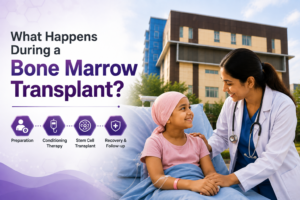
What Happens During a Bone Marrow Transplant?
Although each child’s journey is unique, the process generally includes:
- Comprehensive pre-transplant evaluation
- Donor selection and compatibility testing
- Conditioning treatment (chemotherapy, with or without other therapies as indicated)
- Stem cell infusion
- Engraftment and recovery
- Close monitoring for infections and transplant-related complications
- Long-term follow-up
Families receive counselling throughout the process to help them understand each stage of treatment.
Supportive Care: An Essential Part of Treatment
Successful leukemia treatment is not only about chemotherapy or transplantation. High-quality supportive care plays a vital role in helping children safely complete treatment.
Supportive care includes:
- Prompt management of infections
- Blood and platelet transfusions when required
- Nutritional counselling
- Pain management
- Anti-nausea medication
- Psychological support
- Physiotherapy and rehabilitation when indicated
- Family education and counselling
This holistic approach helps improve comfort, safety, and overall treatment outcomes.
Life After Leukemia Treatment
Completing treatment is a major milestone, but ongoing care remains important.
Children who have finished treatment require regular follow-up visits to:
- Monitor for recurrence
- Assess blood counts
- Evaluate growth and development
- Monitor heart, liver, kidney, and endocrine health when indicated
- Review immunization schedules
- Support emotional well-being
- Address school reintegration and quality of life
Most children gradually return to normal daily activities, including school, sports, and social life, under the guidance of their healthcare team.
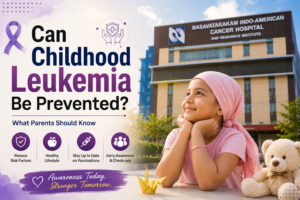
Can Childhood Leukemia Be Prevented?
At present, there is no proven way to prevent most cases of childhood leukemia.
Because the exact cause remains unknown in the majority of children, parents should understand that leukemia is not caused by everyday parenting decisions, routine childhood activities, or diet.
The best way to improve outcomes is early recognition of symptoms, prompt medical evaluation, and treatment by an experienced Pediatric Hemato-Oncology team.
Frequently Asked Questions (FAQ)
- What is the most common childhood cancer?
Leukemia is the most common cancer diagnosed in children.
- Is childhood leukemia curable?
Many children with leukemia can be successfully treated, and long-term remission or cure is possible with modern treatment. The outlook varies depending on the type of leukemia, risk category, and response to treatment.
- What are the earliest symptoms of childhood leukemia?
Persistent fever, unusual tiredness, frequent infections, easy bruising or bleeding, bone pain, swollen lymph nodes, and unexplained weight loss are among the symptoms that warrant medical evaluation.
- Is leukemia inherited?
Most childhood leukemia is not inherited and is not caused by anything parents did or did not do.
- Does every child with leukemia need a Bone Marrow Transplant?
No. Many children respond well to chemotherapy alone. Bone Marrow Transplantation is recommended only for selected patients based on their disease characteristics and treatment response.
- How long does treatment last?
Treatment duration varies depending on the type of leukemia and the treatment plan. Your Pediatric Hemato-Oncologist will explain the expected timeline for your child.
- Can children go back to school after treatment?
Many children return to school and resume normal activities after treatment, with guidance from their healthcare team.
- Should parents seek care at a specialized Pediatric Cancer Centre?
Yes. Childhood leukemia is best managed by specialists experienced in Pediatric Hemato-Oncology and supported by multidisciplinary teams familiar with the unique medical and emotional needs of children.
Why Choose Basavatarakam Indo-American Cancer Hospital & Research Institute (BIACH&RI)?
Families looking for specialized childhood leukemia care need a hospital that combines clinical expertise, advanced diagnostics, multidisciplinary care, and compassionate support.
At Basavatarakam Indo-American Cancer Hospital & Research Institute (BIACH&RI), Hyderabad, children with leukemia receive care from a dedicated Pediatric Hemato-Oncology and Bone Marrow Transplant team with access to comprehensive cancer services under one roof.
Our approach focuses on:
- Individualized treatment planning
- Multidisciplinary teamwork
- Advanced laboratory diagnostics
- Evidence-based treatment protocols
- Pediatric Bone Marrow Transplant expertise
- Comprehensive supportive care
- Nutrition and rehabilitation support
- Long-term survivorship and follow-up care
- Family-centred communication
Key Takeaways
- Childhood leukemia is the most common childhood cancer.
- Early diagnosis and specialist care are critical.
- ALL and AML are the two major types of childhood leukemia.
- Modern diagnostic techniques help personalize treatment.
- Chemotherapy is the mainstay of treatment.
- Bone Marrow Transplantation is recommended for selected children.
- Supportive care is essential throughout treatment.
- Many children can achieve long-term remission and lead healthy lives after treatment.
If your child has persistent fever, unusual bruising, unexplained fatigue, bone pain, or recurrent infections, do not ignore these symptoms. Early evaluation by a Pediatric Hemato-Oncologist can make a significant difference.
The Pediatric Hemato-Oncology & Bone Marrow Transplant team at Basavatarakam Indo-American Cancer Hospital & Research Institute, Hyderabad, is committed to providing comprehensive, evidence-based, and compassionate care for children with leukemia and other childhood blood disorders. Contact our team to learn more about evaluation, diagnosis, treatment options, and long-term follow-up care.