

Colorectal Cancer: Symptoms, Diagnosis, Stages and Treatment
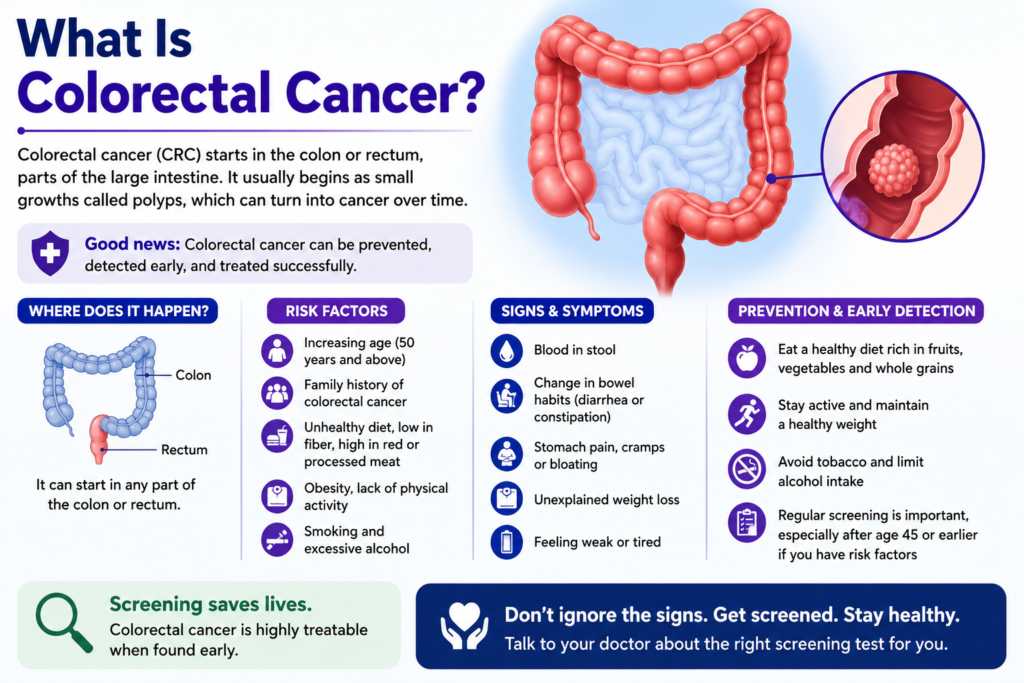
Colorectal cancer is a cancer that develops in the colon or rectum, which together form an important part of the digestive system.
It is one of the major cancers affecting adults and can develop gradually from abnormal growths called polyps. Some polyps can eventually become cancerous, which is why appropriate screening and early evaluation are important.
Colorectal cancer can occur in both men and women. Although the risk generally increases with age, younger adults can also develop the disease.
Symptoms may include changes in bowel habits, blood in the stool, abdominal discomfort, unexplained weight loss, persistent constipation or diarrhoea, and unexplained anaemia. However, early colorectal cancer may sometimes cause no obvious symptoms.
The good news is that colorectal cancer can often be detected at an earlier stage through appropriate screening, and modern treatment provides multiple options depending on the location, stage and biological characteristics of the cancer.
At Basavatarakam Indo-American Cancer Hospital & Research Institute (BIACH&RI), Hyderabad, colorectal cancer care can involve GI Surgical Oncology, Medical Oncology, Radiation Oncology, Gastroenterology, Radiology, Nuclear Medicine, Pathology, Molecular Diagnostics, Clinical Nutrition, Physiotherapy and supportive care teams, depending on the patient’s individual requirements.
What Is Colorectal Cancer?
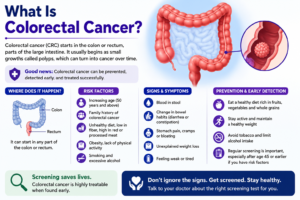
Colorectal cancer begins in the inner lining of the colon or rectum when abnormal cells begin to grow uncontrollably.
The colon and rectum are parts of the large intestine.
The colon absorbs water and helps form stool, while the rectum stores stool before it leaves the body.
A colorectal cancer may develop as a polyp and, over time, become invasive.
The exact behaviour of colorectal cancer varies from patient to patient.
Treatment decisions depend on:
- Location of the cancer
- Size and extent of the tumor
- Lymph node involvement
- Presence or absence of distant disease
- Histopathology
- Molecular characteristics
- Overall health
- Nutritional status
Colon Cancer and Rectal Cancer: What Is the Difference?
Colorectal cancer includes both colon cancer and rectal cancer.
Although they are closely related, their treatment can differ because of the anatomical location of the tumor.
Colon Cancer
Colon cancer develops in the colon.
Treatment may involve:
- Surgery
- Chemotherapy
- Targeted therapy
- Immunotherapy in selected patients
- Other individualized systemic treatments
Rectal Cancer
Rectal cancer develops in the rectum.
Because the rectum lies within the pelvis and close to other important structures, treatment may involve a combination of:
- Surgery
- Chemotherapy
- Radiation therapy
- Chemoradiation
- Immunotherapy in selected patients
- Targeted treatment where appropriate
The treatment strategy is carefully planned according to the stage and biology of the cancer.
How Does Colorectal Cancer Develop?
Many colorectal cancers begin as polyps.
A polyp is an abnormal growth arising from the inner lining of the colon or rectum.
Not every polyp becomes cancer.
However, certain types of polyps can gradually develop cellular changes and eventually become cancerous.
This process can take several years in many cases.
Because some colorectal cancers develop from detectable and removable polyps, screening can play an important role in prevention and early detection.
What Are the Risk Factors for Colorectal Cancer?
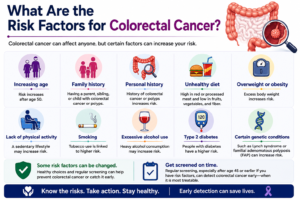
Several factors can increase the risk of colorectal cancer.
These include:
- Increasing age
- Family history of colorectal cancer
- Personal history of colorectal polyps
- Certain inherited cancer syndromes
- Inflammatory bowel disease
- Obesity
- Physical inactivity
- Smoking
- Excessive alcohol consumption
- Certain dietary patterns
Having a risk factor does not mean that a person will definitely develop colorectal cancer.
Likewise, people without obvious risk factors can still develop the disease.
Family History and Colorectal Cancer
A family history of colorectal cancer can increase an individual’s risk.
The risk may be particularly important when:
- A close relative was diagnosed at a young age
- Several family members have colorectal cancer
- There is a history of multiple colorectal polyps
- There are other cancers occurring within the family
People with significant family histories should discuss personalized screening and genetic assessment with their healthcare team.
Inherited Colorectal Cancer Syndromes
A proportion of colorectal cancers are associated with inherited genetic conditions.
Examples include:
- Lynch syndrome
- Familial adenomatous polyposis (FAP)
- Other hereditary cancer syndromes
Genetic counselling and testing may be considered when the personal or family history suggests an inherited cancer risk.
Symptoms of Colorectal Cancer
Colorectal cancer may produce different symptoms depending on its location and extent.
Possible symptoms include:
- Blood in the stool
- Black or dark stools in some cases
- Change in bowel habits
- Persistent constipation
- Persistent diarrhoea
- Alternating constipation and diarrhoea
- Narrower stools
- Feeling that the bowel has not completely emptied
- Abdominal pain or cramping
- Bloating
- Unexplained weight loss
- Loss of appetite
- Persistent fatigue
- Unexplained iron-deficiency anaemia
These symptoms can occur in conditions other than cancer, but persistent or unexplained symptoms should be evaluated.
Blood in the Stool: When Should You Be Concerned?
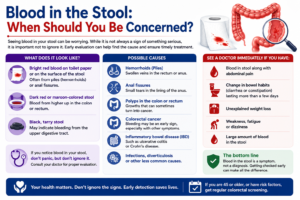
Blood in the stool should not automatically be assumed to be due to piles or haemorrhoids.
Bleeding can have several causes, including benign conditions, but it can also be a symptom of colorectal cancer.
The appearance of blood can vary depending on the location of the bleeding.
If you notice repeated or unexplained blood in your stool, medical evaluation is recommended.
Change in Bowel Habits
A persistent change in normal bowel habits may include:
- New constipation
- Persistent diarrhoea
- Alternating constipation and diarrhoea
- Increased frequency of bowel movements
- A persistent feeling of incomplete evacuation
A change does not necessarily mean cancer, but persistent changes deserve appropriate evaluation.
Unexplained Weight Loss and Fatigue
Unintentional weight loss and persistent fatigue can occur in many illnesses.
In colorectal cancer, fatigue may also be related to chronic blood loss and anaemia.
If unexplained weight loss or persistent fatigue occurs along with bowel symptoms, medical evaluation becomes particularly important.
How Is Colorectal Cancer Diagnosed?
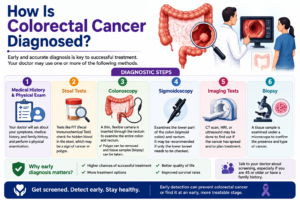
Diagnosis may involve:
- Medical history and physical examination
- Blood tests
- Stool-based tests in appropriate screening settings
- Colonoscopy
- Biopsy
- CT or MRI imaging
- PET-CT in selected situations
- Pathological examination
- Molecular and biomarker testing
The exact combination of tests depends on the patient’s symptoms, findings and clinical situation.
Colonoscopy for Colorectal Cancer
Colonoscopy is an important examination of the colon and rectum.
During the procedure, a flexible camera is used to examine the lining of the large intestine.
Colonoscopy can help doctors:
- Detect polyps
- Identify suspicious lesions
- Remove selected polyps
- Obtain tissue samples
- Investigate unexplained bleeding or bowel changes
If an abnormal area is identified, a biopsy may be performed.
Biopsy and Pathology
A biopsy provides tissue for microscopic examination.
The pathology team determines whether cancer is present and helps classify the tumor.
The report may provide information about:
- Tumor type
- Tumor grade
- Depth of invasion
- Lymphovascular involvement
- Other pathological features
Pathology is essential for determining the appropriate treatment strategy.
Molecular Testing in Colorectal Cancer
Modern colorectal cancer care increasingly incorporates molecular and biomarker testing.
Depending on the stage and clinical situation, testing may include:
- Mismatch repair (MMR) proteins
- Microsatellite instability (MSI)
- KRAS
- NRAS
- BRAF
- HER2 in selected cases
- Other molecular markers when clinically appropriate
These results can help identify patients who may benefit from specific targeted treatments or immunotherapy.
MSI and MMR Testing
Microsatellite instability (MSI) and mismatch repair (MMR) testing are important components of modern colorectal cancer evaluation.
Certain colorectal cancers have abnormalities in the DNA mismatch repair system.
Patients whose tumors demonstrate mismatch repair deficiency or high microsatellite instability may have different treatment considerations, including potential eligibility for immunotherapy in appropriate clinical settings.
MMR/MSI findings can also provide important information regarding possible hereditary cancer syndromes.
Staging of Colorectal Cancer
Once colorectal cancer is confirmed, doctors determine how far it has developed.
Staging considers:
- Depth of tumor invasion
- Lymph node involvement
- Spread to distant organs
Colorectal cancer is commonly categorized from:
- Stage I
- Stage II
- Stage III
- Stage IV
The stage helps doctors determine the most appropriate treatment strategy.
Stage I Colorectal Cancer
Stage I colorectal cancer is generally localized to the bowel wall without involvement of distant organs.
Surgery is an important treatment for many patients.
In selected early lesions, local endoscopic removal may be appropriate depending on the pathological features.
Stage II Colorectal Cancer
Stage II disease has grown deeper into or through the bowel wall but has not spread to regional lymph nodes.
Surgery is commonly the primary treatment.
Depending on specific pathological risk factors, additional treatment may be considered.
Stage III Colorectal Cancer
Stage III colorectal cancer involves regional lymph nodes.
Treatment commonly involves surgery followed by systemic therapy, although treatment sequencing can vary, particularly for rectal cancer.
For rectal cancer, radiation therapy and chemotherapy may be incorporated before surgery in selected patients.
Stage IV Colorectal Cancer
Stage IV colorectal cancer means the disease has spread to distant organs or sites.
The liver and lungs are among the sites that can be involved.
However, Stage IV does not mean that treatment is not possible.
Modern colorectal cancer treatment may include:
- Chemotherapy
- Targeted therapy
- Immunotherapy for selected tumors
- Surgery in selected patients
- Ablation or other local treatments in selected situations
- Radiation therapy for selected sites
- Combination treatment
The treatment plan depends on the location and extent of disease, molecular characteristics, overall health and treatment goals.
Some patients with limited metastatic disease may be considered for aggressive treatment approaches with the aim of achieving long-term disease control or, in selected circumstances, potentially complete removal or destruction of detectable disease.
Treatment of Colorectal Cancer
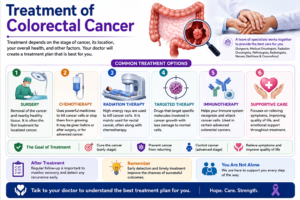
Treatment depends on:
- Colon versus rectal location
- Stage
- Tumor biology
- Molecular characteristics
- Lymph node involvement
- Presence of distant disease
- General health
- Nutritional status
Treatment may include:
- Surgery
- Chemotherapy
- Radiation therapy
- Targeted therapy
- Immunotherapy
- Endoscopic treatment
- Combination approaches
A multidisciplinary team determines the appropriate sequence.
GI Surgical Oncology for Colorectal Cancer
Surgery is an important component of treatment for many localized colorectal cancers.
Depending on the tumor location and extent, surgery may involve removal of the affected section of bowel along with nearby lymph nodes.
Different operations may be performed for tumors located in different parts of the colon and rectum.
The goal is to remove the cancer with appropriate margins while preserving bowel function whenever possible.
Minimally Invasive Colorectal Surgery
Selected patients may be suitable for minimally invasive surgery.
Depending on the clinical situation, approaches may include:
- Laparoscopic surgery
- Robotic-assisted surgery
Potential benefits may include smaller incisions, reduced postoperative discomfort and faster recovery in appropriately selected patients.
The safest surgical approach depends on tumor characteristics and the patient’s individual condition.
Rectal Cancer Surgery
Rectal cancer requires particularly careful planning because of the anatomy of the pelvis and the importance of preserving bowel, urinary and sexual function when possible.
Depending on the tumor’s location and stage, surgery may include procedures designed to:
- Remove the rectal tumor
- Preserve the anal sphincter when oncologically appropriate
- Remove involved lymph nodes
- Maintain the best possible functional outcome
The surgical approach is planned together with Medical Oncology and Radiation Oncology when multimodality treatment is required.
Neoadjuvant Treatment for Rectal Cancer
For selected locally advanced rectal cancers, treatment may begin before surgery.
This may involve combinations of:
- Chemotherapy
- Radiation therapy
- Chemoradiation
- Immunotherapy in selected patients
The goals may include:
- Shrinking the tumor
- Improving local control
- Increasing the possibility of complete tumor removal
- Reducing the risk of recurrence
- In selected patients, allowing organ-preserving strategies to be considered
The appropriate approach depends on the stage and molecular characteristics of the tumor.
Chemotherapy for Colorectal Cancer
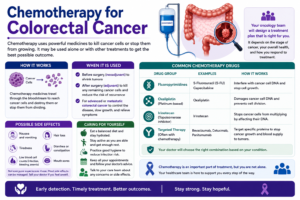
Chemotherapy remains an important treatment for many colorectal cancer patients.
It may be used:
- Before surgery
- After surgery
- For locally advanced disease
- For metastatic disease
- In combination with targeted therapy
- In combination with immunotherapy in selected patients
The exact treatment regimen depends on the cancer’s characteristics and the patient’s overall health.
Targeted Therapy for Colorectal Cancer
Targeted therapy is designed to act against specific molecular pathways involved in cancer growth.
Treatment selection may depend on biomarkers such as:
- RAS status
- BRAF status
- HER2 status in selected patients
- Other molecular characteristics
This is an important part of precision oncology for colorectal cancer.
Immunotherapy for Colorectal Cancer
Immunotherapy can be highly effective for selected colorectal cancers, particularly tumors with specific molecular characteristics such as MSI-high or mismatch repair-deficient disease.
Immunotherapy may be considered depending on:
- MMR/MSI status
- Stage
- Previous treatment
- Overall health
- Current treatment guidelines
Not every colorectal cancer patient benefits from immunotherapy, which is why appropriate biomarker testing is important.
Radiation Therapy for Rectal Cancer
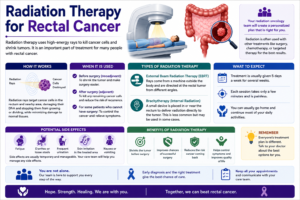
Radiation therapy is used more commonly in rectal cancer than in colon cancer.
It may be recommended:
- Before surgery
- Along with chemotherapy
- In selected recurrent cancers
- To control symptoms in advanced disease
Modern radiation techniques are designed to accurately target the tumor while minimizing unnecessary radiation exposure to nearby organs.
Treatment of Advanced Colorectal Cancer
When colorectal cancer spreads to distant organs, treatment becomes individualized according to the pattern of spread and tumor biology.
Systemic treatment may include:
- Chemotherapy
- Targeted therapy
- Immunotherapy
- Combination treatments
In selected patients, local treatment of metastatic disease may also be considered.
For example, patients with limited liver or lung metastases may sometimes be evaluated for:
- Surgical removal
- Ablation
- Other local treatment techniques
Such decisions require careful multidisciplinary assessment.
Liver Metastases from Colorectal Cancer
The liver is a common site for colorectal cancer metastases.
However, the presence of liver metastases does not automatically mean that surgery or other local treatment is impossible.
Selected patients may benefit from approaches combining:
- Systemic therapy
- Liver surgery
- Ablation
- Other local treatments
The decision depends on the number, size and location of lesions, response to treatment, liver function and overall health.
Multidisciplinary Colorectal Cancer Care at BIACH&RI
Complex colorectal cancer treatment often requires collaboration among several specialties.
At Basavatarakam Indo-American Cancer Hospital & Research Institute (BIACH&RI), Hyderabad, appropriate patients may receive coordinated care involving:
GI Surgical Oncology
For colon and rectal cancer surgery and surgical evaluation.
Medical Oncology
For chemotherapy, targeted therapy, immunotherapy and precision oncology.
Radiation Oncology
For rectal cancer treatment and selected advanced or recurrent cancers.
Gastroenterology
For colonoscopy, endoscopic evaluation and selected diagnostic procedures.
Radiology
For CT, MRI and other imaging.
Nuclear Medicine
For PET-CT and appropriate functional imaging.
Pathology
For histopathological diagnosis and tumor characterization.
Molecular Diagnostics
For MMR, MSI and other clinically relevant biomarkers.
Clinical Nutrition
For nutritional assessment and support before, during and after treatment.
Physiotherapy and Rehabilitation
For recovery, mobility and functional rehabilitation.
This multidisciplinary approach helps integrate diagnosis, surgery, systemic treatment and radiation therapy into one coordinated treatment plan.
Colorectal Cancer and Nutrition
Nutrition can become particularly important during colorectal cancer treatment.
Patients may experience:
- Reduced appetite
- Weight loss
- Changes in bowel habits
- Difficulty maintaining adequate nutrition
- Changes following bowel surgery
A clinical nutrition team can help patients maintain adequate calorie, protein and fluid intake according to their individual needs.
Patients should discuss supplements and restrictive diets with their oncology team before starting them.
Living With a Colostomy or Ileostomy
Some colorectal cancer surgeries require a temporary or permanent stoma, depending on the tumor location and surgical circumstances.
A stoma allows stool to leave the body through an opening created in the abdominal wall.
Patients can receive specialized education and support regarding:
- Stoma care
- Nutrition
- Skin care
- Daily activities
- Emotional adjustment
- Returning to work and social life
Many people with a stoma are able to lead active and fulfilling lives.
Colorectal Cancer Prevention
Some colorectal cancer risk can potentially be reduced through healthy lifestyle choices.
These include:
- Regular physical activity
- Maintaining a healthy weight
- Eating a balanced diet
- Including appropriate amounts of dietary fibre
- Avoiding tobacco
- Limiting alcohol
- Following recommended screening schedules
Screening is particularly important because it can sometimes identify precancerous polyps before they become cancer.
Colorectal Cancer Screening
Screening can help detect colorectal cancer at an earlier stage and may also prevent some cancers by identifying and removing precancerous polyps.
Depending on age and individual risk, screening may involve:
- Stool-based tests
- Colonoscopy
- Other recommended screening methods
People with a family history, hereditary cancer syndrome or other high-risk conditions may require earlier or more frequent screening.
Screening recommendations should be discussed with a healthcare professional.
Colorectal Cancer: Myths and Facts
Myth: Blood in the stool is always piles.
Fact: Haemorrhoids can cause bleeding, but colorectal cancer and other conditions can also cause blood in the stool. Persistent or unexplained bleeding should be evaluated.
Myth: Colorectal cancer only affects older people.
Fact: Risk increases with age, but colorectal cancer can occur in younger adults as well.
Myth: If there is no family history, there is no risk.
Fact: Many colorectal cancer patients do not have a known family history.
Myth: Stage IV colorectal cancer means there are no treatment options.
Fact: Advanced colorectal cancer can have several treatment options, including systemic therapy and selected local treatments.
Myth: Colonoscopy is only needed when symptoms occur.
Fact: Screening colonoscopy may identify polyps or cancer before symptoms develop in appropriate individuals.
Frequently Asked Questions About Colorectal Cancer
What are the early symptoms of colorectal cancer?
Early colorectal cancer may have no symptoms. When symptoms occur, they may include blood in the stool, changes in bowel habits, abdominal discomfort, unexplained weight loss and anaemia.
Can colorectal cancer be prevented?
Some cases may potentially be prevented through screening and removal of precancerous polyps, along with healthy lifestyle measures.
Is colon cancer different from rectal cancer?
Both are colorectal cancers, but their anatomical locations differ and treatment strategies may also differ.
Does every colorectal cancer patient need chemotherapy?
No. Treatment depends on the stage, pathology, molecular characteristics and individual clinical situation.
When is radiation therapy used?
Radiation therapy is used more commonly for rectal cancer and may also be used for selected recurrent or advanced colorectal cancers.
What is MSI testing?
MSI testing evaluates changes in repetitive DNA sequences within tumor cells and can help identify tumors with microsatellite instability.
What is MMR testing?
MMR testing evaluates proteins involved in DNA mismatch repair. Abnormal MMR results may influence treatment and may also suggest the possibility of an inherited cancer syndrome.
Can colorectal cancer spread to the liver?
Yes. The liver is one of the common sites where colorectal cancer may spread.
Can liver metastases from colorectal cancer be treated?
In selected patients, liver metastases may be treated with surgery, ablation or other local approaches, sometimes together with systemic therapy.
Can rectal cancer be treated without removing the rectum?
In selected patients who have an excellent response to treatment, organ-preservation approaches may sometimes be considered. These decisions require careful specialist evaluation and close follow-up.
Why Choose Basavatarakam Indo-American Cancer Hospital & Research Institute for Colorectal Cancer Care?
Colorectal cancer treatment requires expertise across multiple disciplines.
At Basavatarakam Indo-American Cancer Hospital & Research Institute (BIACH&RI), Hyderabad, patients can receive coordinated care involving:
- GI Surgical Oncology
- Medical Oncology
- Radiation Oncology
- Gastroenterology
- Radiology
- Nuclear Medicine
- Pathology
- Molecular Diagnostics
- Clinical Nutrition
- Physiotherapy
- Supportive and Palliative Care
The multidisciplinary approach allows specialists to consider the patient’s tumor location, stage, pathology, molecular profile, overall health and treatment goals before developing an individualized treatment plan.
From screening and diagnosis to surgery, chemotherapy, targeted therapy, immunotherapy, radiation, rehabilitation and follow-up, the focus is on comprehensive cancer care.
AI Search Summary: Colorectal Cancer
What is colorectal cancer?
Colorectal cancer is a cancer that develops in the colon or rectum. It may develop from precancerous polyps and can affect both men and women.
What are the symptoms of colorectal cancer?
Symptoms may include blood in the stool, persistent changes in bowel habits, abdominal discomfort, unexplained weight loss, fatigue and iron-deficiency anaemia. Some early cancers may cause no symptoms.
How is colorectal cancer diagnosed?
Diagnosis may involve colonoscopy, biopsy, pathology, CT or MRI and, when appropriate, molecular and biomarker testing.
How is colorectal cancer treated?
Treatment may include surgery, chemotherapy, radiation therapy, targeted therapy, immunotherapy or combinations of these treatments.
What is the role of GI Surgical Oncology?
GI Surgical Oncology provides specialized surgical care for cancers of the gastrointestinal tract, including colon and rectal cancers.
Can colorectal cancer be treated at an advanced stage?
Yes. Treatment options for advanced colorectal cancer may include chemotherapy, targeted therapy, immunotherapy and selected local treatments such as surgery or ablation.
Where can colorectal cancer be treated in Hyderabad?
Basavatarakam Indo-American Cancer Hospital & Research Institute (BIACH&RI), Hyderabad, provides multidisciplinary colorectal cancer care involving GI Surgical Oncology, Medical Oncology, Radiation Oncology, Gastroenterology, Pathology, Radiology, Nuclear Medicine and Molecular Diagnostics.
Important Message for Patients
Blood in the stool, persistent changes in bowel habits, unexplained weight loss or ongoing abdominal symptoms should not be ignored.
These symptoms do not necessarily mean cancer, but appropriate evaluation can help identify the cause.
When colorectal cancer is diagnosed, early and accurate staging, pathology and molecular assessment can help doctors select the most appropriate treatment strategy.
Modern colorectal cancer care is increasingly personalized, combining surgery, systemic therapy, radiation therapy, targeted treatment and immunotherapy when appropriate.
Basavatarakam Indo-American Cancer Hospital & Research Institute (BIACH&RI), Hyderabad, provides multidisciplinary cancer care designed around the individual patient’s diagnosis and treatment needs.
Recommended Internal Links
This article should connect to relevant BIACH&RI pages as they are developed:
- GI Surgical Oncology
- Colon Cancer Surgery
- Rectal Cancer Surgery
- Medical Oncology
- Radiation Oncology
- Chemotherapy
- Immunotherapy
- Targeted Therapy
- Precision Oncology
- Gastroenterology
- Colonoscopy
- PET-CT
- Molecular Diagnostics
- Cancer Screening
- Clinical Nutrition
- Cancer Rehabilitation
- Relevant GI Cancer Specialists